


“Trust Is Hard To Earn, Easy To Lose!” – Seg 1/5
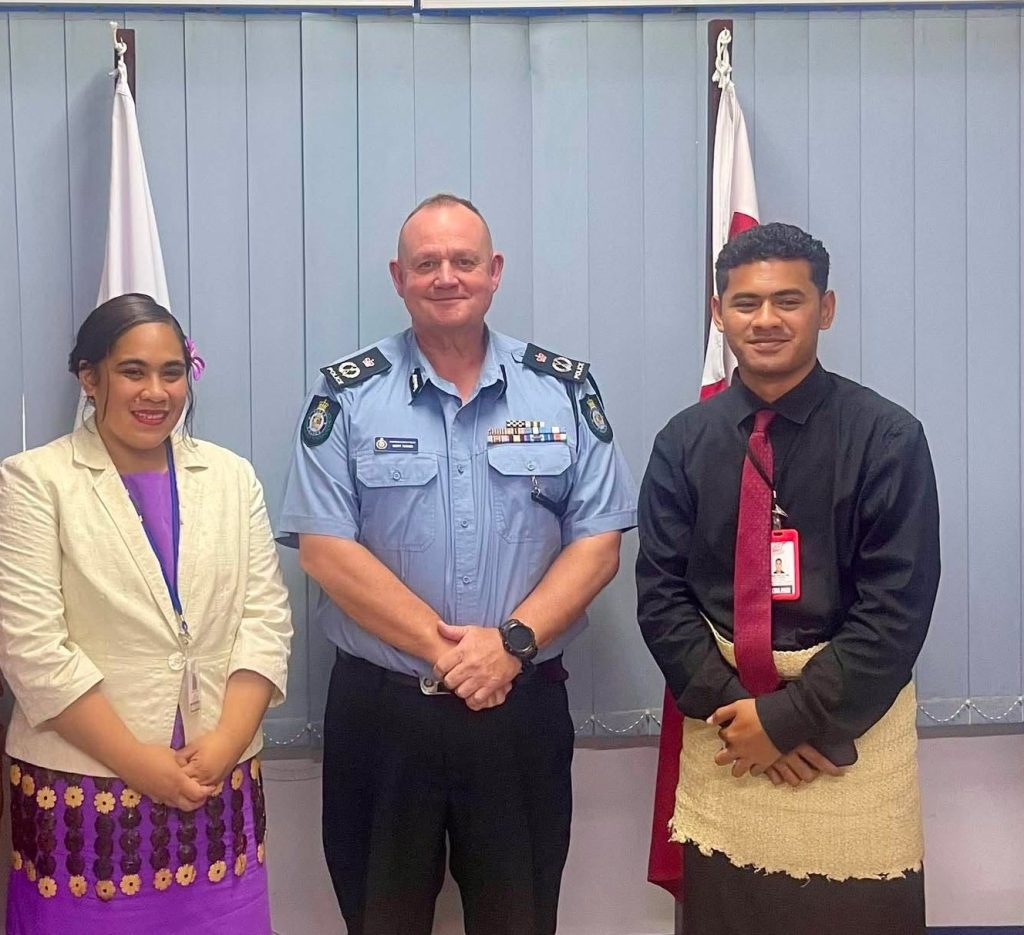
On July 2, 2026, 88.1 FM – People’s Radio together with the Tonga Chronicles had the opportunity to interview the Tonga Police Commissioner Jeff Turner. The purpose of this interview is to keep the public informed about the work that the Ministry is carrying out, address common issues faced by people and get an update of where Tonga is with general public services assigned to the Tonga Ministry of Police. This interview is divided into segments and this is the first segment with Amanda Lo’amanu of the 88.1FM / Tonga Chronicles and Tonga Police Commissioner Jeff Turner addressing the Ministry’s 50 new Losaline Loukinikini Salakielu ‘Ahio recruits / PUBLIC TRUST / Police Capacity and Cyber Crime.
88.1FM/Tonga Chronicle:
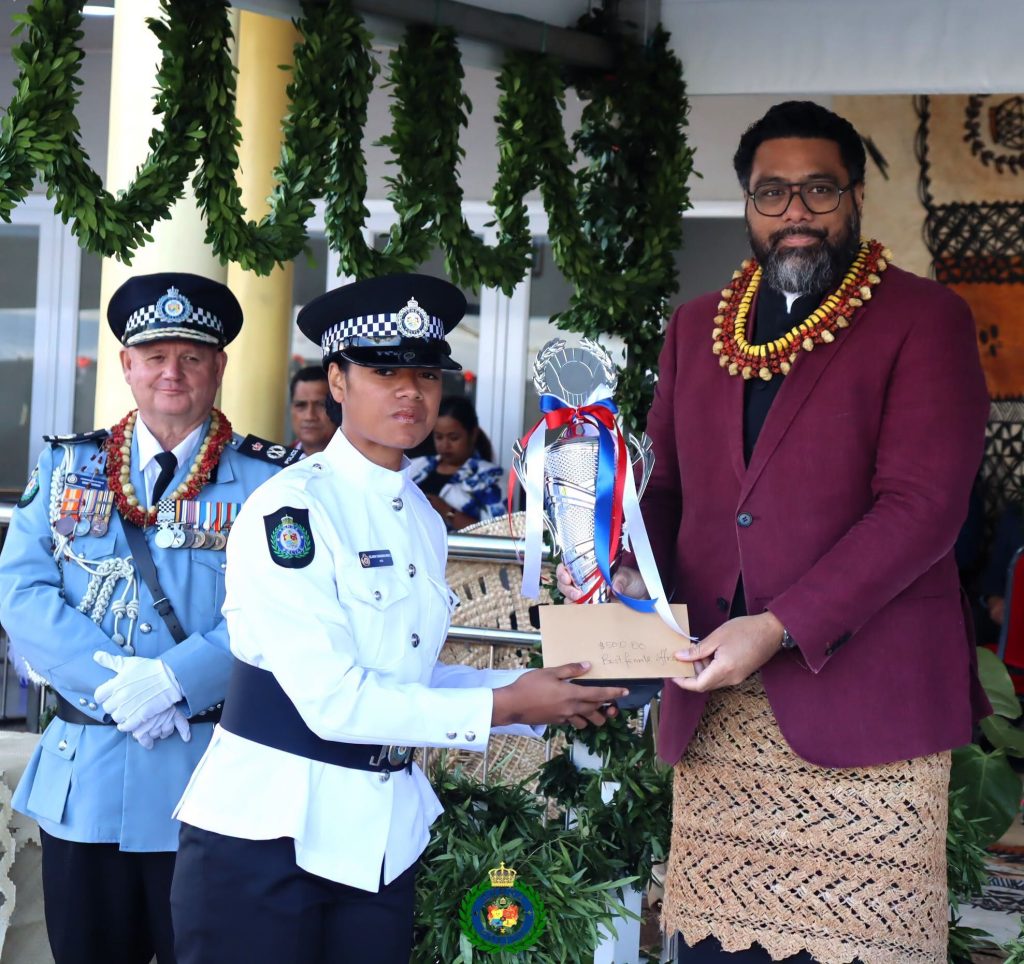
On the 3rd of July, Recruit # 54: Losaline Loukinikini Salakielu ‘Ahio will formally graduate from the Tonga Police College with 50 new police officers. What does it mean for the Ministry to welcome 50 new officers?
Commissioner Turner:
We are very much looking forward to having 50 new officers working here with Tonga Police. We are still a little bit under our authorized strength but there is another course that will start on or about the 7th of September. These 50 young officers, 42 of them will be working here in Tongatapu. 5 will go up to Vava’u and 3 will go to ‘Eua. Like all things, influx of new people, new ideas, enthusiasm but we also have to acknowledge that they are junior members going out into the field. So, just prior to their graduation we introduced what we call a Field Training Officers course. They will be mentored by Senior Constables in the field who will make sure that the way they act and the way they deal with the public is correct and it is linked to what they’ve learned at the college and to provide them some in field mentoring. We are not just abandoning them on day one. They are part of the team and we expect big things from them.
88.1FM/Tonga Chronicle:
The Chief Magistrate spoke of the uniform carrying the trust of the people – that the oath is not just a duty completed but a promise made before God, the nation and family. What does that trust means?
Commissioner Turner:
We police by consent and by that, I mean, it is an appealing principle that goes back. If you want to be a successful police force, you have got to reflect the community but you have to be here to protect and work with the community. We cannot do this on our own. Trust is a really hard value to earn and a really easy one to lose. What we have instilled in our recruits and across our organization more widely over the years is that trust is one of our core values that we just cannot lose. If the public do not have trust in us to do the right thing, then, how can we successfully police.
88.1FM/Tonga Chronicle:
The Tonga Police Corporate Plan lists an extraordinary range of legislation under its mandate. From Computer Crimes Act to Money Laundering and Proceeds of Crime Act to Counter Terrorism and Translational Organized Crime Act to the Pornography Control Act. That is a lot of ground for one Force to cover. Realistically, how many of these are actively enforced day to day and which ones are you struggling to resource properly?
Commissioner Turner:
Like all police forces worldwide, there is always going to be a bit more work than we can take on and handle but we prioritize the work that has the most effect on victims. Domestic Violence is always going to be a priority for us as oppose to computer crimes. Computer crimes, we talk about cyber crime but most of it is around computer enabled crime. That is one of our biggest challenges and we are working with our Australian partners in the Tonga Australian Policing Partnership around how we can uplift our skills in the cyber space. I am going back to Australia in the next three or four weeks on leave but I have some meetings scheduled with a unit back in Australia that’s called the Joint Police Cyber Coordination Center (JPC 3).
That is a combined task force that works across banks and industry and policing and we’re going to take some of our cyber-crime police officers back to go and work with that unit to understand a better way to do business but also to look at what capacity and what capabilities we need here because one of the things we do lack is probably around technical expertise. What we want to do is have projects in Australia and New Zealand where we work with our partners instead of just talking about it, we’re going to take our members here to Australia and New Zealand. They will work there for two or three weeks with their counterparts to get exposure to how these things could work and as you know, people are vulnerable to online scams. My advice to everybody is if it sounds too good to be true, it is not true. If you think you’re going to get paid $50 to go and register and you’re going to be a million pa’anga in return, that is just not the case. So be careful around these scams and we have got to make sure that we get to educate the public that way as well.
88.1FM/Tonga Chronicle:
Referring to the computer crimes act and apart from the scams, how are you combating these computer crimes acts in relation to videos that are posted on FB with AI and Chat GBT right now. How are you able to verify which videos are you able to legally find these people based on video evidence on social media?
Commissioner Turner:
There is a number of problems for this one. The first one is – a lot of these posts are posted from other countries so jurisdiction becomes an issue for us in the first instance. And as you have raised, things like AI and chat GPT, you have seen these all the time, the quality of the reels are getting quite difficult to ascertain between what is real and what has been generated. That is the challenge for all of us, not just here in Tonga but worldwide. Again, I go back to my previous answer around the JPC3. It is to get a better understanding of how we do this because there is a lot of technical expertise that goes behind this. The other part, is that, people feel defamed when this happens and Tonga defamation is a civil matter but it is also a criminal matter. Where I come from defamation is a civil matter. I prefer it was a civil matter to be honest. I think it should be a civil matter but at the moment the way the statues are its civil and criminal. So, to prove these offences are really quite difficult and jurisdictional boundaries are difficult to enforce when someone’s posting something from Fiji or from Australia or from the US. It is a real challenge for us and one that we have got to do some work on how we do this.
Segment 2 will address Tonga’s drugs problem.