


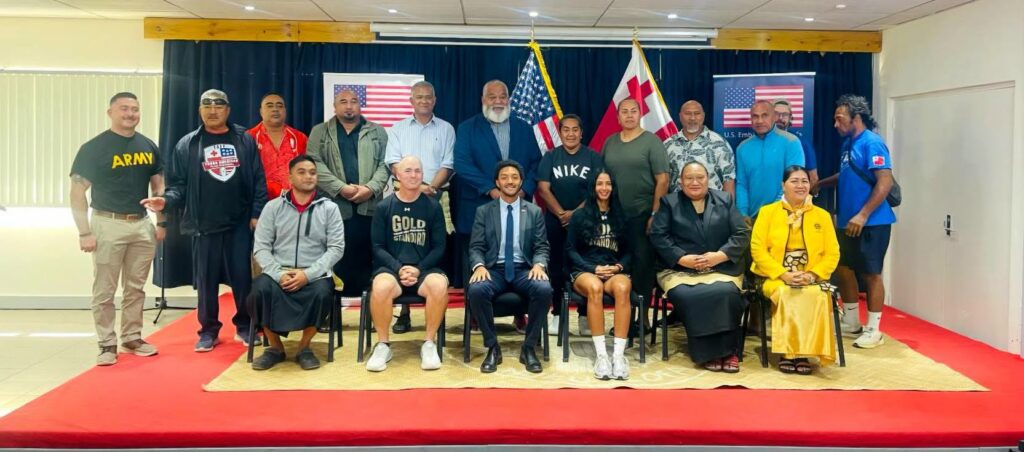
Nuku’alofa, Tonga — Flag football, a sport first pioneered in Tonga between 2014 and 2016, is being revitalized with renewed support from the U.S. Embassy Tonga and Tonga’s Ministry of Internal Affairs.
U.S. Embassy Chargé d’Affaires Dr. Devon Brown says the renewed push comes at an important time, with flag football set to make its Olympic debut at the Los Angeles 2028 Olympic Games, alongside rugby sevens.
Flag football is a non-contact version of American football, where players wear flags attached to their waist. Instead of tackling an opposing player to stop the play, defenders remove the ball carrier’s flag. The sport places a strong emphasis on speed, passing, agility, teamwork and strategy, while reducing the physical contact associated with traditional rugby and American football.
While it shares some similarities with rugby—such as advancing the ball, creating space and working as a team—flag football differs significantly from rugby because there are no tackles, scrums, rucks or mauls. The game is generally played with a smaller number of players on the field and relies heavily on passing and quick changes of direction.
The initiative, working closely with the Tonga Flag Football League and the American Flag Football Federation, aims to rebuild momentum and introduce the sport to more communities across Tonga.
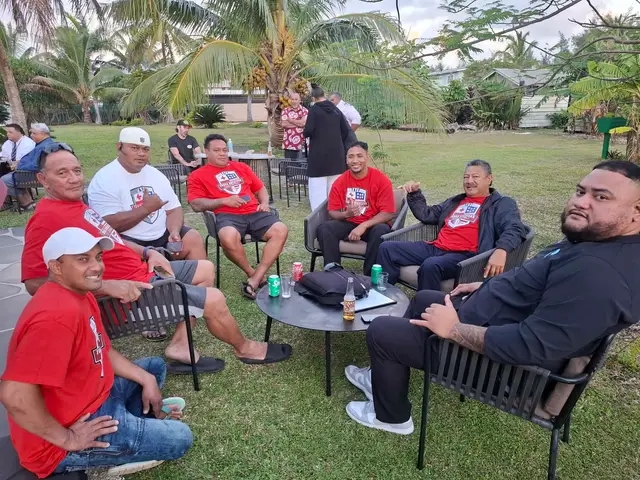
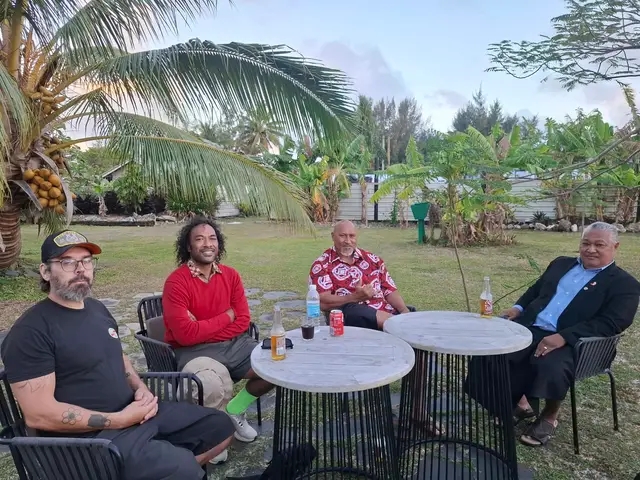
Dr. Brown highlighted the importance of developing flag football not only as a recreational sport, but also as a pathway for Tongan youth to gain opportunities to compete locally and internationally.
With the U.S. Embassy supporting the involvement of a U.S. Sports Envoy, the initiative has further raised the profile of flag football in Tonga and introduced new sporting opportunities for young people.
The renewed partnership comes as interest in the sport continues to grow, with the goal of strengthening participation, developing local talent and creating opportunities for Tongan athletes to potentially take their skills overseas.
For Tonga, the timing is significant. With flag football joining the Olympic programme at LA 2028, Dr. Brown believes Tonga has an opportunity now to build a strong foundation and ensure its young athletes are ready to take advantage of what could become a new international sporting pathway.
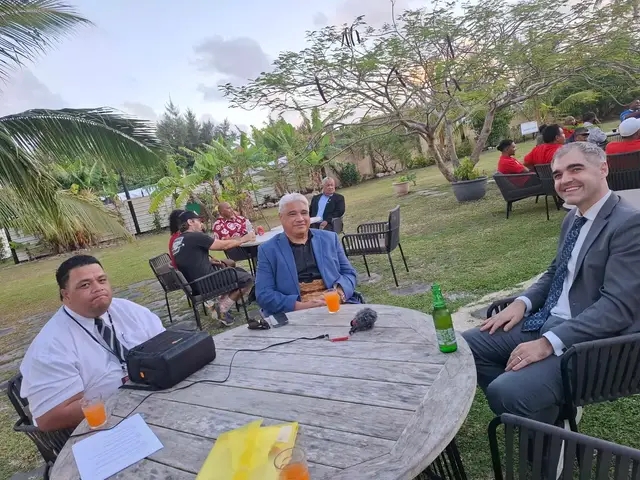
This is Segment 1 of a five-part Tonga Chronicle series based on an exclusive interview with U.S. Embassy Tonga Chargé d’Affaires Dr. Devon Brown.