
Dr. Sandie Morgan urges patience, restoration and trust for trafficking survivors
Nuku’alofa, Tonga — Human trafficking has emerged as a serious and deeply concerning issue facing Tonga, prompting increased attention to victim protection, prevention and community education as the country confronts allegations involving Tongan women and trafficking networks overseas.
In response to the growing concern, the U.S. Embassy in Tonga is strengthening its engagement with Tonga in the fight against human trafficking, bringing international expertise and awareness to the forefront.
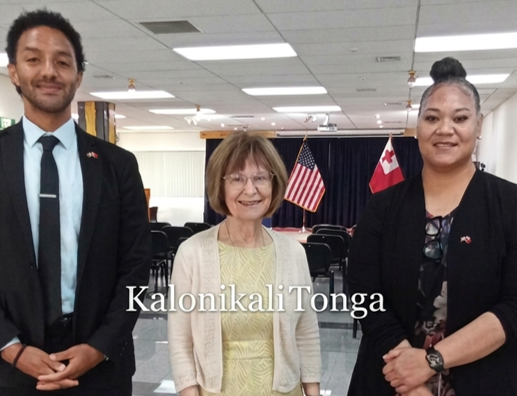
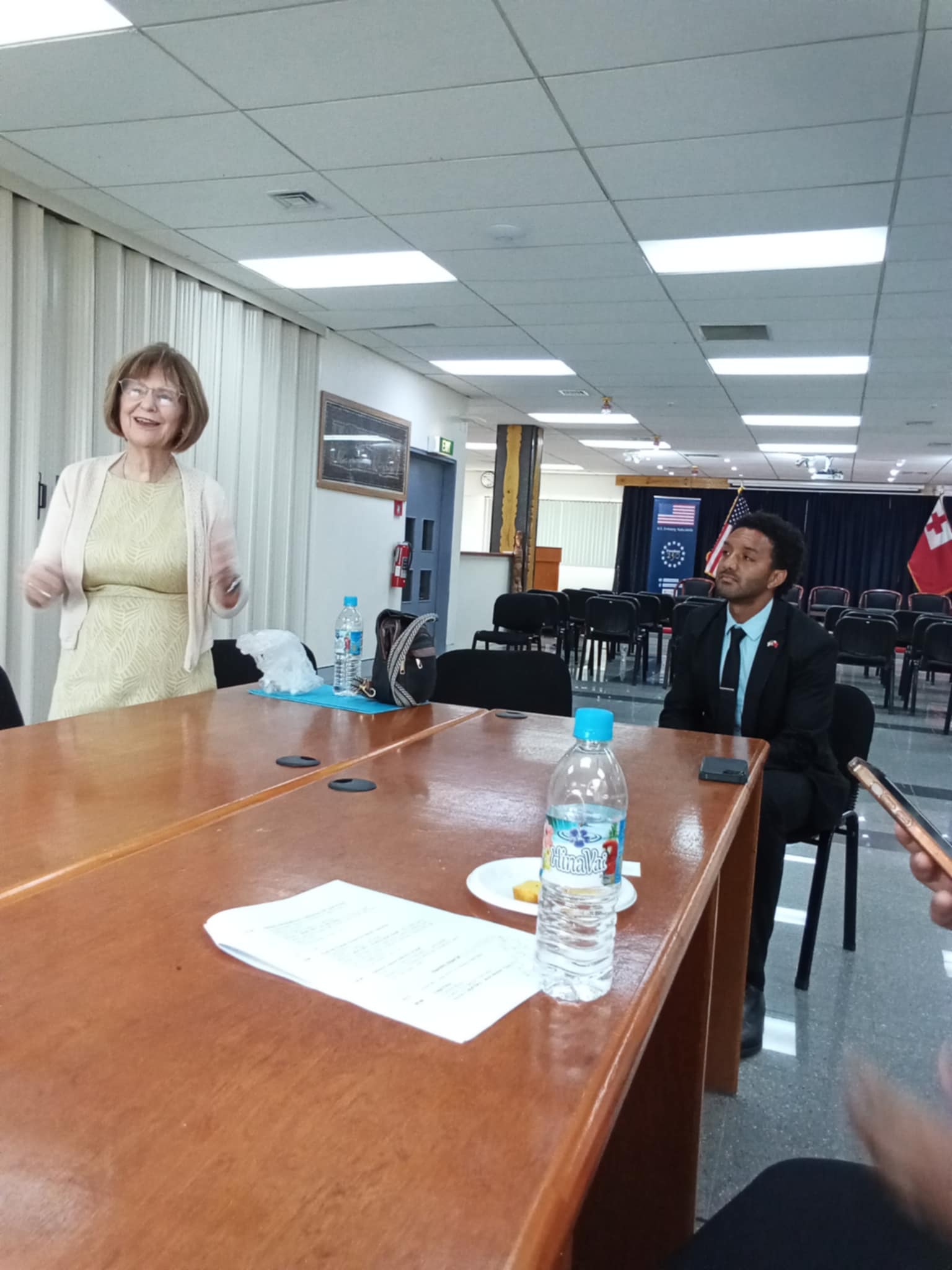
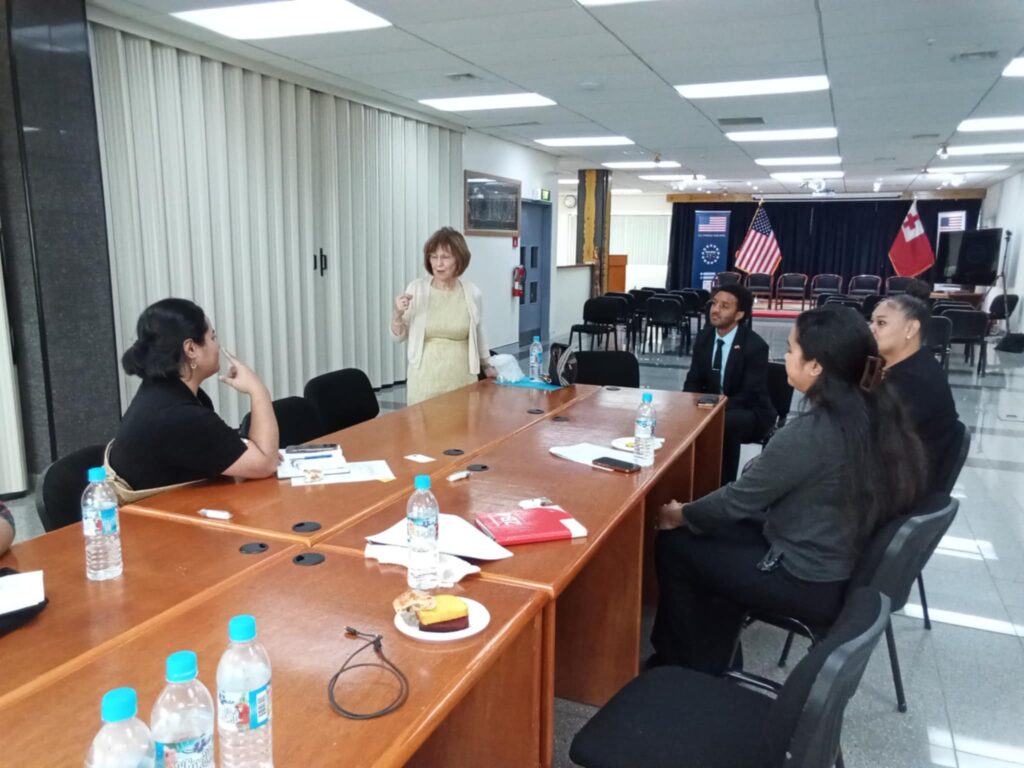
On Tuesday, 18 August 2026, the U.S. Embassy Tonga hosted members of the Tongan media for a special Media Meeting Sync with internationally recognised human trafficking expert Dr. Sandie Morgan, coordinated by Dr. Devon Brown, Chargé d’Affaires and Deputy Chief of Mission at the U.S. Embassy Tonga.
The session provided journalists with important insight into how trafficking survivors should be approached, the importance of survivor-centred recovery, and the often-overlooked psychological impact experienced by those who work closely with victims.
“It is too early” to interview survivors
One of the most important questions raised during the meeting came from Tonga Broadcasting Commission Reporter Liliani Polutele and Katalina Siasau of Matangi Tonga, concerning Tongan women who have experienced alleged human trafficking in China and whether they should now be interviewed about their experiences.
Dr. Morgan stressed that, for survivors who have only recently returned home, it may be too early to expect them to recount their experiences publicly.
She emphasised that the immediate priority should be reintegration, restoration, safety and rebuilding their lives, rather than seeking detailed accounts of their trauma.
According to the guidance discussed during the meeting, survivors may need significant time and space to regain stability. Dr. Morgan highlighted the importance of allowing survivors to rebuild their lives, noting that even after an initial period of approximately 60 days, survivors may remain extremely fragile and may not yet feel ready to disclose everything they have experienced.
She stressed that recovery is not a quick process and that it can take years before a survivor begins to feel more secure and able to move forward, even if they are not yet thriving.
Rebuilding trust after losing hope
Dr. Morgan placed particular emphasis on trust.
For survivors of trafficking, returning home does not necessarily mean the trauma is over. Many may have experienced exploitation, deception, fear, isolation and profound loss of control.
Dr. Morgan highlighted the importance of creating an environment where survivors can gradually regain confidence in themselves, their families and their communities.
She also spoke about the devastating psychological impact of victims feeling that “no one was coming for them” — a sense of abandonment and hopelessness that can remain long after they have escaped the trafficking situation.
For this reason, empowerment must become a central part of recovery.
Rather than defining survivors by what happened to them, communities must help them regain independence, confidence, dignity and hope.
What is vicarious trauma?
Dr. Morgan also addressed an important issue for journalists, police officers, social workers, health professionals, counsellors and others who regularly hear or witness the traumatic experiences of trafficking survivors — vicarious trauma.
Vicarious traumatic stress refers to stress that can occur when a person is indirectly exposed to another person’s traumatic experience, including through listening to or supporting someone who has experienced trauma. It is also commonly referred to as secondary traumatic stress.
The U.S. State Department has similarly described vicarious trauma among professionals working with trafficking victims as negative reactions that can develop through repeatedly hearing or witnessing accounts of violence, abuse and trauma. Symptoms can include anxiety, depression, sleep disturbance, irritability, nightmares, emotional numbness and loss of empathy.
The issue is not simply theoretical. A 2025 study of 256 anti-trafficking workers found that 58 percent reported secondary traumatic stress symptoms at a clinical level, with higher levels of vicarious trauma associated with greater intentions to leave their jobs.
This means that protecting survivors also requires protecting the people who work with them.
Education must begin with our children
Dr. Morgan also stressed the importance of prevention and education, particularly for children and young people.
She urged communities to educate both boys and girls about how human trafficking can begin and how traffickers may use seemingly attractive offers to gain trust.
For vulnerable young people, approaches involving fake marriage proposals, promises of money, employment, travel or a better life can become pathways into exploitation.
The recent allegations involving Tongan women travelling to China for arranged marriages have brought this danger into sharp focus. Tongan police are investigating allegations that women were lured into arranged marriages, while support organisations have identified indicators they say are consistent with internationally recognised human-trafficking indicators.
This has raised urgent questions for Tonga about how young people can be better educated to recognise deception before they become victims.
Prevention starts before the trafficker arrives
For Tonga, the challenge is not only responding after trafficking occurs.
It is also about ensuring that children, families and communities understand the warning signs before a trafficker has the opportunity to exploit vulnerability.
Economic hardship, limited opportunities and the desire for a better future can make false promises particularly powerful. That is why prevention must include education, economic empowerment, safe migration awareness, community support and strong systems for reporting suspected trafficking.
Dr. Morgan’s message was clear: communities must create environments where young people can ask questions, recognise danger and seek help without fear or shame.
A resource for Tonga’s fight against trafficking
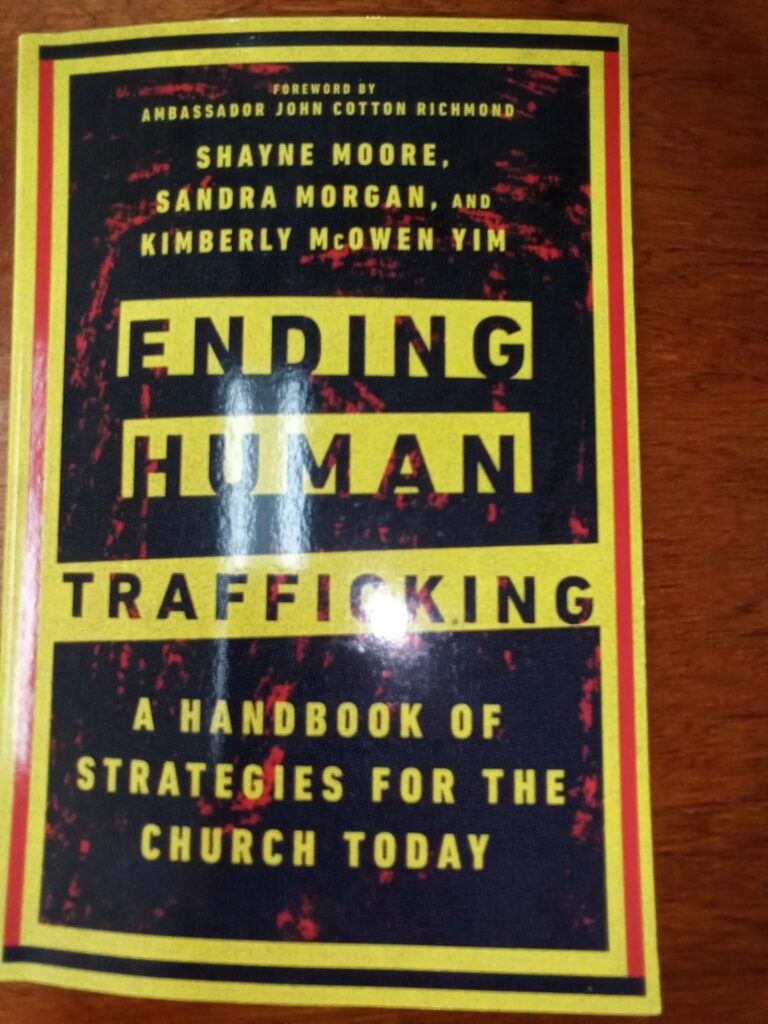
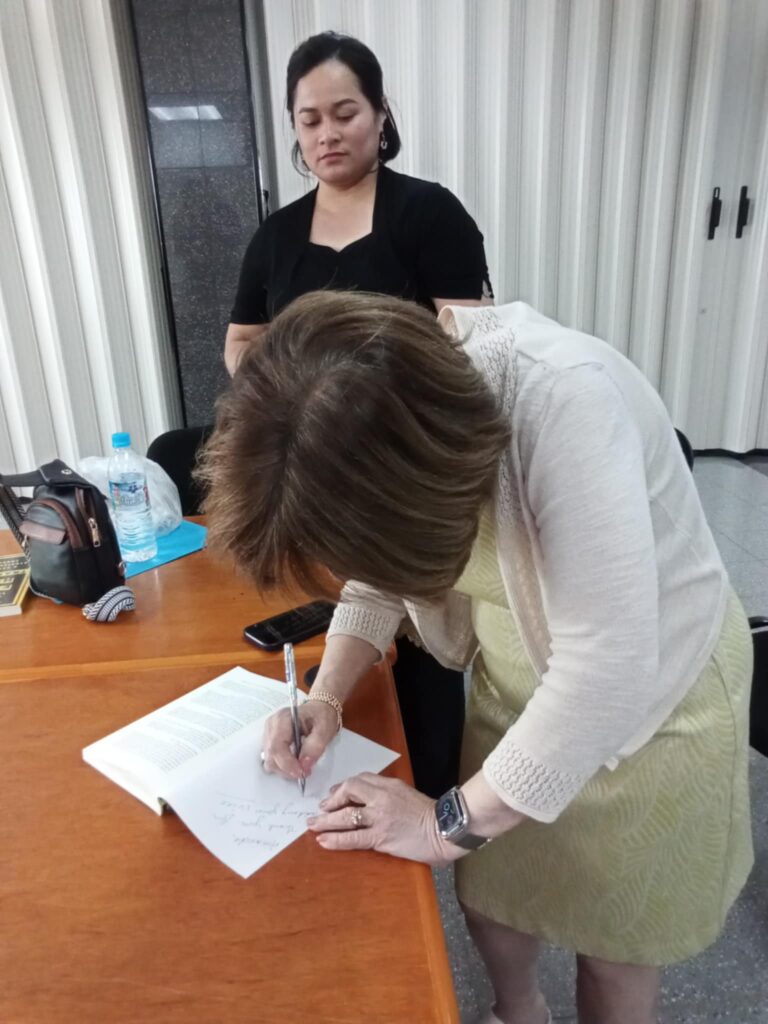
During the meeting, Dr. Morgan also shared copies of her book, Ending Human Trafficking: A Handbook of Strategies for the Church Today, co-authored with Shayne Moore and Kimberly McOwen Yim.
The book focuses on understanding human trafficking, prevention, victim protection, prosecution, partnership and practical strategies for communities and organisations seeking to combat modern slavery.
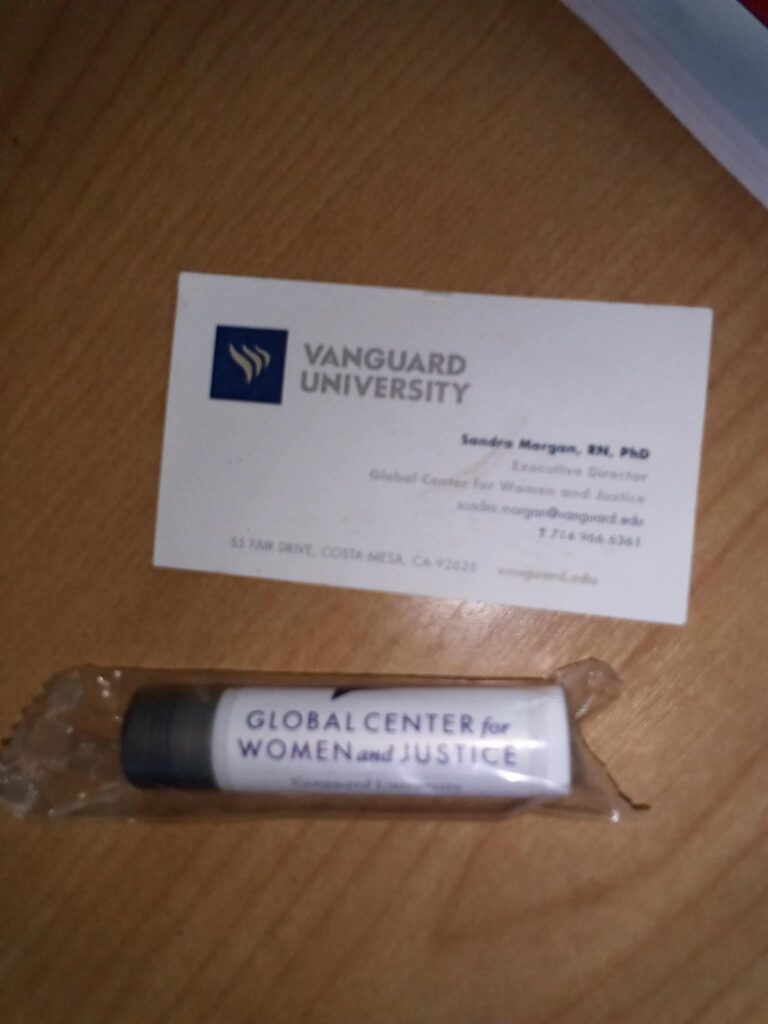
The book was among resources provided to members of the Tongan media attending the meeting, alongside a lighter but memorable gift — sunflower butter lip balm.
For Tonga’s journalists, however, the most significant takeaway was far more serious: human trafficking requires informed reporting, survivor-centred approaches and a united community response.
As Tonga begins to confront this emerging threat more openly, the message from Dr. Morgan was not simply to find victims or tell their stories.
It was to restore them, protect them, empower them and help them rebuild their lives — while ensuring the next generation knows how to recognise trafficking before it happens.