


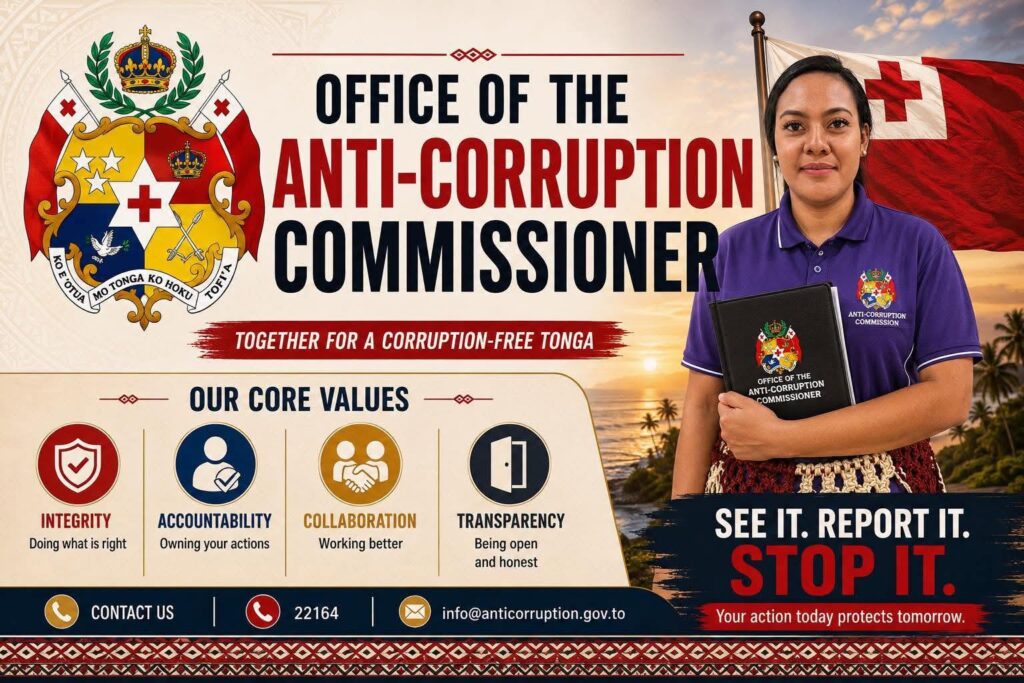
Nuku’alofa, Tonga — Serious questions are being raised over the effectiveness and independence of Tonga’s Anti-Corruption Commission, amid claims that more than 300 complaints have been submitted since 2024, but only two cases have progressed to prosecution.
The Commission was established to provide an independent mechanism to investigate corruption and wrongdoing in Tonga. However, concerns remain over whether the current Anti-Corruption Act gives the Commission enough independence and legal power to properly investigate and prosecute complaints.
One of the two cases has already concluded without the person charged being convicted, while the second remains before the courts.
This has prompted questions from the public: Why have so few complaints progressed to prosecution? What happens to the hundreds of complaints received, and what prevents the Commission from investigating and acting on them?
The Commission reportedly receives approximately $1.9 million in public funding, further raising questions about its performance, accountability and reporting obligations.
The public is also asking: Who does the Commission report to? What must it report, and how often?
At the centre of the debate is whether Tonga’s Anti-Corruption Commissioner Act needs to be amended to give the Commission greater independence and stronger powers to receive complaints, investigate allegations and pursue prosecutions.
The original vision of an independent anti-corruption body was to strengthen accountability and help prevent corruption within government and Parliament.
As Tonga continues its fight against corruption, the central question remains:
Does the Anti-Corruption Commission have the power to act independently — or is it a watchdog without the teeth?