


NUKU‘ALOFA — The bond between Australia and the Kingdom of Tonga has hit a historic high point, driven by landmark sports investments and life-changing migration opportunities.
Director of 88.1FM People’s Radio / Tonga Chronicle ‘Akosita Havili Lavulavu sat down with Australian High Commissioner, His Excellency Mr. Brick Bradley, to discuss everything from local culinary experiments to a $250 million regional rugby partnership. Below is a transcription of their conversation:
Introduction and Personal Reflections:
Director of 88.1FM People’s Radio / Tonga Chronicle – ‘Akosita Havili Lavulavu:
Malo e lelei and a very warm welcome to the People’s Radio 88.1 FM and the Tonga Chronicle Newspaper. It is an honor to have with us this morning His Excellency Mr. Brek Batley, Australia’s High Commissioner to the Kingdom of Tonga. Your Excellency, malo e laumalie, malo e me’a mai ‘I he pongipongi ni. Thank you for joining us.
Australia High Commissioner to Tonga – His Excellency Mr. Breck Batley:
Sita, thank you so much for having us on your show.
Director of 88.1FM People’s Radio / Tonga Chronicle – ‘Akosita Havili Lavulavu:
Your Excellency, you have been here for about two and a half years now. Before we get into the busy agendas between our two countries, can you share a memorable experience you hold close to your heart ever since arriving in Tonga?
Australia High Commissioner to Tonga – His Excellency Mr. Breck Batley: You have asked the hardest question first because I have so many brilliant experiences. A standout was climbing the volcanoes in Haʻapai late last year. It was the most beautiful place and an incredible hiking experience, being isolated out on the island feeling remote but yet just engaging with the natural wonder of Tonga. Just recently I have had some vasuva and I had a big one at home where I marinated, prepared it and having it. And now I feel like I am becoming a Tongan. On Monday I went whale swimming. I have some friends here from Australia and it is the fourth time I went whale swimming. There is nothing more majestic than being eye to eye with the whales in Tonga. It is actually a very valuable thing to go through when you have friends come here because you want to show them the best of Tonga. I have an itinerary that is jam-packed for 7 days for them. I want to suggest to the Tongan Prime Minister that, because when you are out on the water and you see the color of the blue in the water in Tonga next to the whales, I think we should come up with a special name for a color blue – Tonga blue. It’s that deep, rich blue that you cannot see anywhere else. I think we get it on every color palette in the world. I was in Vava’u, ‘Eua and the Niuas. I love them all equally. I was in Vava’u recently and I have to say they have some of the best scuba diving in the Pacific, no doubt about it. The people of Vava’u are absolutely gorgeous and welcoming every time I am there.
Director of 88.1FM People’s Radio / Tonga Chronicle – ‘Akosita Havili Lavulavu:
The last few months have been extraordinary—celebrating 200 years of Christianity, our new Prime Minister’s first bilateral in Brisbane, a landmark rugby league partnership signed, and two Tongan icons reaching 300 NRL games. In one sentence, how would you describe the current Australia-Tonga relationship?
Australia High Commissioner to Tonga – His Excellency Mr. Breck Batley:
I would say that the relationship is blossoming at every level—from people-to-people, church groups, and educational institutions, to our political engagement and sports.
Director of 88.1FM People’s Radio / Tonga Chronicle – ‘Akosita Havili Lavulavu:
Australia and Tonga marked 55 years of formal diplomatic relations last year but our people to people ties go back 200 years. What does that history mean for how you approach your role everyday here in the kingdom of Tonga?
Australia High Commissioner to Tonga – His Excellency Mr. Breck Batley:
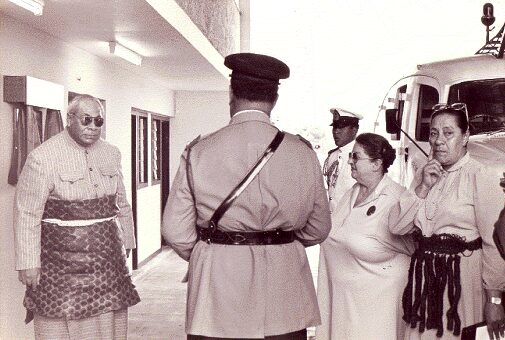
Well, history is essential for everything we do as a foreign service, but especially for the Australian High Commission here. There are so many excellent ambassadors, excellent officers that have come well before me. And as you say, that’s just 55 years of diplomatic relations, but you think of all the medical experts, the church leaders, the sports players, the educational leaders that have come over 200 years before us. And what the 200th anniversary of Christianity quite clearly showed was just those deep Tonga-Australia ties based and grounded so strongly in faith and in the church from the first missionaries coming across in the 1820s through to setting up the longest standing educational partnerships between, for example Newington and Tupou College, but also Queen Salote College and MLC in Sydney.
This history is extremely important. The Shirley Bakers that have been here in the late 1800s and worked side by side and together with the royal family, with the Tongan institutions. From my point of view, it is so beautiful reading and learning about this. And the problem is there is just so much of it I am still learning every day and at every event. We had Helen Taliai here just a few weeks ago for the 200th anniversary and she’d written a book on the early Australian missionaries that had come here. And there is now a beautiful memorial next to the Centenary Church marking 42 of those Australians. And these were pioneers that came here and didn’t know what to expect but knew they stood for their values and their faith. And Tonga and Australia partnership is grounded in some of these stories. I have had coffee with some of the missionaries that have been here in the 1970s and 80s and 90s, Sandy and Faye and others, and they were telling their stories of just how important Tonga was in their lives and is in their lives. And I think that is true of so many in the Tongan diaspora who want to give back as well to Tonga. I was out in Sydney with the Tonga Prime Minister only two weeks ago doing a community town hall event. And it is just the passion, the ‘mafana’ between the diaspora and Tonga is just so strong and that is something that we are focused on.
Redefining the Pacific Family Through Sport
Director of 88.1FM People’s Radio / Tonga Chronicle – ‘Akosita Havili Lavulavu:
I like how you use that Tongan word ‘mafana’, you are getting your Tongan right.
The first topic for our program is sports. When we talk about sports, our people here in Tonga, especially with rugby, it turns on a light in everybody. And sport is important to our country because, especially rugby, it unites the country and the people in general. And we have seen it in the past when all the games happened with the Mate Ma’a Tonga, the ‘Ikale Tahi and all that.
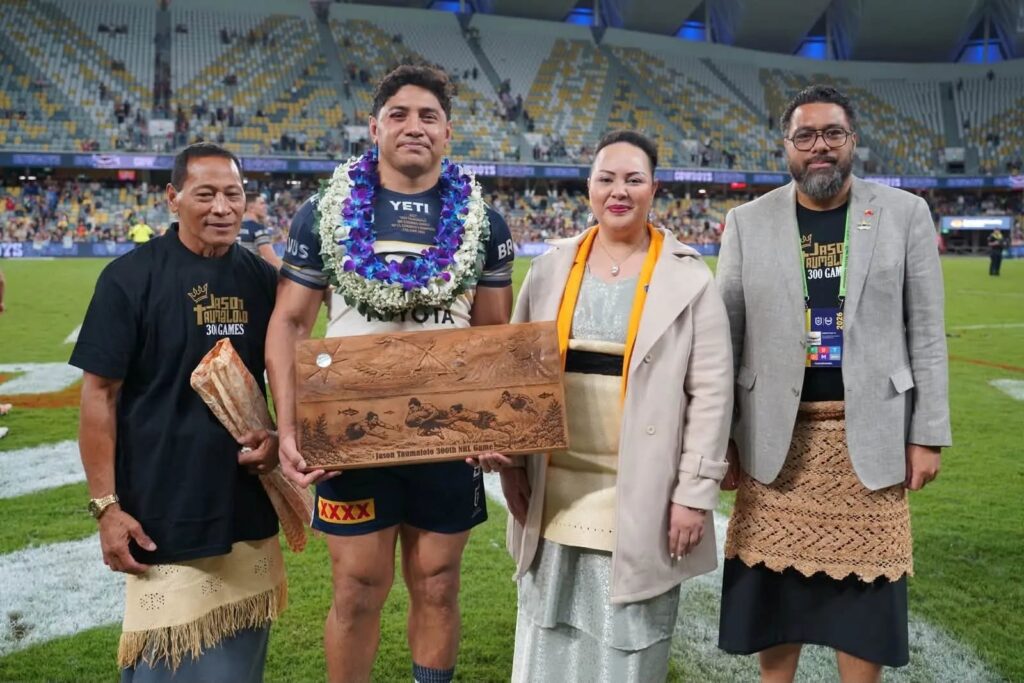
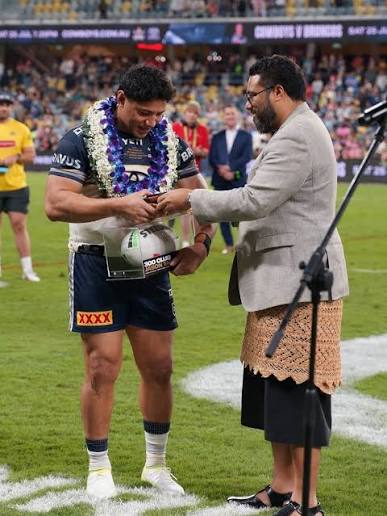
Within three weeks, Tonga saw two rugby league icons reach 300 NRL games. That was Jason Taumalolo on the 27th of June with the Cowboys in Townsville and Daniel Tupou on the 11th of July with the Roosters in Sydney. Her Royal Highness, Princess Angelica Latufuipeka and the Honourable Prime Minister, Lord Fakafanua were on the stands for both. And from Australia’s perspective, what did it mean to host these historic Tongan moments on Australian soil?


Australia High Commissioner to Tonga – His Excellency Mr. Breck Batley:
Well, these are two icons of the game. They are humble, talented and now legendary players in the game of rugby league. And it was such an honour to have Princess Angelica and the Tonga Prime Minister at both of those games. And I had the pleasure of being at the Daniel Tupou game as well with both of them. You know, there are only 57 players now, 57 players that have got to 300 games. The average length of service for a rugby league player in the NRL is about 66 games. To get to 100 games or 200 games is a huge achievement. To have your body last and your talent be strong enough to hold you in the team for 300 games is just a huge, huge achievement that so few people get to do.
I must admit, I had an awkward moment, though, as an EELS supporter sitting in the rooster’s lounge. I was holding and biting my tongue. But of course, I was cheering for Daniel Tupou and he got a hat-trick of tries, which was just beautiful. And of course, the Penrith Panthers were defeated by the Cowboys. That whole team stood up for Jason, which was great to see. But those games, I want to see more of them. This is when we talk about the Tonga-Australia Sporting Partnership and we have the Commonwealth Games on starting today. We want to see more netballers thriving and Tonga going from the eighth in the world to number one in the world. We want to see more rugby union players come out of Vava’u and end up in the professional competitions in Australia or New Zealand. We want to see more boxers win gold medals at the Commonwealth Games. And I know you have had three medals there over the last 20 years.
For us, it is about how do you build grassroots competitions and coordination of skills at really young age, support good messaging to kids about health and nutrition and domestic violence, all these sorts of messages. But ultimately, how do you nurture that talent and then create pathways to the elite competitions across all sports? And you can see what it means to the young kids, the way they look up to some of these players. We want more role models, more Tongan role models, women and men in all of these sports. And you asked earlier about the sports in Tonga – I can’t believe how exciting all the school sports competitions are. I was at the rugby last Friday. Sorry, Tupou College. ‘Atele did a great job. Great and awesome game. That should be broadcast live in Australia. The talent in those senior competitions is just really at a high level. It was wonderful to see the Crown Prince deliver the cup to the prince in the Junior Competition. But also the athletics competition, the intercollege athletics sports carnival. That is the greatest.
I tell all our staff at the High Commission, you must go and watch. For all the Australians that have just arrived, I said, that is the first thing you have got to go and see. See the passion with which Tongans not only hold their old schools for the alumni, but also what we call having a crack or having a fair go. The idea of just young athletes enjoying themselves and doing their best and everyone supporting them, that is such a great atmosphere, a festival atmosphere.
Director of 88.1FM People’s Radio / Tonga Chronicle – ‘Akosita Havili Lavulavu:
Now, on the 8th of July in Brisbane, Australia signed the Pacific Rugby League Partnership. Two hundred and fifty million Australian dollars (AUD$250 million) over 10 years with Tonga, Samoa, Fiji and Papua New Guinea. Some senior Australian figures have described the contest for influence in the Pacific as a ‘knife fight’ and analysts are calling rugby league a soft power lever. How should Tongans understand this investment? Is it about the game or is there something bigger?
Australia High Commissioner to Tonga – His Excellency Mr. Breck Batley:
Well, this is about sports. We have just talked so much about how Australia and Tonga share this beautiful passion and tradition together across not just one sport, not just two, but dozens of different areas. That partnership that has just been agreed and the next design phase was announced by our Prime Minister and the Tonga Prime Minister was there in Brisbane, along with the Samoa Prime Minister and the Papua New Guinea Prime Minister. That is a reflection of the Pacific family uniting around something that matters to all countries. This was something that was asked of us to work closer on rugby league. And of course, Papua New Guinea now has a team, a professional team in the NRL called the Chiefs. And that is part of that broader package.
For us, this is about maximising our strengths and our passions together and creating opportunities for young kids and creating pathways for those that ultimately make it. That is life changing. Absolutely life changing for not just the individuals, but families and communities and for Tonga’s national pride and direction. Same for Australia. I mean, what the TALAs do to young women here is enormous. So, for us, we see sports as a development opportunity. No doubt, of course, there’s contests and all of those things that you mentioned. But that’s not the primary reason.
Director of 88.1FM People’s Radio / Tonga Chronicle – ‘Akosita Havili Lavulavu:
Thank you Your Excellency. The partnership specifically mentions upgrading the 10,000 capacity Teufaiva Stadium here in Nuku’alofa and building a high performance centre. With the 2031 Pacific Games in mind, what is the timeline when we will actually be seeing some kind of work happening around that area?
Australia High Commissioner to Tonga – His Excellency Mr. Breck Batley:
Well, I am so excited that Tonga has got the Pacific Games for 2031. It will be a moment for Tonga to shine in the regional stage. This is one of the things that we are working on with TASANOC and other organisations, for Tonga to do as well as possible in the games amongst not just the athletes, but all the officials, and all the organisers. So that is where Australia’s support always goes – to the people, not just the players, but the officials, the referees, the organisers.
The infrastructure, of course, is a separate issue, equally important, but you have got to have that human element strong in the first instance. And I know that the Rugby League partnership will look at some of these areas and that is to be determined over the next six months and there will be conversations ongoing. I know that the CEO of Rugby League here, Tavake, is working very strongly with the Australian Rugby League Commission on these. From our perspective, we want to see not just sporting infrastructure in place for the 2031 Games. Australia will do its part to help there, but also broader infrastructure. You know, I know the bridge, for example, will be done by then. I know Japan is working on International Airport here. We are working on the hospital in Vava’u and other big projects. Of course, the Parliament House is something that we are working with New Zealand on and that will come online late next year. All of these things matter in terms of how Tonga is on show in 2031.
Director of 88.1FM People’s Radio / Tonga Chronicle – ‘Akosita Havili Lavulavu:
We are all looking forward to all this development in the country.
Moving on, beyond Elite Pathways, the partnership talks about grassroot clubs, as you had mentioned a bit earlier, school rugby league programmes and violence prevention and youth work. Can you give our listeners something concrete – what will our villages and our schools and, for instance, in Vava’u, what would they expect to see? Any change?
Australia High Commissioner to Tonga – His Excellency Mr. Breck Batley:
Absolutely. Let me just give a shout out to the work of the Tongan Rugby League. In the last two years here they have started programmes with 8 to 10-year-olds and in primary schools on just coordination skills and the messaging around health, nutrition, these sorts of things. So that is already happening. There’s now under 14, under 16, under 18 competitions, the 10-week annual competitions. That’s already happening. There are now trips overseas to Fiji and to Australia for the winning teams. That is happening. All of these things will connect in a more comprehensive way and they will grow. But the pathway is already there. It is about how do you expand that? And this is not for me to design a programme, it is for the Tongan Rugby League to design. But how do you maximise all of the young energy in Vava’u and all the schools or all the communities to give different options for kids and girls as well? This is not just for men or boys. And as I said earlier, it’s just so incredible to see people succeed in Australia, women that go across and get contracts in Australia. That is what we want to see more of. And so that is what I think the NRL is focused on together with the Tongan Rugby League.
Migration and Labour Mobility
Director of 88.1FM People’s Radio / Tonga Chronicle – ‘Akosita Havili Lavulavu:
Australia hosts the Rugby League World Cup this October to November, the Rugby Union World Cup in 2027 and the Rugby League World Cup again in 2029. What arrangements is Australia making for Tongan supporters travelling to support Mate Ma’a Tonga and the ‘Ikale Tahi on visas, family reunification and community host events?
Australia High Commissioner to Tonga – His Excellency Mr. Breck Batley:
Yes. Well, I want to be at the game between Tonga and Samoa in Sydney in about four months’ time in October. That will be absolutely one for the record books. But there are going to be so many incredible games from the 15th of October for a month. And I know the Tongan diaspora will come out in huge numbers. I loved it in the last game. I went to the game with the Tongan Prime Minister and others in 2024 for the Australia Mate Ma’a Tonga game. And I know there was a competition in the diaspora in other games as well between Tonga and Samoa about who can get the most number of people in the crowd. But at that game, it was just a sea of red, as they say. I think the stadium, Parramatta Stadium, CommBank Stadium, holds about 35,000. I think there were about seven green and gold jerseys in there amongst all the red. So yeah, undoubtedly, as you say, there will be so much interest in this.
We will certainly do whatever we can to facilitate the movement of people from Tonga to Australia to make it as easy as possible. As always, we have to maintain our border security and make sure that we are adhering to all our border security policies. But whatever we can do to make sure that as many Tongans get to those games and that the communities celebrate, we will. I just, obviously, when the kangaroos play the Matematonga, that’s going to be another tricky one for me. They almost won in 2024. Almost. I think it is going to be very, very tight come late October. The first game, I think Tonga versus England is in Perth around the 17th of October. That will be a huge game over there too. And Tonga’s got to beat England, right?
Director of 88.1FM People’s Radio / Tonga Chronicle – ‘Akosita Havili Lavulavu:
Ofcourse, we beat anything!
Thank you, Your Excellency. Now, moving to our second category of questions, this is a topic that our people are very interested in, and that is the Pacific Engagement Visa Ballots and the PALM (Pacific Australia Labour Mobility) scheme. Only because this is a topic that gives opportunities to our people to migrate to Australia with the PEV ballot and also the PALM scheme, the Seasonal Workers Program. And I am sure our listeners are really wanting to listen out to what you have to say about this – the PEV ballot and the PALM scheme. And just with the PEV ballot for 2026-2027, opening up on the 1st of July, and will be closing on the 29th of July. The inaugural ballot in 2024-2025 drew over 56,000 registrations for 3,000 places.
Two years in, how has Tonga performed? How many Tongans have been granted a PEV visa to date? And is Tonga using their country allocations in full?
Australia High Commissioner to Tonga – His Excellency Mr. Breck Batley:
Yes, thank you, Sita. This is one of our flagship programs. It is only three years old, so this is the third year of intake. The Pacific Engagement Visa is designed to give Tongans and all Pacific Islanders a pathway to residency and ultimately citizenship in Australia. And this responds to requests so many governments in the region, for a program like this. Tonga has had around 250 spots last year. It has got 150 spots to start with this year. It may increase. And as you say, the round is open and it closes next Wednesday. You have to be aged between 18 to 45. I think it is about $25 for the application fee.
Now, this is a ballot and not targeting anyone. It is literally a ballot. Your name gets pulled out of a hat. It does not focus on those that have a big bank account or those that have particular skills or those of a certain age or anything. It is just the luck of the draw. So it is very fair. Tongans have applied in large numbers. They have been very successful in getting all the spots that Tonga wants. The one challenge is that, to get the visa, you must have an offer of employment in Australia. So for those that are successful, you then have 12 months to find a job in Australia and we help with that. There is a PEV office here that helps with outreach. You must have a job offer and then the visa is granted. And the family can come, you have access to schools, you have access to our medical system. It is just like being an Australian in Australia. And obviously the citizenship is a choice that people will have under that, if they want to go down that path. And it does not stop them from coming back to Tonga. We have had lots of great feedback on it. I welcome, our office welcomes other feedbacks, as I say, it is a new program. It is going to keep improving. We just had the Marshall Islands join this year, so it is the 12th country that has joined. But Tonga continues to have a high number of applications and a high success rate.
Director of 88.1FM People’s Radio / Tonga Chronicle – ‘Akosita Havili Lavulavu:
I have a friend who was lucky in the ballot and they have migrated. It is a couple and four children. They have already migrated to Australia and they are just so overwhelmed and so happy and blessed that they have been given this opportunity to migrate to Australia and have access to, as you mentioned, the health system, education for the children. It is just a wonderful experience for our people. And as it is a ballot, it is whoever is lucky is lucky, right? And so as you said, you must have a job offer. You do have a PEV office here in Tonga that can assist our people with finding job offers for their PEV application.
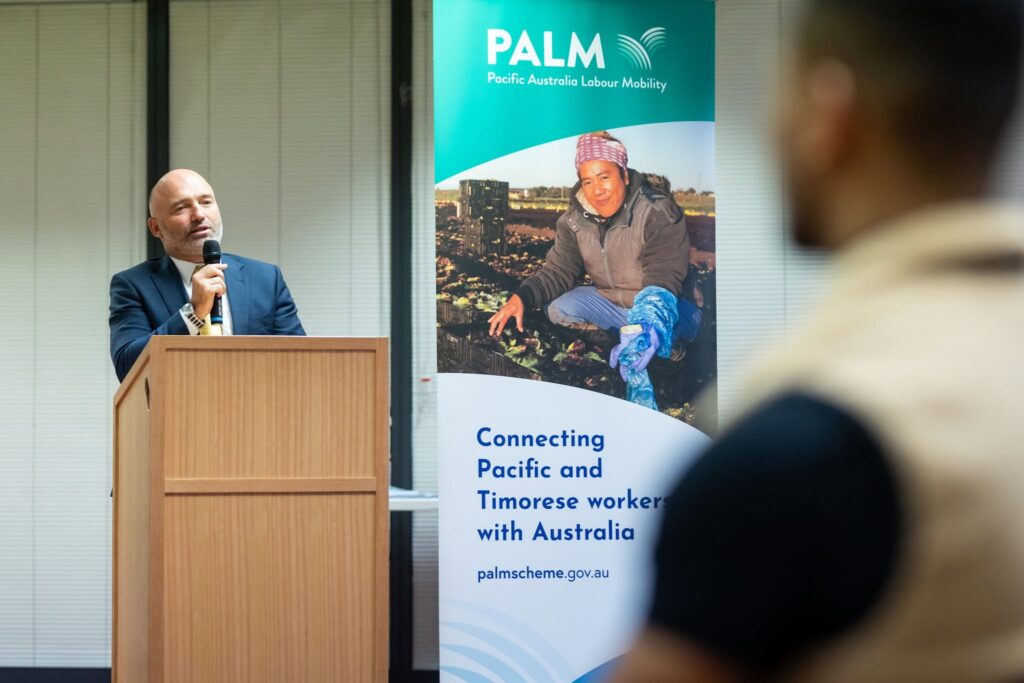
Now the PALM program, it is a very different program. Within 3 to 6 months required departure between placements. There have been serious concerns across the region on worker welfare, wage deductions, family separations, mental health and Tonga losing its workers to overseas. What is Australia doing on worker protection specifically for the Tongan PALM participants?
Australia High Commissioner to Tonga – His Excellency Mr. Breck Batley:
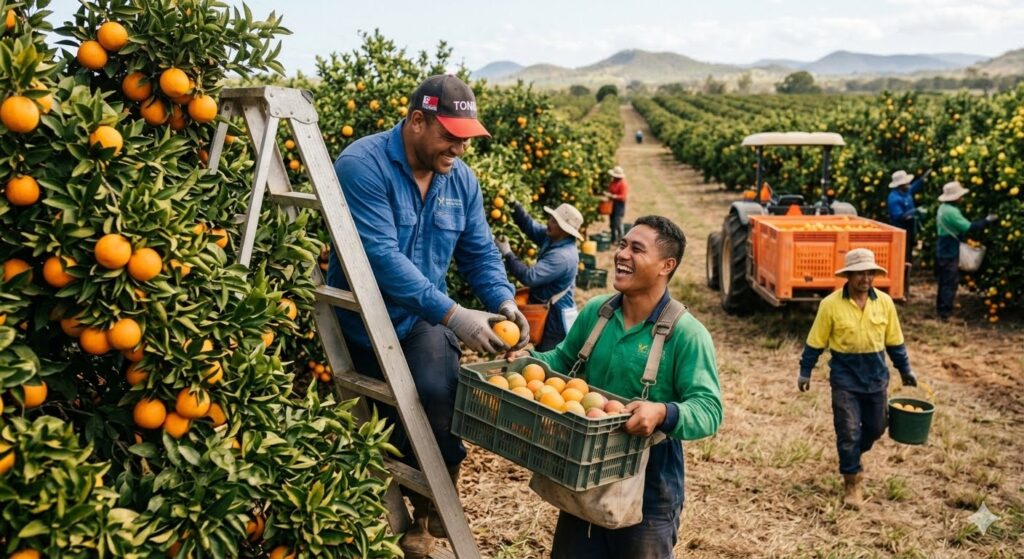
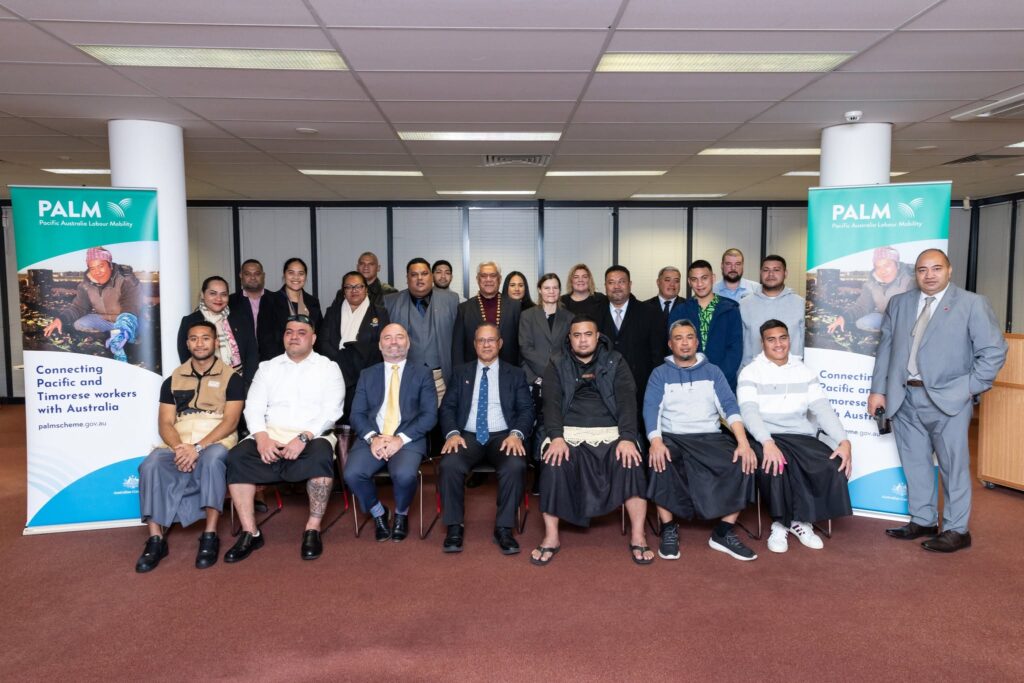
Thank you Sita. PALM is one of our big programs that we jointly work on between the Ministry of Internal Affairs and the Ministry of Trade and our High Commissions and Canberra. There are around 3,700 Tongans in Australia at the moment through the PALM program. Two of the big benefits of the PALM program as far as on the Tongan side, are the remittances that get sent back and that is around TOP$120,000,000 each year and also the skills development. We see so many palm workers come back here with either high levels of skills or an entrepreneurial outlook and start a business and of course all the things that they can do back in Tonga. From our point of view in Australia, it is such a valued program. So many employers love the PALM Scheme. Tongans have a great reputation in workers. I know numerous countries and numerous companies asked to have Tongans continue working with them. Tonga has a great reputation in the program.
Just to make the point on the question you raised that all Tongans and all Pacific Islanders in the PALM program are under the same working conditions, same wages as Australians in the same jobs. There is no distinction. If there are ever any grievances in the workplace, just as for an Australian, there are multiple processes to help resolve that. There are always going to be some issues in these programs, that is a given. The question is, are there systems in place to deal with it?
We have welfare officers that are employed. We have a 24/7 hotline. There is a community liaison officers that Tonga employs. There are grievance processes such as the Fair Work Ombudsman and we do an enormous amount of pre departure and arrival briefings as well, to deal with some of these issues around, as you say, mental health and family separations, to know what people are signing up for and making sure they are making the right judgements and they are supporting themselves with what they need.
I think it is fair to say that the PALM program is sort of embedded in Tonga’s economic development and Australia’s economic activity in our agricultural areas and some of our key sectors like aged care and we want to see it a success. We will do anything that the Ministry of Internal Affairs or others ask of us to adapt the program to Tonga’s priorities or to Tonga’s systems. Likewise, the employers in Australia want to see it a success, so do the workers, so do their families. This is not just a set-and-forget program. Every year it is changing and we take on feedback from every country to make sure it keeps improving.
Director of 88.1FM People’s Radio / Tonga Chronicle – ‘Akosita Havili Lavulavu:
Thank you, Your Excellency.
I support the PALM Scheme and we see results here in Tonga already. We have people who have returned, have built homes, now have vehicles and who are able to run their own business, entrepreneurship. I think there is good and bad to everything. But it all depends on the participant – to sit down with their families, to understand what they will be facing, their challenges and look at the good side and the benefits of it. It is a very good program.
Australia High Commissioner to Tonga – His Excellency Mr. Breck Batley:
And there has to be a self-selection process. Not everyone might be suited to leaving their family, leaving their culture, going to a foreign land and working for, as you say, six months or you could be there longer. That takes a lot of courage and a lot of adaptation in the country and learning about all these new Australian cultural and business practices. But ultimately for so many, it is such a successful endeavor and it is life changing for them and their families and also, as I say, for our businesses.
Director of 88.1FM People’s Radio / Tonga Chronicle – ‘Akosita Havili Lavulavu:
Absolutely.
There is a genuine tension for Tonga. PALM sends home remittances, as you mentioned, but it also depletes the domestic workforce. Trades people – the nurses, teachers, has Australia engaged in serious conversations or Talanoa with the Tongan Government about the brain drain cost or is this still largely a one-way conversation?
Australia High Commissioner to Tonga – His Excellency Mr. Breck Batley:
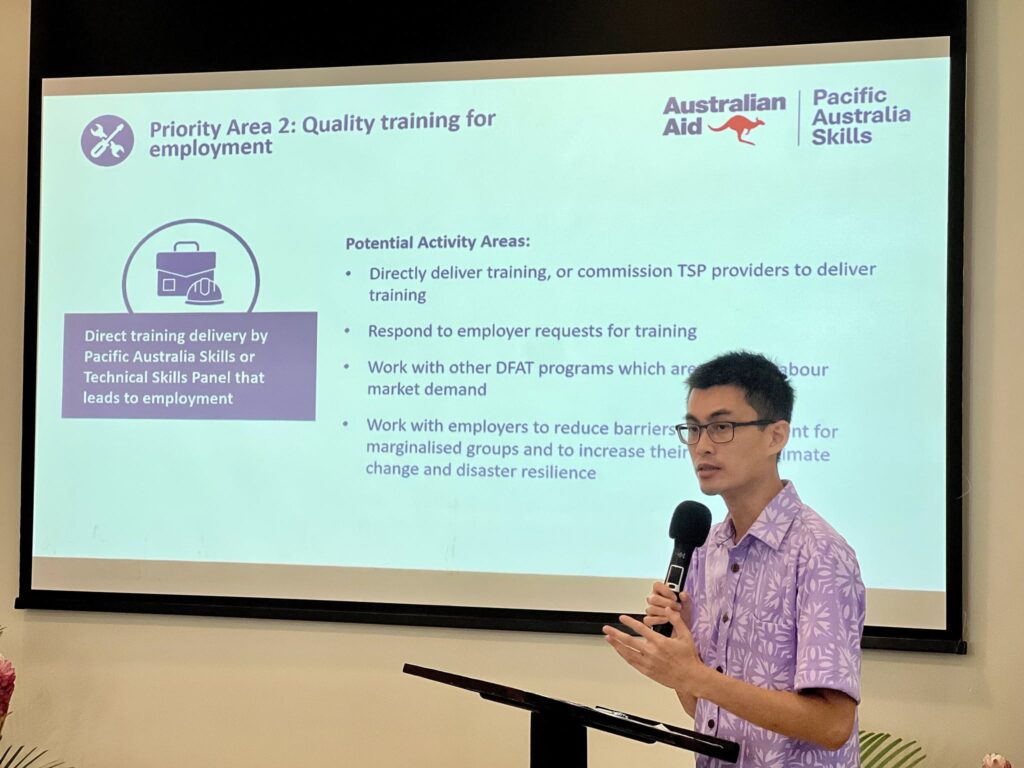
Well, as I said, PALM is a mutual joint program. It is not Australia saying here is a PALM program, sign on or sign off. It is up to the Tongan Government and the ministries involved to determine how they want to use PALM. They can determine which people go to Australia, which islands, which age groups, which skill sets to make sure that any impact is as limited as possible or that skills are being bult up in the areas geographic or the sectoral areas that you desire. I think it is a really important point that we do what the government asks us and we are always tweaking for the outcomes that you want. I know that there is talk of skill shortages in some areas. There are a lot of workers here in Tonga. The key is how do you make sure they have the right skills for the jobs here in Tonga? That is the conversation we are absolutely having with the government. It is not a labor shortage per se. It is making sure the skills are matching the jobs. Whether that is waiters in hotels or plumbers and electricians. Australia has a new larger regional skills program. The Pacific Skills Program that is just rolling out this year. We have trained around near a thousand people in the last program. This one will be bigger and be targeted to the skills that the Tongan Government wants but also what the businesses wants. We engage with the Chamber of Commerce. We engage with Ministry of Trade. It is really important, from our point of view, that these skills programs, and it was World Skills Day only last week, it is really important that we keep coming up with programs and as you mentioned the nursing school, so Australia is investing $5million in the new nursing school and construction has just started, to make sure that there is a pathway for young people to pursue careers where there are jobs. And some of those jobs will be overseas and some of them will be here. But what we want to see Tongan’s get higher salaries and if it is overseas, and more remittances that come back, and if it is locally there are constant consistent employment channel for people and for organizations like the hospital. We know how hard it is to retain staff in some areas. There has to be a body of staff that are trained to come through the system.
Director of 88.1FM People’s Radio / Tonga Chronicle – ‘Akosita Havili Lavulavu:
For the PALM workers who are currently in Australia on a valid temporary visa thinking about registering for the PEV ballot, what is your message to them?
Australia High Commissioner to Tonga – His Excellency Mr. Breck Batley:
Oh, I would have to check this. I am not sure that they can apply. I think you have to be based in Tonga. I will check that.
The PEV is open to everyone. If there are certain circumstances for example, if you have just been awarded an Australia Awards Scholarship and you are in Australia studying, you have to finish your scholarship before you can apply for it. There are a few things there to make sure that we are not hurting one program to serve another program. Likewise, for those that have signed on to employees in Australia. PEV is open to everyone and if it means waiting six months until you finish one program then that is what you have to do.
Recent Political Affairs
Director of 88.1FM People’s Radio / Tonga Chronicle – ‘Akosita Havili Lavulavu:
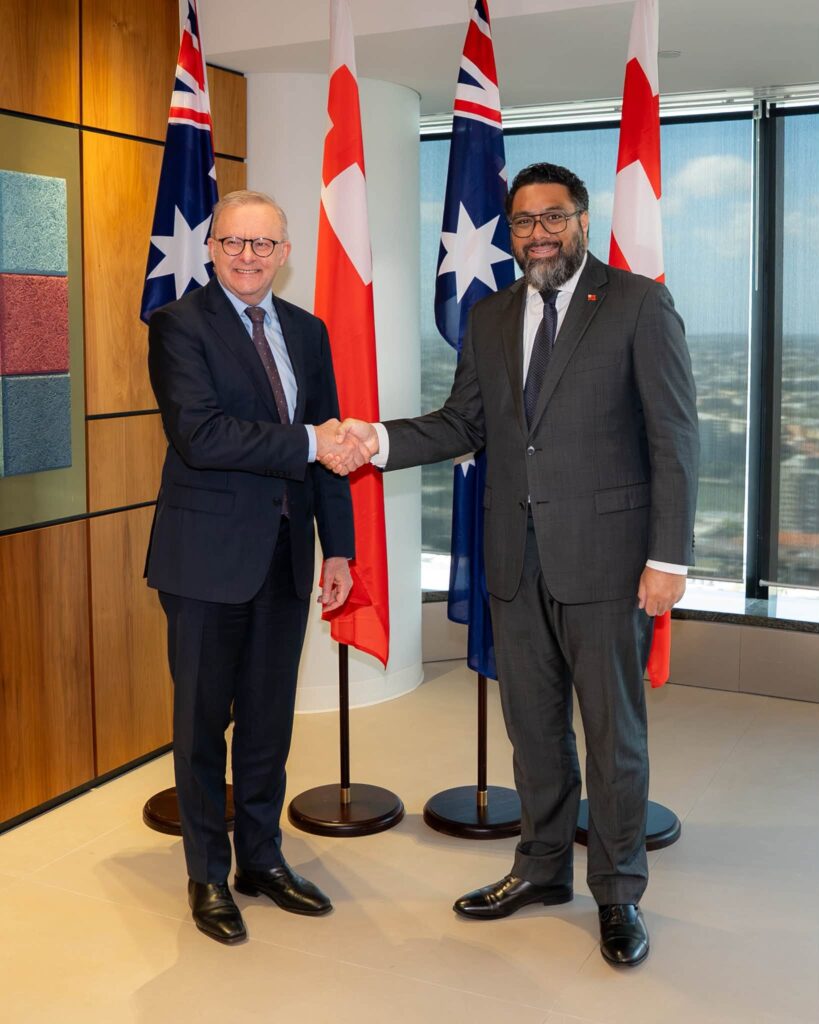
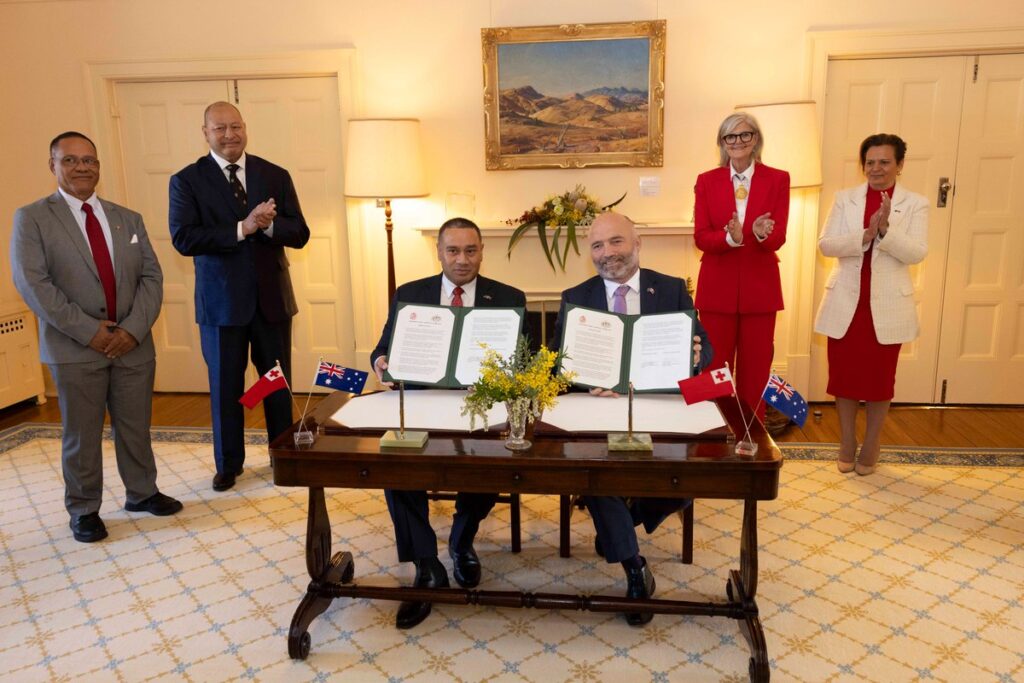
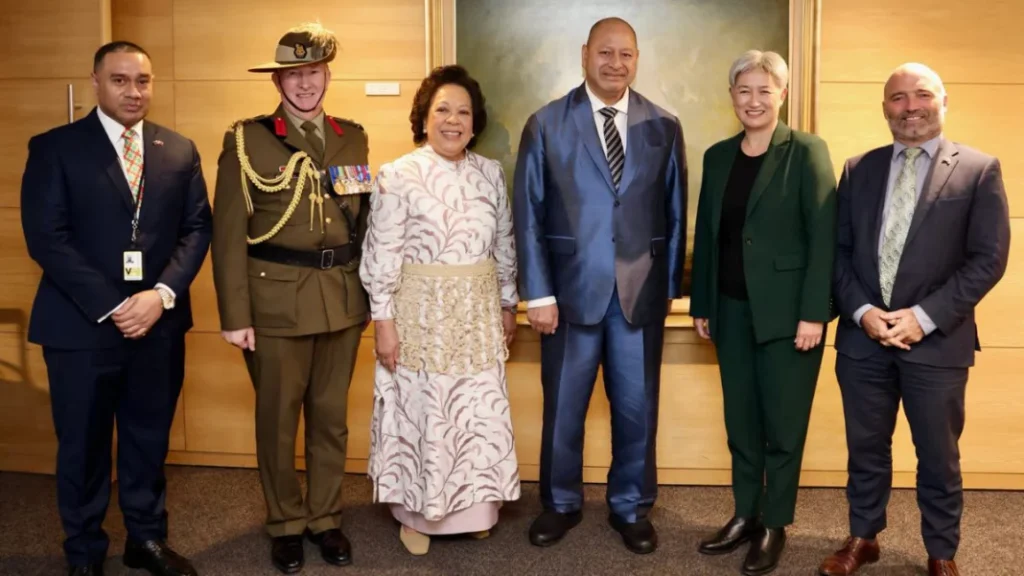
In the interest of time, I would like to move to our next category – the recent political affairs. The Hon. Prime Minister, Lord Fakafanua, met Prime Minister Abeneze in Brisbane on the 8th of July. His first bilateral since taking office in December. He said he expects the ‘Kaume’a Ofi Agreement’ could be signed by the end of the year. Calling it quite ambitious. From Australia’s side is that timeline realistic? And what are the sticking points?
Australia High Commissioner to Tonga – His Excellency Mr. Breck Batley:
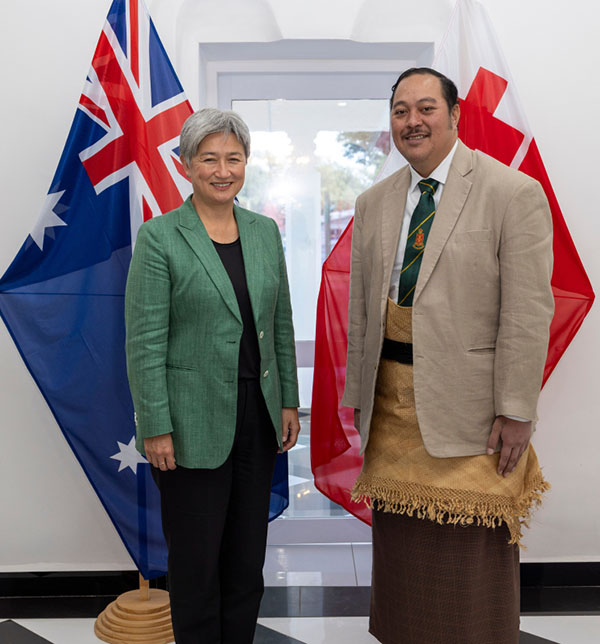
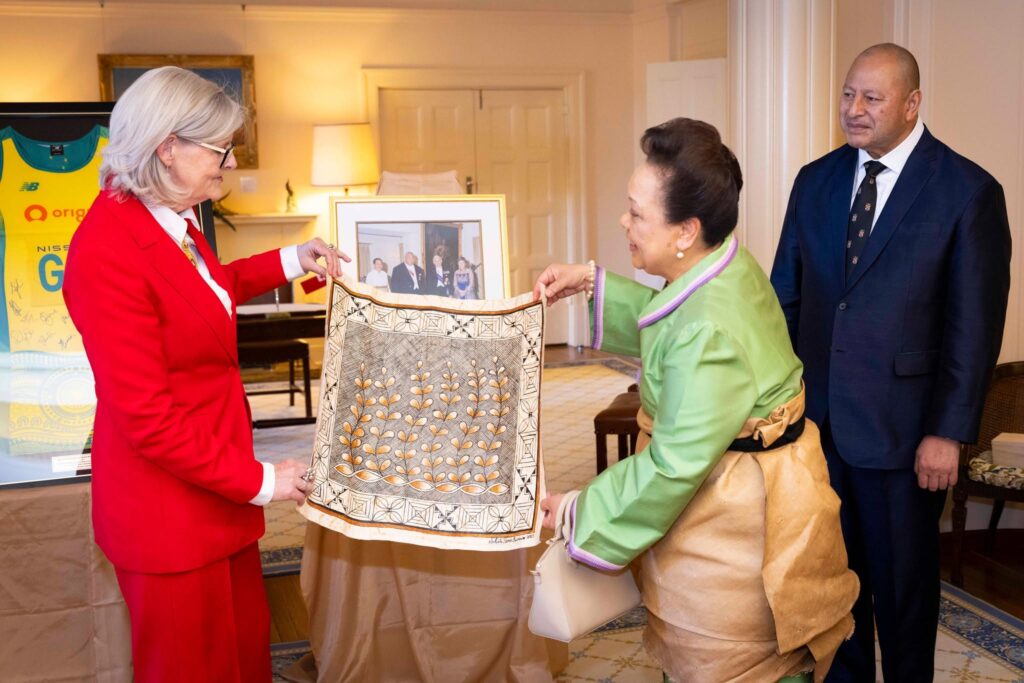
This is the new elevated partnership between Tonga and Australia and it is such an honor to be part of these conversations. It is a natural progression in what is an extremely close partnership. This was initiated when the Crown Prince went to Australia last year and it was signed in front of his Majesty in September last year with our Governor General and since then, we have had some discussions between our Government on what we both want out of the partnership. It is very simple, it is about where does Tonga and Australia want their partnership to be over the next 10, 20 years and you would have seen that there have been other partnerships in the region than Australia, for example, Vanuatu and Fiji have done. This is about listening to each other and responding to, for example the Tongan government’s request. Whether that is on health or education, whether that is on Defense. These conversations are about cementing our partnership into the future and in what is a far more different set of circumstances.
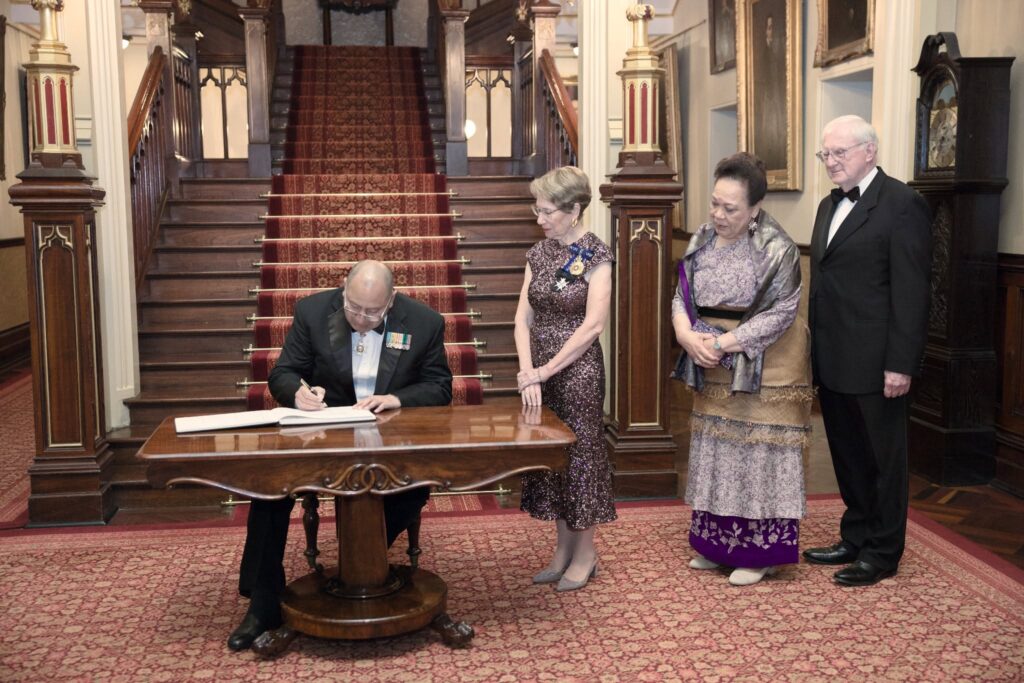
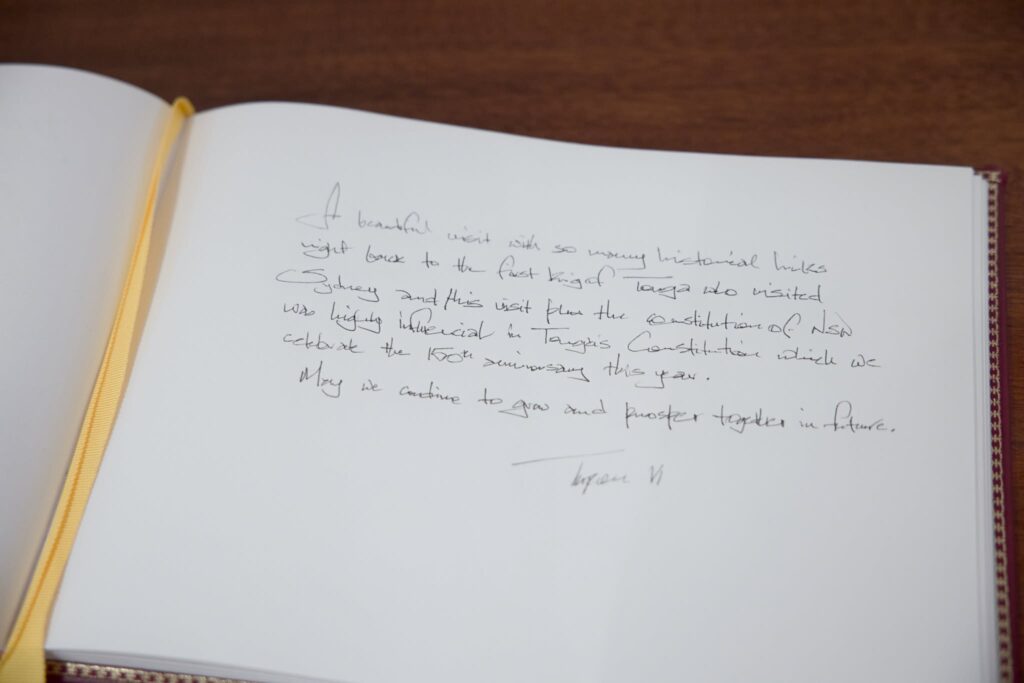
On timelines we will just let that play out. That is for those involved to make sure we get it right. We only do this once. There is no set timeline and does not need to be. What matters is that we agree on something that both countries really want. And if that takes two months or if it takes six months so be it. What is important is that we set ourselves up for continued success. It is just amazing how close, in the 200th anniversary of Christianity, the 150th anniversary of the Constitution last year which of course highlighted that you talked history, highlighted the king’s visit to Australia in 1853 to Syney and the links to the New South Wales Constitution. It is such a depth in our partnership. You look at our Defense Partnership that is going on 45 plus years and just how close how our two militaries operate. There is a project actually at the moment that is really exciting at the airport where our Australian Defense Force and His Majesty’s Armed Forces are working on the rebuilding of the air hanger that blew down in Cyclone Gita so many years ago. There are just constant projects across the breadth of our partnership that are substantial and we want to make sure that they are where we are, in the right areas in supporting Tonga and Tonga supporting Australia over the next twenty, 30 years.
Director of 88.1FM People’s Radio / Tonga Chronicle – ‘Akosita Havili Lavulavu:
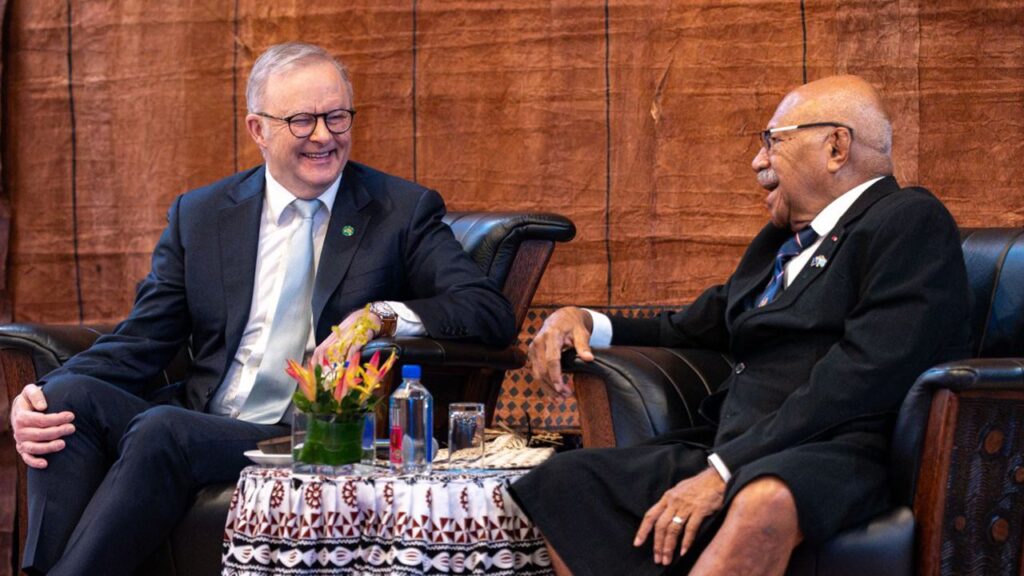
Now the statement of intent signed during His Majesty’s Canberra visit in September 2025, lists Defense and Maritime security as pillars. Australia has just signed the Ocean of Peace alliance with Fiji and flagged it as open to other Pacific Defense Forces. Is Tonga being invited in and what does Tonga’s sovereignty look like inside that framework.
Australia High Commissioner to Tonga – His Excellency Mr. Breck Batley:
Well, this is an initiative led by the Prime Minister of Fiji Rambuka, the Ocean of Peace Initiative, something that all Pacific Island Forum leaders signed onto last year at the leaders meeting. The idea is that all countries singularly and collectively will work towards keeping the Pacific Ocean peaceful. As one of the initiatives under that, there has been a Notion of Peace Alliance signed between Australia and Fiji and that cements the Ocean of Peace concepts as a vision that all that have signed onto and brings it into a practical effect where Australia and Fiji will work together in the Defense circle even closer that they were already doing together. Yes, there is an opportunity in that alliance for others to join and that can only happen once that alliance comes into being. It has to be ratified for both our political systems and parliamentary systems and that conversation can take place.
Director of 88.1FM People’s Radio / Tonga Chronicle – ‘Akosita Havili Lavulavu:
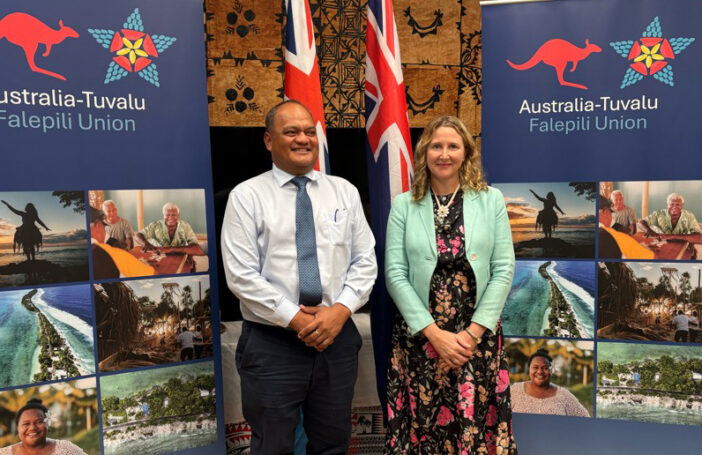
‘Kaume’a Ofi Agreement’ follows the ‘Falepili’ union with Tuvalu and pacts with Fiji, PNG, Vanuatu and Nauru. Critics calls this a ‘hub-and-spoke’ approach that weakens the Pacific regionalism in favor of bilateral deals with Canberra at the center. How do you answer to this critic?
Australia High Commissioner to Tonga – His Excellency Mr. Breck Batley:
Each one of those agreement that you mentioned and as I have said earlier, is in response to a request from Pacific Island Countries. We listen. Our Foreign Minister, Ms. Wong, when she travels, she wants to hear what are the priorities of each country and how can Australia support those amongst other traditional partnerships as well. Whether that is in climate change and adaptation measures in Tuvalu and whether that is in Defense arrangements with PNG, or in Health here in Tonga. These are the sorts of conversation that are going on and it is very simple – we want to respond in the best possible way as Pacific Islands biggest foreign partner inside the forum in very tailored ways. The Falepili Union you mentioned with Tuvalu was very specific. One of the things that has been asked off Australia was Climate Pathways for people to move from Tuvalu to Australia. That program is well underway where a certain number of Tuvaluans can move to Australia each year. But that does not mean they cannot stay in Tuvalu or come back to Tuvalu. That is what was part of the agreement that we delivered on the broader context of that agreement.
Climate Change
Director of 88.1FM People’s Radio / Tonga Chronicle – ‘Akosita Havili Lavulavu:
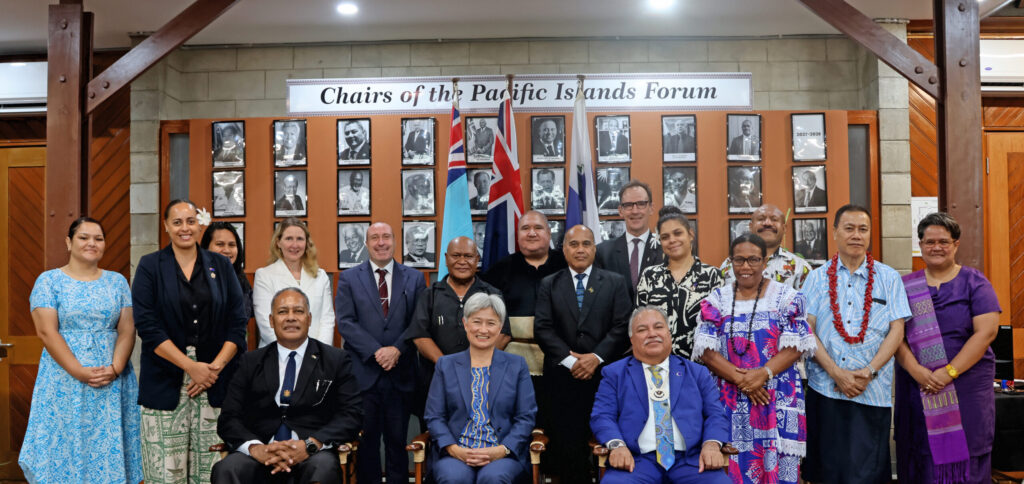
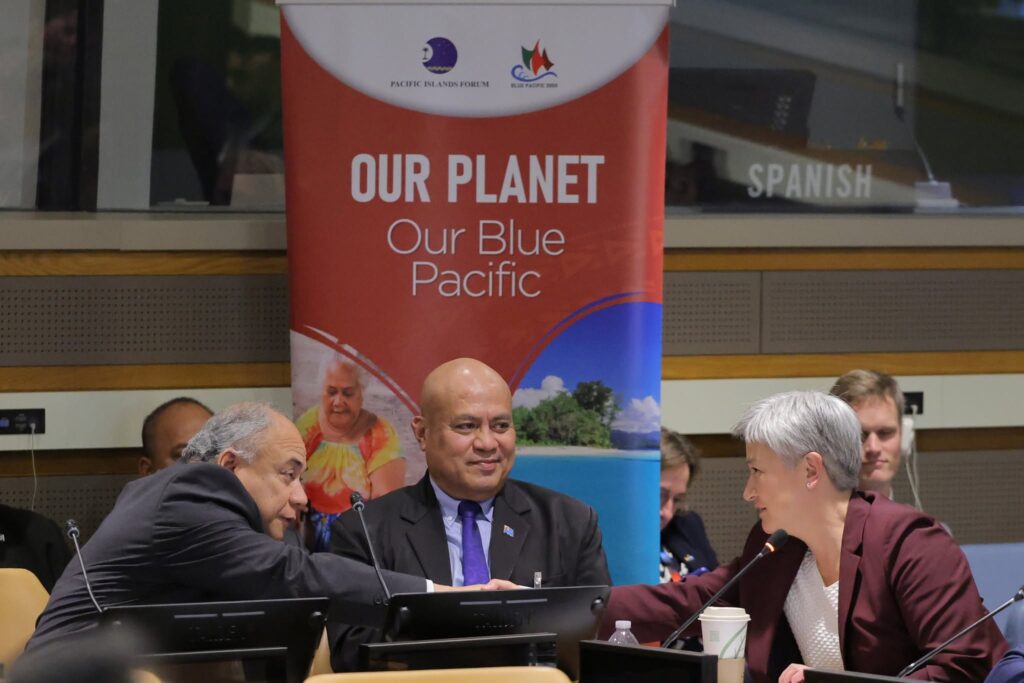
On Climate, Australia dropped its COP31 hosting bid but kept the negotiations presidency and Pre- COP will run in Fiji and Tuvalu in October, with a Palau climate event at the PIFs meeting in August. What can Tongan listeners strictly expect Australia to deliver at the COP31 on loss and damage on the Pacific Resilience Facility?
Australia High Commissioner to Tonga – His Excellency Mr. Breck Batley:
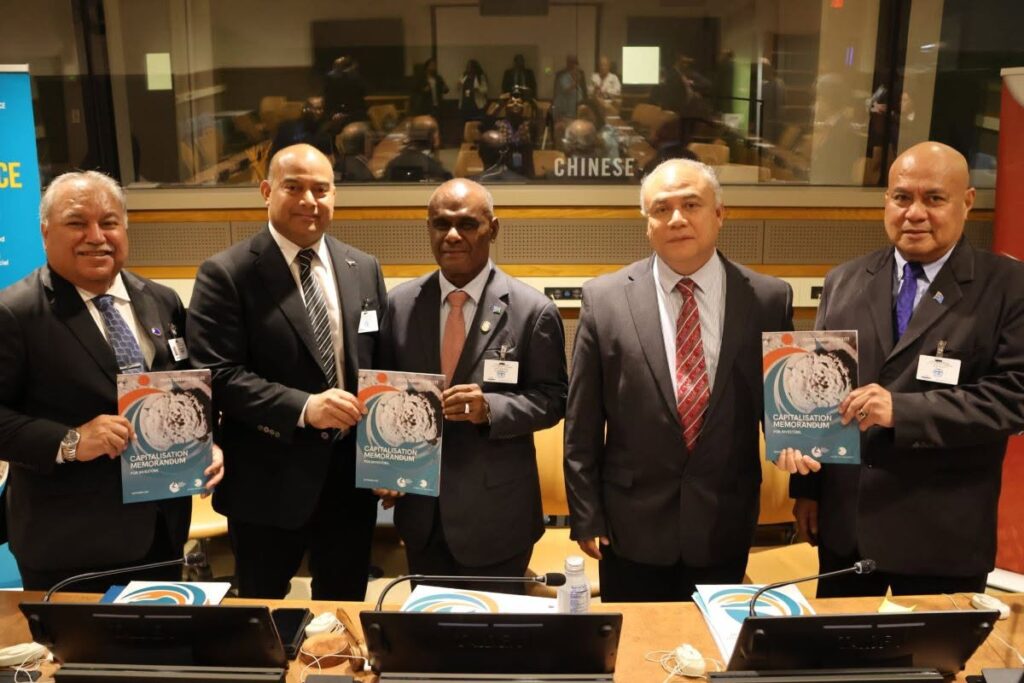
As you mentioned, Australia tried to secure COP31 in the Pacific as a hosted event in our region as a way to showcase to the world just the first hand effects of climate change. We did not get the main event. We had to negotiate with Turkey and they will hold the main event later this year. But what we did negotiate was that our Minister of Climate Change and Energy, Chris Bowen is the chief negotiator in Tokyo as part of those talks. But secondly that there will be a pre-COP meeting in the Pacific. That is a pretty good outcome where there will be dozens of world leaders that are invited to Fiji and Tuvalu in around the 5th, 6th, 7th of October. They will get to see and discuss the issue that matter to the Pacific on climate change – mitigation and adaptation, loss and damage, pacific resilience facilities – all of these issues will be discussed. Quite incredible to have such important leaders there and they will do a day or two trip overnight to Tuvalu and will see first-hand some of the sea level rise adaptation programs that are in place there and just the impact that has on the community. From our point of view, we want to see the Pacific Resilience Facility which already has some capital in it. Australia has spent $100 million and there is a list of about 10 countries that have given pledging money to the Pacific Resilience Facility, which of course will be hosted or based here in Tonga. This is a regional bank to do programs on climate change that Tonga won the rights to host here in Tonga in Nuku’alofa. So that office will, no doubt, open in the coming year or two and it is in Tonga and Australia’s interest to see as much capital go into this Pacific Resilience Facility. It can do as many projects as possible in Tonga and in the region and that will be one of the focus points in Fiji but also in Turkey later this year is how do you get some of the big economies of the world to think about supporting a Facility like the Pacific Resilience Facility, because we probably need another billion dollars in capital.
Director of 88.1FM People’s Radio / Tonga Chronicle – ‘Akosita Havili Lavulavu:
Where does Tonga sits in the que for Pacific Resilience Facility funding and other commitments specifically for Tonga this year?
Australia High Commissioner to Tonga – His Excellency Mr. Breck Batley:
The Pacific Resilience Facility (PRF)has only just come into effect with enough of the countries preparing their treaty arrangements for the PRF to come into effect. That was just in the last month. As I said, the Facility needs more capital, it has a goal of $500 million but it really needs up around a billion to be able to start delivering projects into the region. They are all working on the processes on how countries apply for those grant – access to that money. I do not know what projects Tonga is going to get or what would Tonga put through as their projects. That is up to the MEIDECC and the Prime Minister and others to determine what projects to do under the Tongan Climate Change Fund, what top projects might you do under the Pacific Resilience Facility, what ones you might do under the Green Climate Fund. That is sort of the playing nature of what our countries have to do when we are thinking about some of our adaptation measures. Each of the countries in the Pacific will be doing, when the time comes that the PRF is operational in terms of grants and projects, what is the most impactful projects they can put forward for consideration and of course it will be competitive.
200th Anniversary of Christianity
Director of 88.1FM People’s Radio / Tonga Chronicle – ‘Akosita Havili Lavulavu:
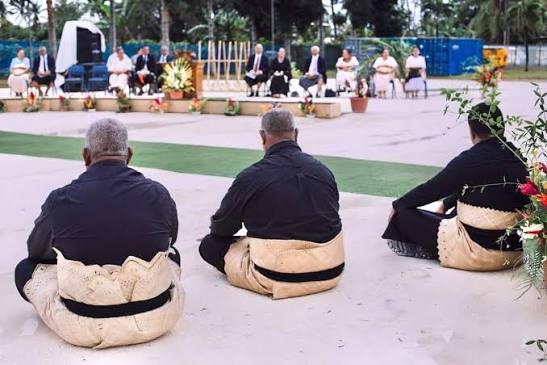
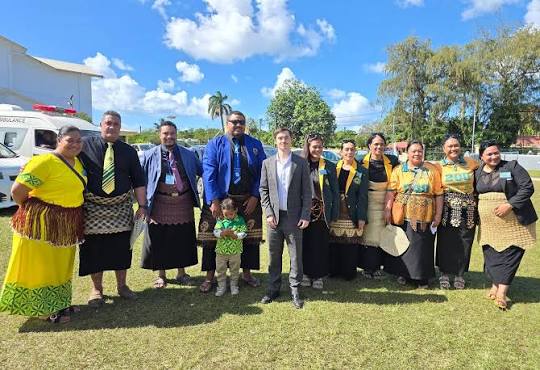
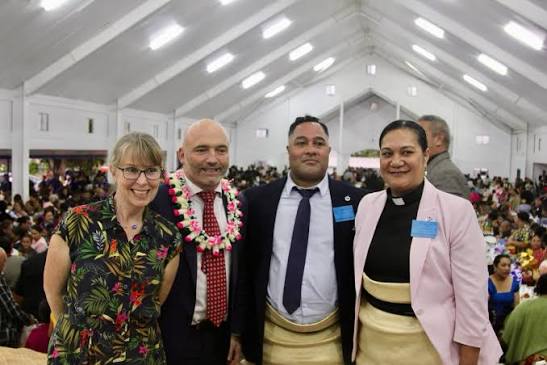
With our last topic, the 200th anniversary of Christianity. Between the 23rd of June and the 2nd of July, Tonga celebrated something no other Pacific Nation has ever celebrated and that was 200 unbroken years of Christianity as the shaping force of the Kingdom. On the 26th of June, his Majesty preached to 10,000 at the centenary chapel, 7 commemorative plaques were unveiled at historic mission sights including Ha’atafu where Rev. John Thomas and Rev. John Hutchinson landed on the 17th of June in 1826. What role did the Australia High Commission played in these commemorations?
Australia High Commissioner to Tonga – His Excellency Mr. Breck Batley:
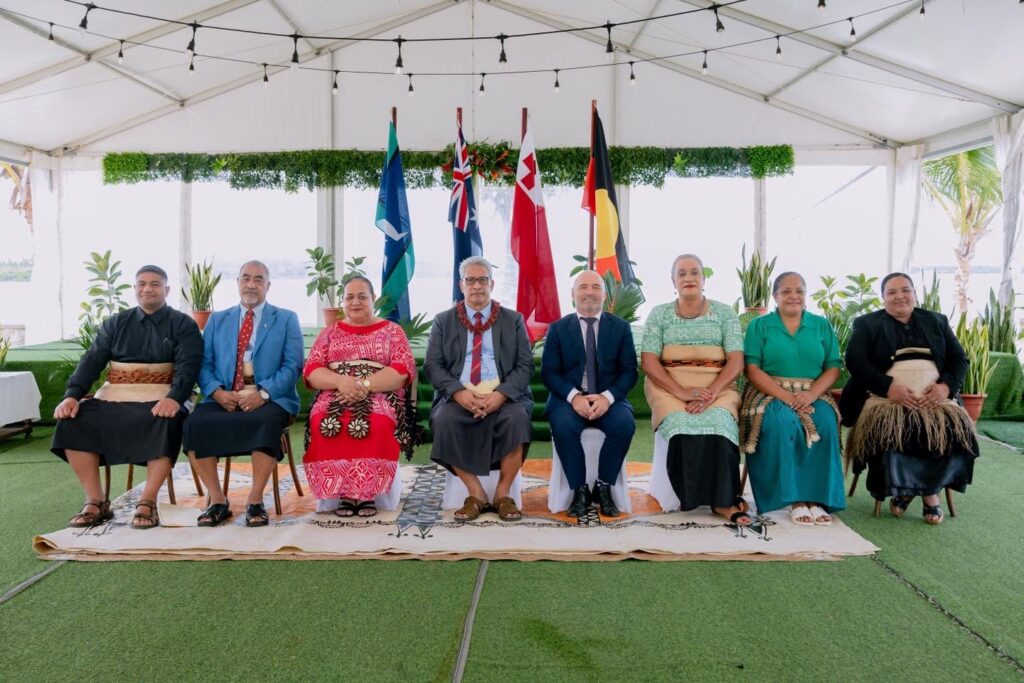
Let me first congratulate all the organizers for pulling off such an incredible series of events. It was a 7/8 days of activities from royal lunches to beautiful coral nights to memorial events and it was such an honour to be part of it and every diplomate when you go overseas you are on a learning curve and its moments like these where you really realize special things in your relationship and for me, it is learning about missionaries that had come here, some Australians, some via-Australia, the important connections that they have built. For us, we supported the new memorial at the Centenary Church and for us, it was a great opportunity on a special milestone to reflect on all those faith connections and that personal sacrifice by so many missionaries not just in Tongatapu but in all of Tonga, in bringing faith and having those discussions in those years including the importance of education and that is where a lot of schools opened up. It was very transformative in so many different ways, King Tupou the First converted and the rest is history. For us the music, the coral band that came, I know there was about 80 or 100 of them that came and I was there the night they were performing and that was just so beautiful to hear them and there was the New Zealand and the American choirs as well. It just solidifies countries like Aust, NZ and the US how faith matters so much in our partnerships and how it brings up the best in our diaspora. I know they have been practicing for 2 months and it was such a competition in the churches which was also wonderful to see in those milestone events. The royal lunches being part of those events with His Majesty and with the Crown Prince and the Crown Princess, it was such a special moment in my career and in my life to be part of this historic events. I remember sitting beside the Crown Princess and eating some of the salty fish – ‘ika masima’ which I loved. Every lunch brings on a new experience in Tonga. The ‘faikakai manioke’ is also my favourite. I caught a tuna yesterday and Tongan tuna is beautiful. Sashimi here is beautiful too. I’m off topic here.
I met with the Presidence of the Uniting Church of Australia, I met with the moderators of the church from Victoria and Sydney. These were important meetings with Rev. Suli, Salesi and Mata on how our communities still grows together across our church groups and not just the FWC but across all church groups and how do we tap into the resources, the skills, and the energy of the diaspora in Australia? Each time I have been back I listen to some of the community wishes around support through charity works or through volunteer programs to come back and so I am really pleased to say that it is the 77th anniversary of Australia’s volunteer program at the moment. I think we have been operating in Tonga for about 61 years. B we are looking at the next phase of the volunteers work as to how do we make it even easier for Tongan Australians to be part of that program and come back here for about 6 months, a year or two years or 3 years and use their skills in whatever organizations they want to. Whether it is in netball organizations, the hospital, at a school or a library or the government. So how do we tap into both sides of the oceans if you like. The ‘Kaume’a Ofi Agreement’ – these are the sort of things we are talking about – how do we maximize the strength in our partnership? There are so many elements we can tap into there – from our faith connections through to the diaspora connections and the skills and resources there.
Director of 88.1FM People’s Radio / Tonga Chronicle – ‘Akosita Havili Lavulavu:
Thank you Your Exellency. The 1826 Weslyan Mission came through the New South Wales connections and Tonga’s Constitution itself was inspired by the New South Wales colonial constitution. Two centuries on – are those bonds still felt by ordinary Australians or have they faded into something more ceremonial?
Australia High Commissioner to Tonga – His Excellency Mr. Breck Batley:
I would not say that it has faded in any way. I think there is a role for the Tonga High Commissioner in Australia and myself as Australia High Commissioner here in Tonga, to bring these stories to life. Not everyone knows about them. It is an incredible history. The Tonga – Australia Partnership is like no other in the region when we think about these connections. In the 1820s with the visit to Australia and in the 1853 by His Majesty. The more they (Australians) learn about these things they understand ‘Kaume’a Ofi’. They understand that these people connections are not just Daniel Tupou and Jason Taumalolo and rugby league games. If you ask many Australians what do you know about Tonga? They will say Jason Taumalolo or they will say the Tala’s Netball Team or Mi-Kaisha, she’s an Australian indigenous Tongan signer that has become very popular in Australia. They probably do not know about the King’s visit in 1853 or they do not know about some of the incredible missionary work that both our countries work on including Tonga missionaries going to Arnhem Land to Northern Territory in the 1960s and 70s in Australia. It is all about the two-way relationship between Tonga and Australia and how we work together and this reciprocity between our two countries. But I know that events like that, that is why the 200th anniversary of Christianity was so important and elevated this whole chapter in our partnership back in Australia to people that had never heard about it. Likewise, the Constitution’s 150th celebration last year. That opened up people’s eyes to that beautiful history and I was with His Majesty and Her Majesty in September at the Governor’s house in New South Wales with our Governors General talking about that history in this beautiful building in Sydney. It is very much alive, when you talk to royal family members, the Tonga Prime Minister and Cabinet and Parliament, everyone’s aware of this history and I know our Ministers are too.
Partnerships, Policies and Community Programs
Director of 88.1FM People’s Radio / Tonga Chronicle – ‘Akosita Havili Lavulavu:
What single most important message would you like to leave with our listeners today?
Australia High Commissioner to Tonga – His Excellency Mr. Breck Batley:
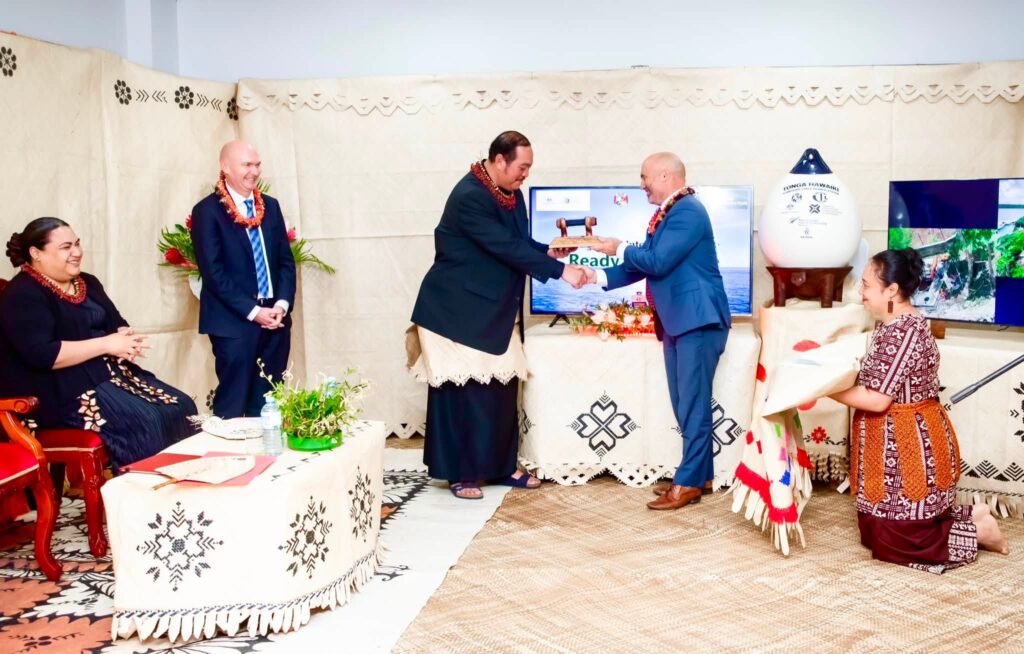
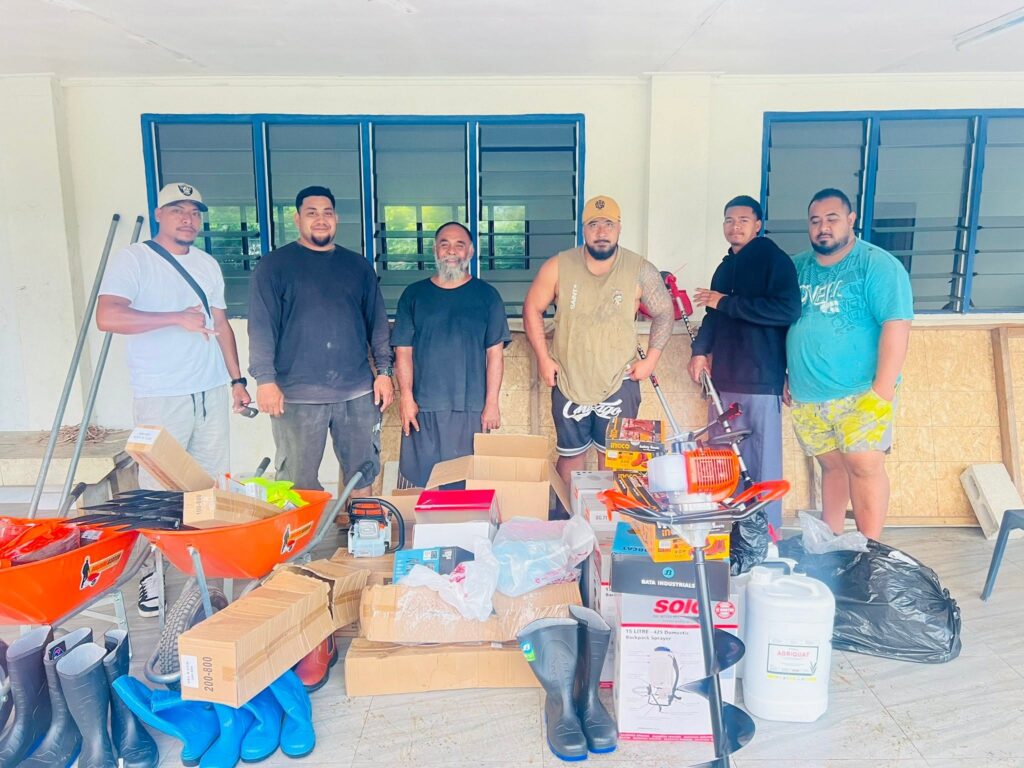
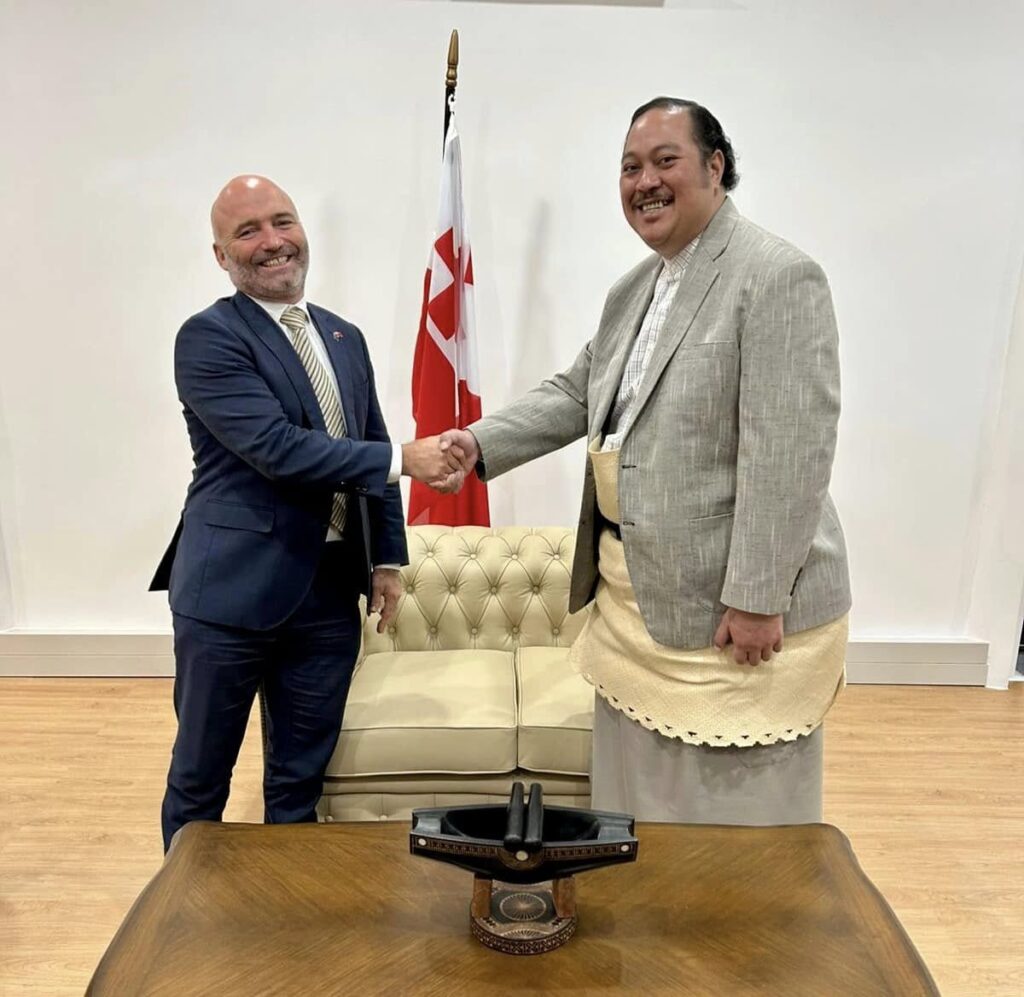
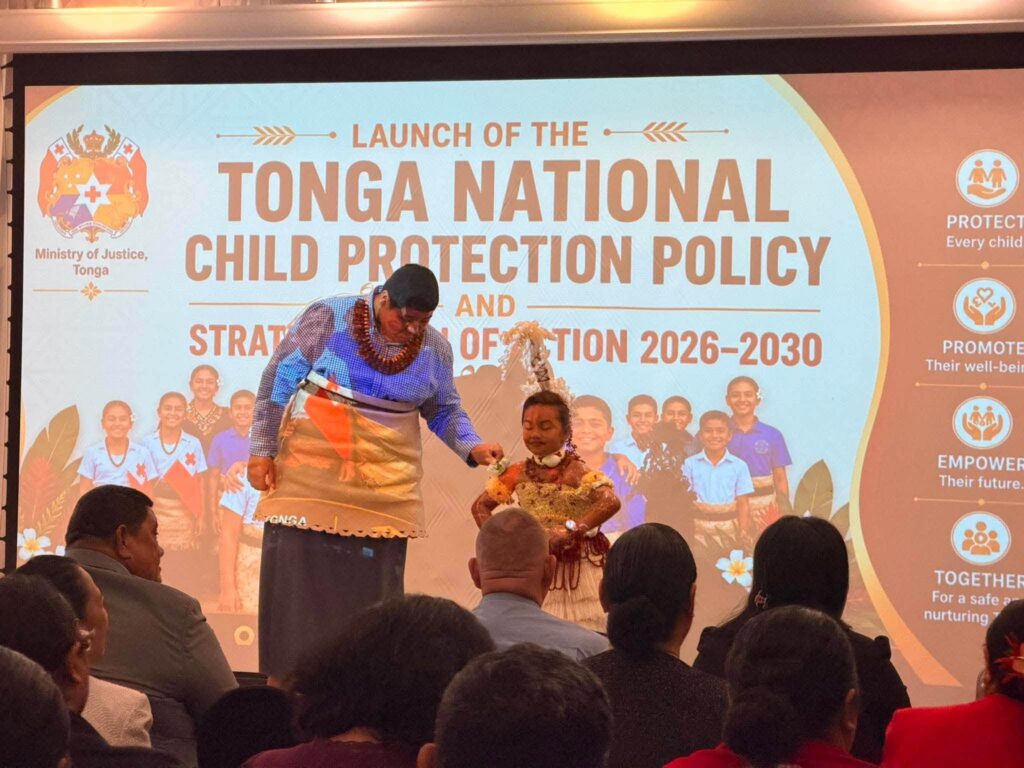
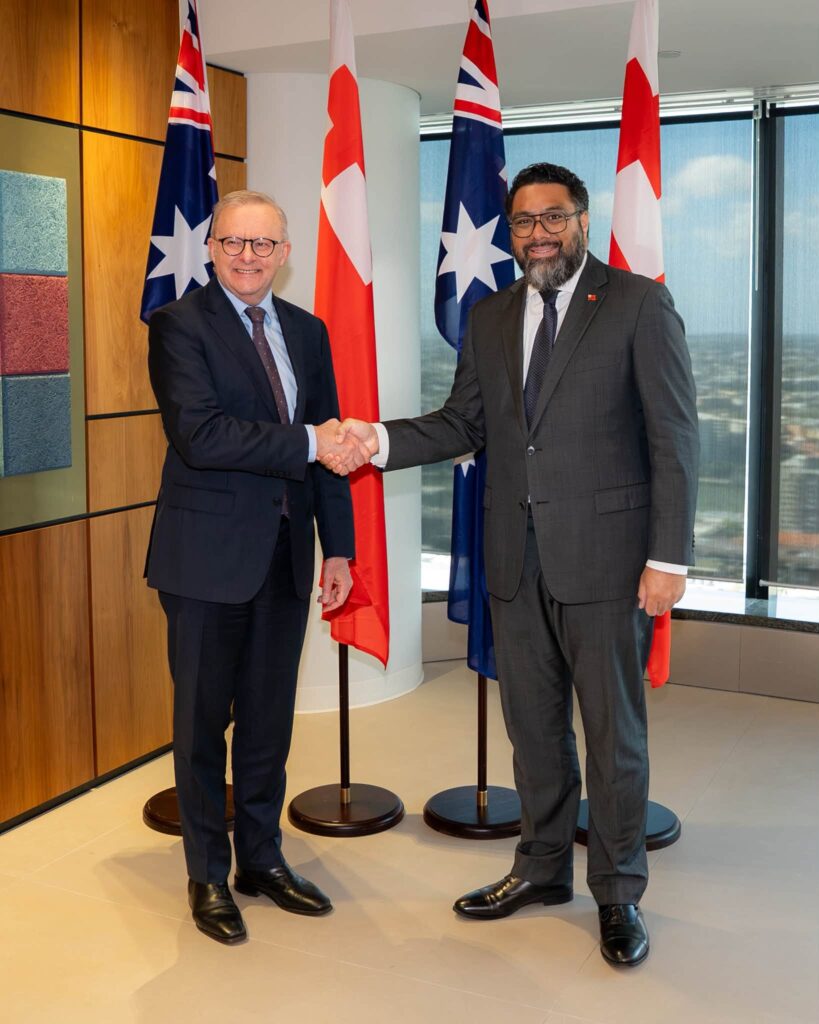
I would not want to be limited to one because there is just so much going on but the obvious one is that our partnership is so close. It is based on trust and it is based on respect and it is based on opportunity and being forward looking and I am so pleased that we are having these partnership talks and we will have an even closer partnership very soon. There are so many good things going on in our partnership. Let me just give a shout out to the Government as well. Over the last couple of months there has been some really big policies and conventions signed. The Youth Policy was done. I raise these because these are things that are close to the Australian Government’s hearts. but also these are some issues that we support together with Tonga. The Youth Policy, the Women’s Empowerment and Gender Equality Policy, the Child Protection Policy, the Tongan Returnees and Reintegration Policy. These were all done in the last 2 or 3 months. These are the things that Australia and Tonga and ministries have been working on. Also the Hope Spots. This is something that the Prime Minster signed onto in Australia. It is keeping the international areas of the sea and ocean protected and enabling marine scientific research. Australia has got 11 of these Hope Spots. Tonga has just signed on to keeping the Tonga Trench and the Whale Nursery as protected areas. The High Seas Treaty this is about protecting the international waters, not our exclusive economic zones but the High Seas. Keeping them protected from marine biodiversity. The Comprehensive Test Ban Treaty. This is against the nuclear testing globally but specifically in our region too. The Treaty against the Prohibition of Nuclear Weapons. The list goes on. These are all really important issues. Some of which gets some attention in the media and some less so, which is understandable but I just wanted to really thank the Tonga Government and the Tonga Ministries and all those involved in progressing these. And the reason this is so important is because they are all part of our partnership. I know you only ask for 1 message but all of these adds up to the power and the ‘mafana’ in our partnership that just continues to grow and grow. The King’s visit and Queen’s visit last year was just replicated again in Samoa with our Governor General. They had dinner together in Samoa when they were both there for the independent celebrations a month or two ago. It was wonderful to see almost a year later, them getting together and reigniting that friendship and partnership. It was so wonderful to see our Prime Minister Albanese and Tonga Prime Minister Lord Fakafanua together in Brisbane and the Prime Minister went on to go to our Defense Base there and meet Brigadier McClelland in Townsville as well as at the Jason Taumalolo. There are all these layers in the partnership that come out when our leaders meet. I know that the Crown Princess will be on the Commonwealth Games in the next day or so and she is going to meet with our Australian Governor General there in Glasgow. All of these personal connections are really important. All of these events that we have had in the last few years in Tonga and in Australia, all of our musicians and sports stars that are coming to life, all of our church groups that are forming even closer bonds, all of our PALM programs, our PEV programs, the work we are doing through skills development, through scholarships and I should say that we have just interviewed 50 Tongans for the about 25 o 30 spots that are for the Australian Awards Scholarships. That will be announced very soon for next year’s intake. All of our volunteer work and there is about 10 – 12 volunteers in Tonga at any one time, all of the infrastructure, all of these things come together in what is a really close trusted partnership. Ones that our policing, our military and our border security force play such an important role and those areas are getting bigger and closer as well.
So let me say Sita, it has been such a pleasure to sit here and talk to you about all of these aspects of our partnerships. Thank you for giving me the opportunity to just highlight some of the beautiful ones. Thank you.
Director of 88.1FM People’s Radio / Tonga Chronicle, ‘Akosita Havili Lavulavu:
Thank you, Your Excellency for your time. I know you have a very busy schedule. I thank you for the opportunity, the message, your knowledge and all the hard work that you are doing here in Tonga. We are very appreciative of it. I am sure that our listeners are very happy that you were able to elaborate on these topics that I was able to question you on. On behalf of the radio station 88.1 FM The People’s Radio and the Tonga Chronicle Newspaper, we thank you for making time to come and answer our many questions. WE do hope that in the new future, we would be able to follow up on work and also information from Australia that is very much what we the people want to listen to. We thank you and your team for all the hard work and effort. Thank you.
Australia High Commissioner to Tonga – His Excellency Mr. Breck Batley:
Thank you Sita. Let me thank all your listeners as well. We have such wonderfull relationships with all the communities and its those relationships that is the best part of the job.
Thank you.