
Segment 1: “…THEY WANTED THEIR VOICES HEARD”
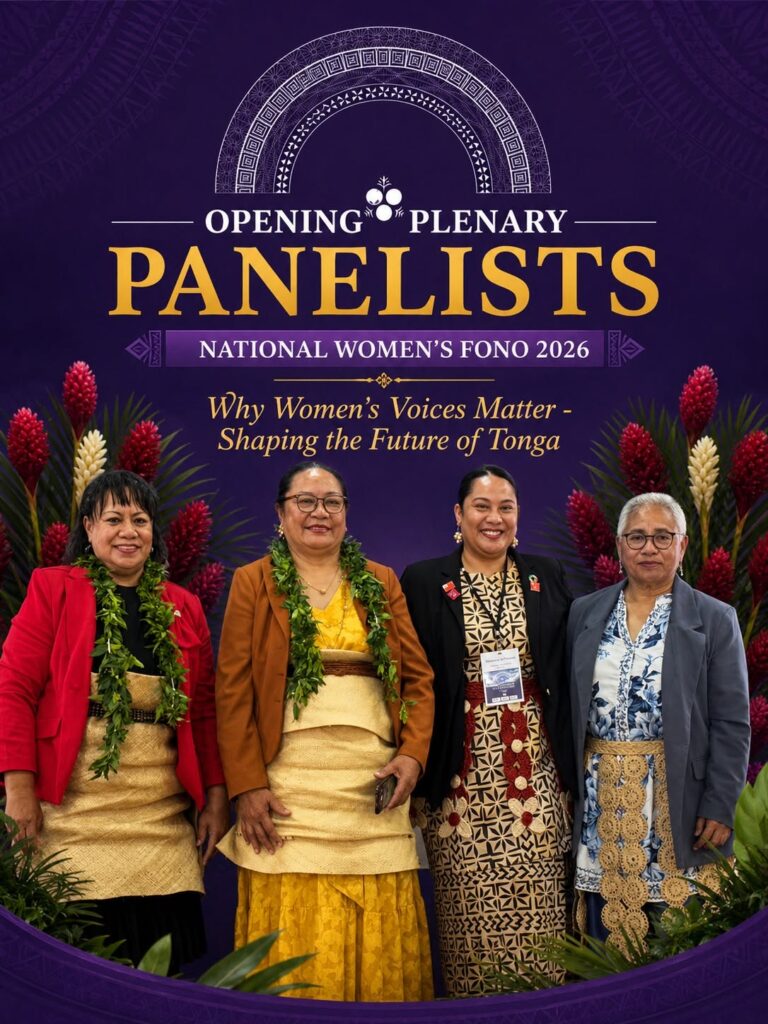
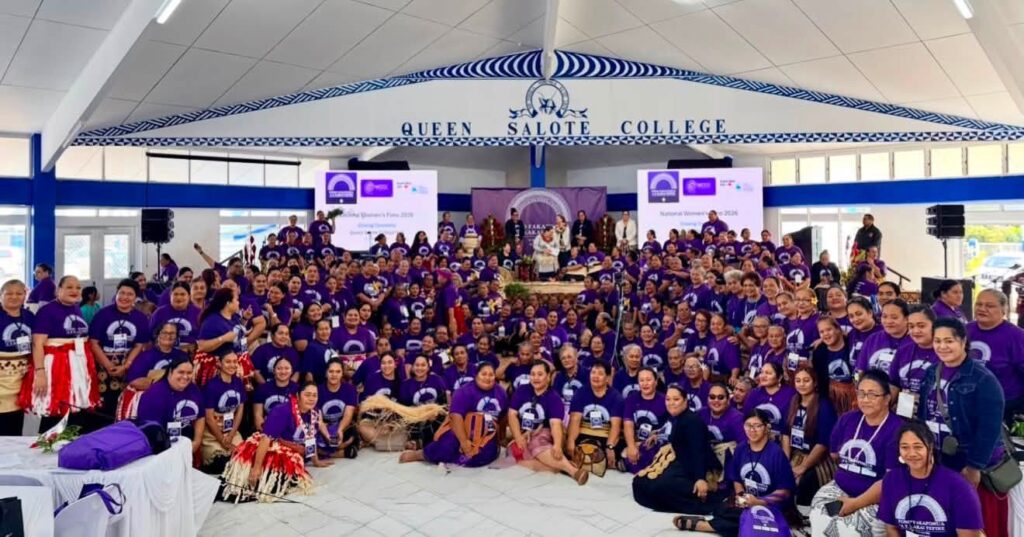
NUKU‘ALOFA —Tonga Chronicles and 88.1 FM People’s Radio recently sat down for an exclusive interview with Mrs. ‘Ofa Guttenbeil-Likiliki, Adaptive Lead and Strategic Support of the Women and Children Crisis Centre (WCCC), to discuss the historic National Women’s Fono held from July 8–10, 2026.
Widely celebrated as a monumental milestone for the Kingdom, the Fono has laid a vital foundation for future generations to advance gender equality and national development. This special coverage highlights the extensive coordination led by the WCCC to bring this national event to fruition, while exploring the strategic path forward for Tonga in the wake of this landmark gathering.
This is the first segment.
Tonga Chronicles / 88.1FM People’s Radio: What was the need that initially sparked the idea of hosting a National Fono for women?
Adaptive Lead and Strategic Support of WCCC – Mrs. ‘Ofa Guttenbeil Likiliki:
The idea for the National Women’s Fono wasn’t something WCCC came up with overnight. It evolved over many years through our work in communities across Tonga. Through our awareness programmes, community engagement and consultations with women, we kept hearing the same message. Women wanted to better understand how they could bring their voices to the forefront so that decision-makers would genuinely listen to them. They wanted their lived experiences, priorities and solutions to help shape national policies and decisions that affect their lives. At the same time, we couldn’t ignore the reality of women’s representation in national decision-making. Since women were granted the right to vote and stand for Parliament in 1951, only eight women have been elected to Tonga’s Legislative Assembly up to the 2025 General Election. While women contribute enormously to their families, communities and the country’s development, their voices have remained significantly underrepresented at the highest decision-making level. These two realities came together. On one hand, women were telling us they wanted their voices heard. On the other hand, the data showed that women’s representation in formal decision-making remained limited. We asked ourselves: How do we create a process that allows the collective voices of women to help shape Tonga’s future, regardless of whether they hold elected office? That question gave birth to the National Women’s Fono. Over a 18- month period, we engaged with more than 5,000 women across all island groups, listening to their experiences, priorities and aspirations. The Fono became the place where those voices came together, were validated by the women themselves, and ultimately resulted in the endorsement of the Tonga Women’s Platform for Action. The Platform is, in many ways, the collective voice of the women of Tonga. It provides a nationally agreed roadmap that decision-makers can draw upon when developing policies, legislation and programmes that affect women, families and communities.
What were the coordinating ground work that was carried out into bringing the women together and actually making the Fono happen?
Adaptive Lead and Strategic Support of WCCC – Mrs. ‘Ofa Guttenbeil Likiliki:
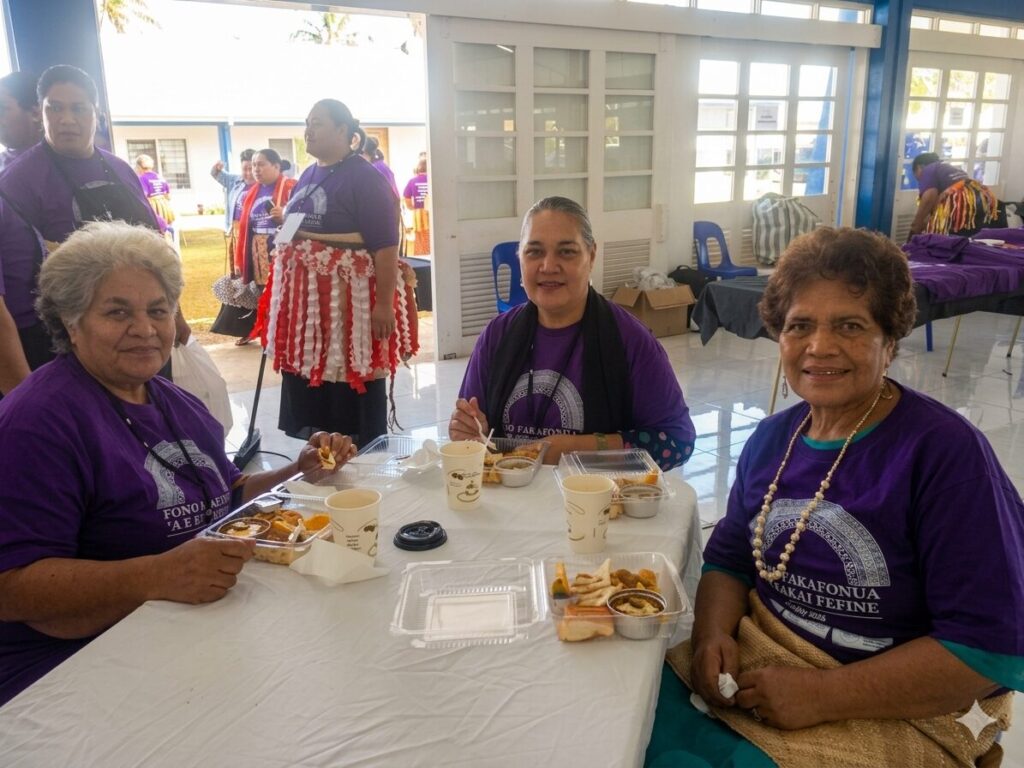
One of the very first steps was finding development partners who believed in the vision. Before we could begin any of the groundwork, we needed partners who understood why Tonga needed a National Women’s Fono and believed in the importance of creating a national platform where women’s voices could help shape national decision-making. We were incredibly fortunate that the Australian Government, through DFAT Canberra, believed in this vision and provided the funding that enabled us to begin the journey. Their support made it possible to undertake the extensive groundwork over the following 18 months, including the nationwide 5,000 Women’s Voices Survey, community engagement across the Kingdom and the development of the Tonga Women’s Platform for Action. We also sincerely acknowledge the Pacific Community (SPC), whose support enabled the meaningful participation of young women throughout the process, recognizing that their voices are essential in shaping Tonga’s future. Once that support was in place, the real work began. WCCC trained our field teams to undertake the survey and community engagement, ensuring that information was collected consistently, respectfully and to a high standard across all island groups. From there, we relied heavily on the long established strong community networks that WCCC has built over many years. Through these relationships, local Women’s Fono Committees were established across villages and island groups. These committees became the backbone of the initiative. They mobilized women, organized community meetings, coordinated logistics, identified participants and ensured women from even the most remote communities had the opportunity to have their voices heard. There was also an enormous amount of coordination behind the scenes – from organizing travel to the outer islands, scheduling consultations, managing thousands of surveys, analyzing the data and coordinating more than 350 participants and stakeholders for the National Women’s Fono itself. What made this initiative so special was that it truly became a national effort. While WCCC initiated and coordinated the process, it was only possible because so many people believed in the vision. Our development partners invested in it, Government ministries and partner organizations collaborated with us, women’s committees and community leaders led the work on the ground, volunteers gave their time, and more than 5,000 women generously shared their experiences, ideas and aspirations. Every one of them played a part in making the National Women’s Fono a success.
What are the Objectives of the National Women’s Fono:
Adaptive Lead and Strategic Support of WCCC – Mrs. ‘Ofa Guttenbeil Likiliki:
Overarching objective : To ensure that the collective voices of the women of Tonga help shape national decision-making and the future development of the Kingdom.
- To provide a national platform for the voices of women.
- To bring together women from across Tonga to collectively identify and articulate the issues, priorities and aspirations that matter most to them.
- To validate the findings of the 5,000 Women’s Voices Survey.
- To present the findings back to women, allowing them to discuss, refine and confirm that the priorities accurately reflected their experiences.
- To develop and endorse the Tonga Women’s Platform for Action.
- To collectively agree on a nationally owned roadmap that will guide future policies, programmes and investments relating to women and girls.
- To strengthen partnerships and collective ownership.
- To bring together Government, civil society, churches, women’s committees, youth, development partners, the private sector and communities to work towards a shared vision for women and girls.
- To establish a foundation for long-term implementation and accountability.
- To move beyond consultation and create a framework for coordinated implementation, monitoring and regular review so that women’s priorities translate into real change.