


HON. ESAFE HEMA LATU PUSHES LOCAL TRADE AND NEW ECONOMIC OPPORTUNITIES FOR HA’APAI!
Nuku’alofa, Tonga — A new voice in Tonga’s Parliament is promoting a practical approach to economic development, with Hon. Esafe Hema Latu, People’s Representative for Ha’apai 13, advocating for initiatives aimed at creating income opportunities, strengthening local production and improving living conditions for his constituents.
In an exclusive interview with the Tonga Chronicle, Hon. Latu outlined a number of initiatives designed to make greater use of the resources and skills already available in Ha’apai, while creating stronger links between producers in Ha’apai and markets in Tongatapu.
BUILDING A MARKET FOR HIAPO AND LOCAL PRODUCE
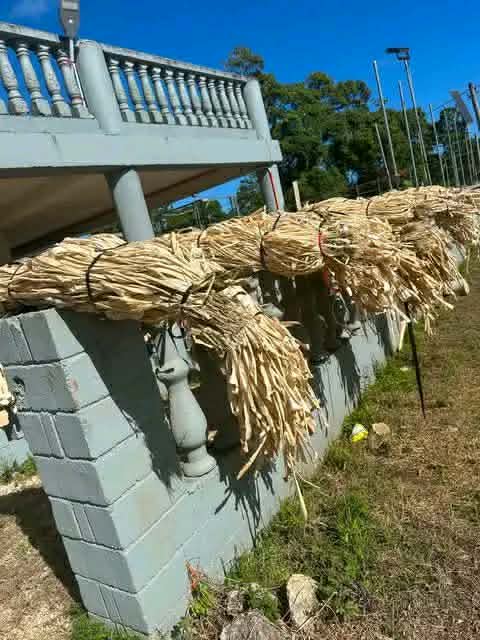
One initiative already being implemented through the Ha’apai 13 Constituency Office involves purchasing hiapo from local producers, particularly in Foa, for TOP$180 per item.
The constituency then sells the hiapo in Tongatapu for TOP$200, with sales conducted from the residence of Parliamentary Representative Hon. Esafe Latu.
The initiative is intended to provide local producers with a direct market while demonstrating that traditional products can generate income when they are connected to consumers beyond Ha’apai.
Hon. Latu said he would also like to see the concept expanded to root crops and other agricultural products, creating opportunities for farmers to produce specifically for commercial markets in Tongatapu.
FROM SUBSISTENCE FARMING TO COMMERCIAL FARMING
Hon. Latu said many families in Ha’apai continue to rely heavily on subsistence farming, producing crops primarily to meet household needs.
His vision is to encourage a gradual transition towards commercial farming, where farmers can produce surplus crops for sale and generate additional income for their families.
He believes the transportation of root crops and other produce from Ha’apai to Tongatapu could provide farmers with a more reliable market while increasing the availability of locally grown food for consumers in the capital.
For Hon. Latu, the objective is to establish an economic cycle where farmers produce more, earn more and reinvest in their families and communities.
BRICK-CUTTING MACHINE BRINGS PRODUCTION CLOSER TO HOME
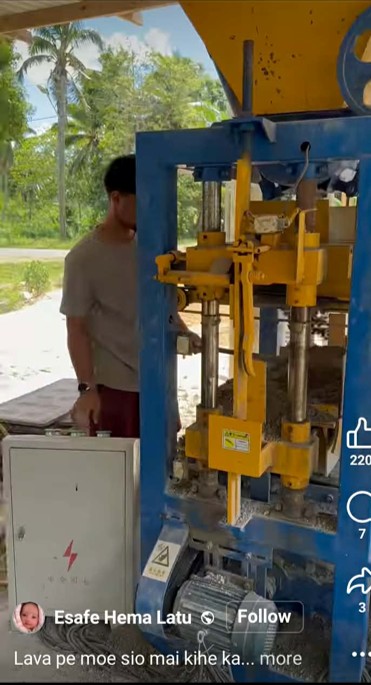
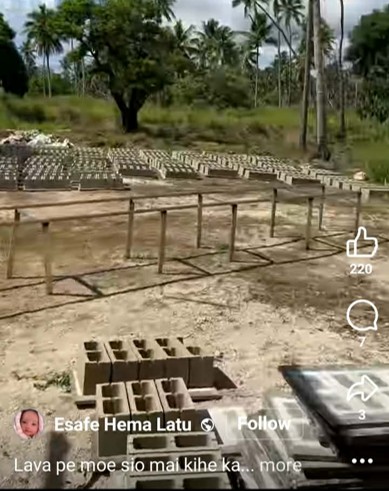
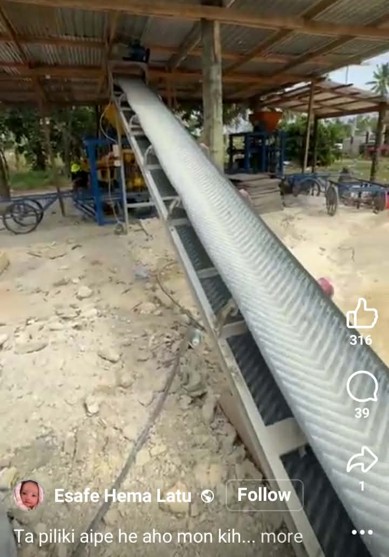
Another initiative forming part of Hon. Latu’s new economic vision is the introduction of a brick-cutting machine for the constituency.
He said the equipment is expected to reduce the need to transport bricks to Ha’apai by boat, as has been done in the past.
By producing bricks locally, the constituency can potentially reduce transportation costs, make building materials more accessible and support construction activities within Ha’apai.
The initiative also reflects Hon. Latu’s broader approach of bringing production closer to the communities that need it, rather than relying entirely on supplies shipped from Tongatapu.
PLANS FOR LOCAL ALUMINIUM ROOFING PRODUCTION
Hon. Latu also outlined plans to acquire an aluminium cutting machine, which would allow roofing materials to be cut locally for people in Foa and throughout Ha’apai 13.
He said the proposal is closely connected to the living conditions faced by some people in his constituency.
According to Hon. Latu, some families are struggling with access to adequate water because their homes lack suitable roofing systems for collecting rainwater. He said some households are currently relying on tarpaulins as roofing, limiting their ability to collect and store rainwater effectively.
The proposed aluminium-cutting initiative is therefore intended not only to support local production but also to address a basic household need — better roofing and improved rainwater collection.
For Hon. Latu, providing access to locally produced roofing materials could help families improve their homes while reducing the cost and logistical difficulties associated with transporting materials from Tongatapu.
AN ECONOMIC APPROACH BUILT AROUND LOCAL RESOURCES
The initiatives outlined by Hon. Latu — from hiapo and agricultural trade to brick production and aluminium roofing — form part of what he describes as a new economic vision for Ha’apai 13.
His approach is centred on using local resources, local labour and local production to create opportunities within the constituency.
Rather than viewing Ha’apai only as a market for goods transported from Tongatapu, Hon. Latu wants to see the island group increasingly recognised as a producer of agricultural goods, traditional products and locally manufactured materials.
He believes stronger local production could help reduce costs, create employment and provide families with additional sources of income.
A DIFFERENT APPROACH TO REPRESENTATION
Hon. Latu described his approach to parliamentary representation as one focused on identifying practical solutions to problems faced by his constituents.
His proposals seek to connect economic development with everyday needs — from helping farmers find markets to ensuring families have access to basic building materials and better roofing.
The initiatives are still part of a developing vision, but Hon. Latu believes they could contribute to a more commercially active and self-reliant Ha’apai 13.
ADDRESSING RUMOURS AND PENDING COURT MATTERS
During the exclusive interview, Hon. Latu also addressed rumours and allegations surrounding pending court matters.
He stated that claims circulating about him are false allegations and said that, according to his position, he has not been charged or remanded by the Tonga Electoral Commission in relation to the matters being discussed.
Hon. Latu said he welcomes the opportunity to address the issues and provide clarification to the public.
The Tonga Chronicle will cover these matters in greater detail in further segments of this exclusive interview, allowing readers to hear directly from Hon. Latu regarding the allegations, the electoral process and the pending matters.
As Hon. Esafe Hema Latu begins his parliamentary representation of Ha’apai 13, his proposals place local production, commercial farming, practical infrastructure and community income at the centre of his economic vision.
For Ha’apai 13, the message is clear: produce locally, create opportunities locally and build an economy that works for the people of the constituency.