



For four consecutive years, at the Opening of Parliament, His Majesty King Tupou VI has highlighted the threat posed by illicit drugs to the Kingdom and its waters.
The Government has responded with tougher penalties, including mandatory life imprisonment for offences involving certain quantities of illicit drugs.
The question now facing public discussion is not whether the law provides a severe punishment—it clearly does—but whether that punishment is effectively deterring people from becoming involved in the illicit drug trade.
The evidence available from the courts provides two important examples.
The first is the recent case of Teau ‘i Mo’unga Faletau, 43, who was convicted of arranging the transportation of 5,846.98 grams of methamphetamine to New Zealand. Because the quantity exceeded 5,000 grams, Lord Chief Justice Hon. Malcolm Bishop KC confirmed that the law required life imprisonment as the only lawful sentence available to the Court.
The second is the ongoing prosecution of Netane Taufa in CV 34/2026, which began on Monday, 14 September, before Lord Chief Justice Bishop KC. Taufa faces allegations involving cannabis and 154 empty packets.
Taufa has not been convicted and remains presumed innocent unless the allegations are proven in court.
What the cases tell us—and what they do not
These two cases demonstrate that Tonga continues to prosecute alleged drug offending and that the courts are applying legislation carrying severe penalties.
But they do not, on their own, establish that drug offending is increasing across the Kingdom, nor do they establish that life imprisonment has failed as a deterrent.
Those conclusions would require broader evidence, such as reliable statistics showing trends in drug seizures, prosecutions, convictions, trafficking activity and drug-related offending over time.
What the cases do show is why the question of deterrence deserves public examination.
If Parliament has imposed one of the Kingdom’s most severe penalties for serious drug offending, what evidence demonstrates that the penalty is reducing the availability of drugs or discouraging people from entering the trade?
The 154 packets question
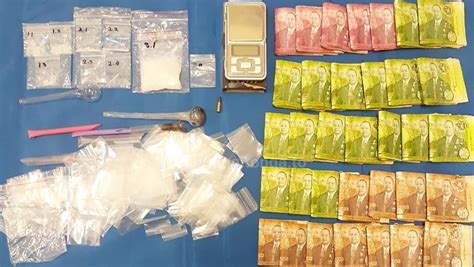
The current Taufa proceedings have also generated public interest over the significance of the alleged 154 empty packets and why such evidence requires consideration by the Supreme Court.
The number of packets may be relevant to the prosecution’s case concerning the alleged possession and possible distribution of cannabis. However, their presence alone does not establish that drugs were sold or intended for sale. That is ultimately a matter for the Court to determine from all the evidence.
The case nevertheless highlights a wider issue: drug prosecutions can involve relatively small quantities, packaging and other circumstantial evidence, as well as large-scale trafficking cases such as Faletau.
The Faletau case: life imprisonment was mandatory
Faletau’s case provides the clearest judicial illustration of Tonga’s toughest drug penalty.
In March, the Supreme Court convicted him of engaging in dealings with another person to transport 5,846.98 grams of methamphetamine to ‘Ofisi Ake, an airline baggage handler.
A co-defendant, Mafi Fatongiatau Lutui, was acquitted of a similar charge.
In July, Lord Chief Justice Bishop sentenced Faletau to life imprisonment.
The Court clarified that because the quantity exceeded the statutory threshold of 5,000 grams, life imprisonment was not simply the maximum penalty.
It was the only sentence the statute permitted.
As the Lord Chief Justice stated:
“This is the only lawful sentence.”
Life does not necessarily mean death in prison
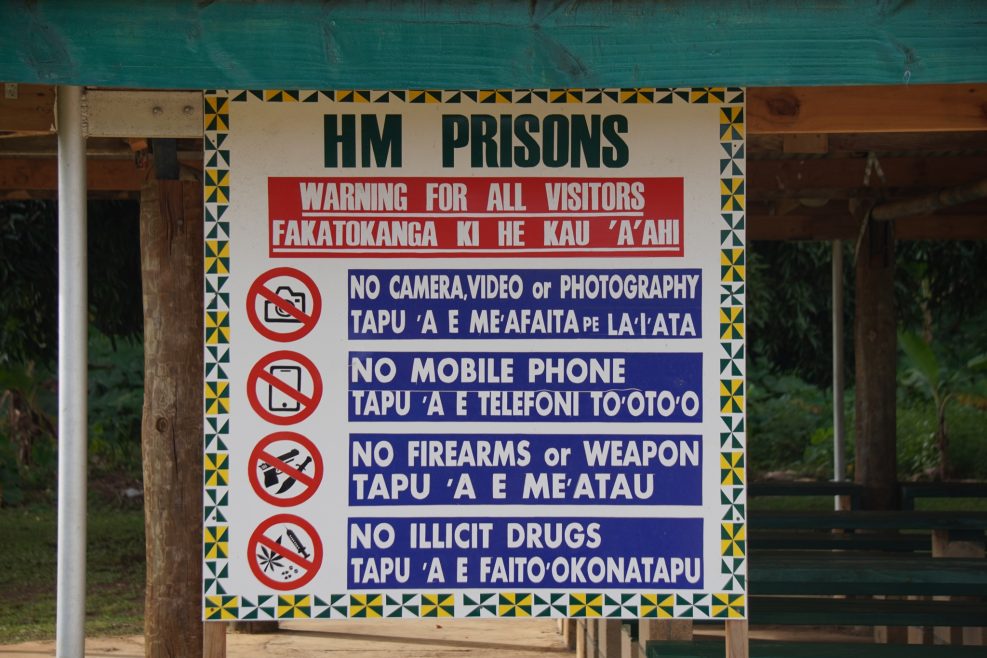
The judgment also made an important distinction between a sentence of life imprisonment and a whole-life sentence.
The Lord Chief Justice found that a whole-life sentence with no possibility of review or mitigation would be unlawful in Tonga.
Under Clause 37 of the Constitution, His Majesty the King, with the consent of the Privy Council, has the power to pardon a convicted person or remit or mitigate a sentence.
The Court also referred to Rule 110 of the Prison Rules, which provides for life sentences to be considered on their merits at periods including 10, 15 and 20 years, or when a prisoner reaches the age of 60.
Those provisions do not guarantee release or a reduction in sentence. They provide a mechanism through which a life sentence may be considered.
The unresolved question
The Faletau judgment establishes the severity of Tonga’s current response to large-scale drug trafficking.
The ongoing Taufa prosecution demonstrates that drug-related allegations continue to occupy the criminal courts.
But the central policy question remains unanswered:
Is the threat of life imprisonment actually preventing drug trafficking and drug-related offending in Tonga?
That question cannot be answered by the existence of individual prosecutions alone.
It requires evidence.
As the Kingdom continues to strengthen enforcement and apply severe penalties, the public may reasonably ask Government and law-enforcement authorities to publish clearer information on whether drug use, trafficking, seizures and drug-related offending are rising, falling or remaining unchanged.
The debate, therefore, should not simply be about whether Tonga should impose harsher punishment.
It should also be about whether the punishment already on the books is achieving its intended purpose.
After four years of emphasis from the Throne and the introduction of mandatory life imprisonment for the most serious drug offences, the fundamental question remains: