


This is the enabling legislation for Tonga’s hosting of the 2031 Pacific Games — the framework the Pacific Games Council has been publicly pressing Tonga to put in place. Council President Vidhya Lakhan and CEO Andrew Minogue visited Nuku‘alofa in May 2026 and stressed that planning and governance work must move quickly, with preparations shifting from planning into implementation. This Bill is the governance half of that message becoming law.
Backdrop for the audience: Tonga secured the 2031 hosting rights in Koror, Palau in October 2024, winning 12 votes to Fiji’s nine — its first Pacific Games ever, having only hosted the 1989 Pacific Mini Games, and coming seven years after the country pulled out of hosting the 2019 Games. The Bill is sponsored by the Minister for Internal Affairs, Hon. Fane Fituafe, and by its own terms self-repeals once the 2031 Games are over.
What the Bill does
Keeping it simple. The Bill builds three things and one legal shield:
- A Tonga Pacific Games Organizing Committee (Part II) — a statutory body corporate that runs the Games day-to-day. Members (at least 9) are appointed by TASANOC after consulting Government and the Pacific Games Council. It can borrow, mortgage, enter commercial and sponsorship deals, build facilities, acquire property and employ staff.
• An Audit and Governance Authority (Part III) — the oversight body, up to 8 people: 4 Government representatives (including the Chair), 3 TASANOC representatives (including the Deputy Chair), and 1 Pacific Games Council representative. It appoints the Organizing Committee’s chairperson and the CEO, sets pay, and approves the corporate plan.
• Money and reporting rules (Part IV) — audited accounts under the Public Finance Management Act, an annual report to the Minister, and the report plus audit laid before the Legislative Assembly within 14 sitting days. Crucially, Government is named “funder of last resort” — it must ensure the Committee has enough money to run the Games.
• Media-rights and intellectual-property protections (Part V) — new criminal offences and police powers (see the flags below).
Things to flag (The Scrutiny List)
1. Part V is the story for the media sector — flag it hard. The Bill vests the “media rights” to the Games in the Pacific Games Council, and defines them extraordinarily broadly: the right to report, broadcast, film, photograph, record, publish or distribute any report, photo, film or broadcast of any event or activity of the 2031 Games through any publicly accessible media — newspapers, radio, television, internet, books, magazines and any computer-based technology. Section 20 makes it a criminal offence to knowingly infringe those rights, punishable by a fine up to $10,000 or up to one year in prison, or both. Section 21 lets a police officer, acting on a written request from the Organizing Committee — not a court warrant — seize a journalist’s camera, recording device, computer, microphone or footage on “reasonable grounds.” Put both sides to the audience:
◦ The legitimate rationale: exclusive media rights are standard at major games, protecting official broadcast and sponsorship revenue, and the explanatory notes say these are mandatory conditions the Games Council imposes on all host nations.
◦ The concern for local media: the breadth of the definition, the criminal penalties, and seizure of equipment on the Organizing Committee’s say-so could chill ordinary news coverage by small Tongan outlets. Where is the line between “infringing media rights” and normal reporting? Will community radio and local papers get free accreditation and licences, or be squeezed out by an exclusive rights-holder?
2. The watchdog and the watched can overlap. Sections 4(4) and 15(4) both allow members of the oversight Authority to also sit on the Organizing Committee they are meant to audit, and the CEO is Secretary to both bodies. That is a genuine independence and conflict-of-interest question for a governance story.
3. Who really controls the Games — and the money. The Pacific Games Council “retains overall control” and can direct the Committee, and much is governed by a Host Contract dated 4 October 2024 that is referenced throughout but is not public. Ask for the Host Contract to be tabled. The bid itself is contested ground: Tonga’s hosting was reportedly secured by former PM Hu‘akavameiliku without parliamentary approval, and Deputy PM Taniela Fusimālohi told Parliament of unforeseen costs, with uncertainty over securing the $36 million needed for upgrades, funded partly through a sports levy.
4. Taxpayer exposure. “Funder of last resort” means the public purse ultimately carries any shortfall. That lands in an accountability climate the audience already knows: a recent editorial warned Tongans to fear “another financial black hole,” pointing to the Auditor General finding no receipts for a $60 million Covid fund and recalling the $120 million Chinese reconstruction loan. Editorials have also cited the Tonga High School National Sport Facility, whose electricity bill alone reportedly runs around TOP$9,000 a month, as a warning about unsustainable running costs.
5. Legacy and secrecy clauses. Section 6(h) lets Cabinet direct where venues and assets go after the Games — worth tracking who ends up owning the facilities. And section 27 makes it an offence to disclose information obtained in administering the Act; flag whether that could be used to blunt whistleblowing or legitimate scrutiny.
How The People Benefit

Give this its fair weight — the Bill is also the vehicle for real gains:
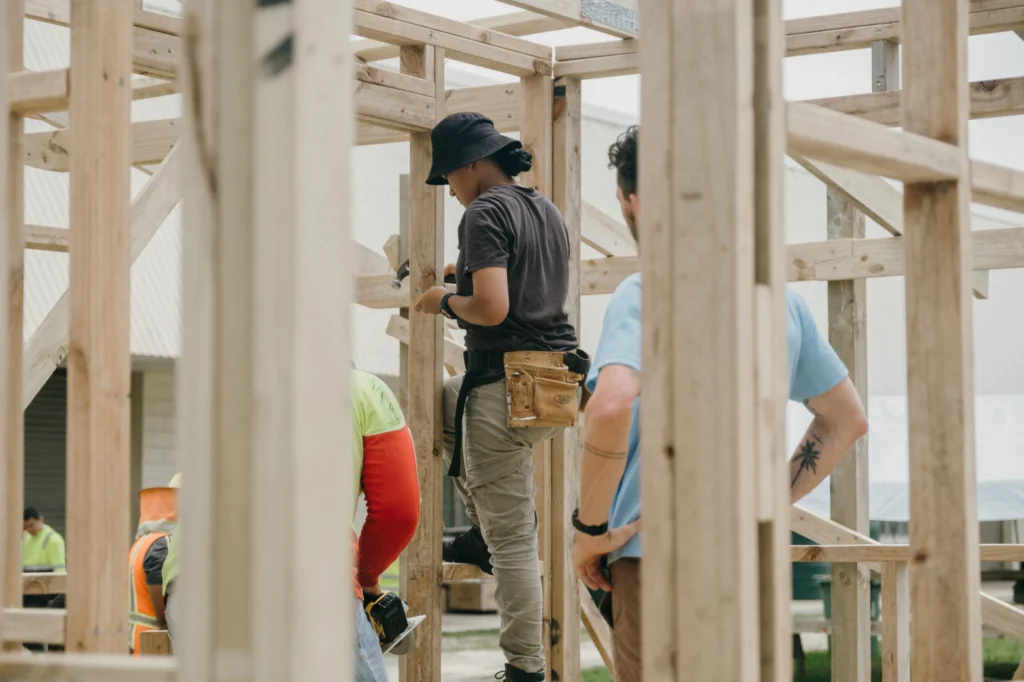
• Infrastructure and legacy: new and upgraded sports venues, and the supporting works (accommodation, logistics) that can serve Tongan communities, schools and athletes long after 2031.
• Jobs and local business: the Committee’s Procurement, Aid Procuring, and Accommodation/Logistics sub-committees mean construction, hospitality, transport and supplier opportunities — plus direct employment on the Organizing Committee and its sub-committees.
• Sports development and youth: a dedicated Sports Development sub-committee, and the Games as a pathway for Tongan athletes. The Council’s CEO has noted the 2031 Games could provide Olympic qualification opportunities across several sports ahead of Brisbane 2032.
• Tourism and national profile: the first full Pacific Games on Tongan soil, drawing athletes, officials and visitors from across the region.
• Accountability guardrails: unlike the bid, this framework does build in audited accounts, external audit, and annual reports laid before Parliament — the transparency the newsroom can hold them to.
Practical Follow-ups for The Newsroom
People to put questions to: the Minister for Internal Affairs (Hon. Fate Fotu Fituafe), TASANOC, the Pacific Games Council, the Attorney General (on Part V’s seizure powers), and any Tongan media association.
Documents to request: the Host Contract, the cost projections and six-year plan due to be tabled, and the corporate plan and budget once the Committee exists.