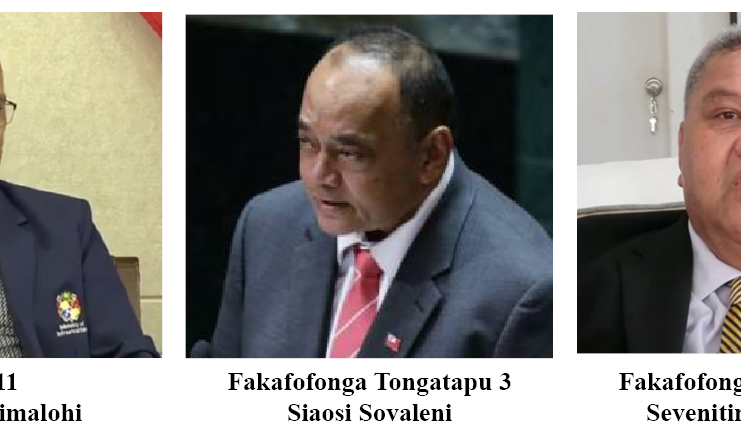
The high-profile trial between the former Pastors and the Current President and General Secretary of the Tokaikolo Church began on Tuesday, June 16, 2026.
The Defendant’s charge is that it is unconstitutional and also illegal for them to continue as the general president and general secretary of the church.
The prosecution expects to call 3 witnesses, and 10 witnesses are expected to be called by the defendant.
The Prosecutor is Rev Mesake Mapapalangi from Tonga but is currently the pastor of the church in Australia. The Prosecutor’s legal representative is Sifa Tu’utafaiva. The Defendants are the Current President, Rev. Saia Fepuiaki Tatafu and the Current General Secretary, Rev Siaosi Pita Kava. The defendant’s legal representative is Clive Edwards. The judge in this case is Acting Chief Justice – Justice Elisapeti Langi.
Me’a ‘Oku ‘Uhinga Ki Ai – Me’a ‘Oku ‘Ikai ‘Uhinga Ki Ai – Ki He Kakai Tonga´
Kuo fakata’e’aonga’i ‘e ha fakamaau lahi ‘i ‘Amelika, ha ngaahi tu’utu’uni ngāue ‘a e pule’anga Trump, ‘a ia na’e ta’ofi ai ‘a e kole ‘ngofua fakapule’anga ‘oku fakafaingamalie’i ki he hū ki Amelika’ (immigration benefit applications) ‘a e ngaahi fonua ‘e 39 – kau ai ‘a Tonga. ‘Oku mahū’inga ‘a e tu’utu’uni ko eni´, kā ‘oku ‘ikai ke ne fakafoki ‘a e totonu e kakai Tonga´ ke kole ngofua folau ‘eve’eva. ‘Oku ‘oatu heni ‘a e fakaikiiki hā mahino ‘o e me’a ‘oku liliu, mo e me’a ‘oku ‘ikai liliu.
KONGA ‘ULUAKI : KO E TU’UTU’UNI ‘A E FAKAMAAU’ANGA´ — KO E ME’A NA’E TU’UTU’UNI KI AI ‘A E FAKAMAAU´
‘I he ‘aho Falaite, 5 Sune 2026, na’e tuku atu ‘e he Fakamaau Lahi ‘Amelika ‘i he Fakamaau’anga Fakavahenga ‘i Rhode Island, John McConnell Jr, ha tu’utu’uni loloa peesi ‘e 135, ‘o ne fakata’e’aonga’i ‘a e ngaahi tu’utu’uni fakahinohino lahi ‘a e pule’anga Trump fekau’aki mo e ngaahi ma’u ngofua ki he hū ki ‘Amelika. Na’e ma’u ‘e he fakamaau’anga´, na’e ngāue ta’efakalao ‘a e Potungāue Lesisita Tangata’ifonua mo e Ngaahi Ngāue ki he Ngofua hū ki ‘Amelika (U.S Citizenship and Immigration Services – USCIS) ‘i hono ta’ofi fakalukufua ‘a e ‘kole ngofua fakapule’anga ‘oku fakafaingamalie’i ki he hū ki ‘Amelika´’, ta’e’iai ha mafai totonu mei he Falealea´.
Na’e ma’u ‘e Fakamaau McConnell ‘a e hanga ‘e he ngaahi tu’utu’uni ngāue ko eni´ ‘o “liaki e mo’ui ‘o e kakai hiki-fonua ta’efa’alaua, ‘oku lolotonga nofo ‘i ‘Amelika ki ha vaomanafa ‘oku ‘ikai fakapapau’i fakalao,”, pea ne tu’utu’uni na’e teke eni ‘e ha “loto taufehi’a ki he kakai hiki-fonua” kae ‘ikai ko ha ‘uhinga mo’oni fekau’aki pea mo e malu fakafonua´.
‘Oku fiema’u ‘ehe tu’utu’uni ko eni´ ‘a e USCIS, ke fai leva ‘i he taimi ni ‘a e hoko atu e fakahoko ngāue ki he ngaahi ‘kole ngofua fakapule’anga ‘oku fakafaingamalie’i ki he hū ki ‘Amelika´’ , ma’ae kakai mei he kotoa e ngaahi fonua ‘e 39 na’e ta’ofi´. ‘Oku kau ki heni ‘a e – ngofua nofo-fonua kaati (green card), kumi hūfanga (asylum claims), ngofua ngāue, kole liliu tangata’ifonua (citizenship), mo e kātoanga fakafuakava’i (naturalization ceremonies) ‘a ia na’e kaniseli pe ta’ofi.
‘
KONGA 2: ME’ANGAUE FAKALAO KEHEKEHE ‘E UA – KO HA FAKAFAIKEHEKEHe ‘OKU MATU’AKI MAHŪ’INGA
Ke mahino’i ‘a e me’a ‘oku liliu ‘e he tu’utu’uni ko eni´ pea mo e me’a ‘oku ‘ikai liliu ma’ae kakai Tonga, ‘oku mahu’inga ke mahino’i ko e me’angāue kehekehe ‘e UA ‘oku fakangaue’i heni. ‘Oku tokolahi ‘a e kakai ‘oku nau feto’oaki kinaua.
ME’ANGAUE ‘ULUAKI: KO E TALA-FAKAHĀ FAKAPULE’ANGA E TAPU ‘O E FOLAU FAKAPALESITENI
Na’e fakamo’oni hingoa ki heni ‘a Palesiteni Trump ‘i he ‘aho 16 Tisema 2025. Kamata fakangāue’i ‘i he ‘aho 1 Sanuali 2026. Ko e Tala-Fakahā Fakapule’anga (Executive Proclamation) eni – ‘oku ne ta’ofi hono foaki ‘a e ngaahi visa fo’ou ki he folau-‘eve’eva (B-1/B-2), ngofua ako (F, M), mo e visa fefakafetongi’aki (J) ma’ae kakai Tonga´ ‘e he Potungāue Ngaahi Ngāue ki Muli ‘o ‘Amelika (U.S. Department of State). ‘Oku ne toe ta’ofi mo e ngaahi kole fo’ou ki he ‘ngofua fakangatangata’a fakapaasipooti ke nofo mo ngaue ‘i ‘Amelika’ (immigrant visas). Ko e tala-fakahā fakapule’anga ko eni´ ‘oku KEI MO’UI FAKALAO KANOKATO ia. Na’e ‘ikai fakata’e’aonga’i eni ‘e he tu’utu’uni fakafakamaau’anga´.
ME’ANGAUE HONO 2: Ko e Tu’u Fakataimi ‘a e USCIS ki he Ngaue ‘Aofangatuku ki he Ngaahi Kole Ngofua Folau.
Ko ha tu’utu’uni ngāue fakaloto’i-potungaue ‘a e USCIS na’e fokotu’u ‘i he konga ki mui ‘o Novema 2025. Na’e ta’ofi ai ‘a e fakahoko ngāue ki he ngaahi kole ‘ngofua fakapule’anga ‘oku fakafaingamalie’i ki he hū ki ‘Amelika’ – ‘a ia ko e ngofua hiki-fonua kaati (green card), kumi hūfanga (asylum), ngofua ngāue, pea mo e liliu tangata’ifonua (citizenship) – ma’ae KAKAI ‘OKU LOLOTONGA ‘i ‘Amelika, mei he ngaahi fonua ‘e 39 ‘oku ta’ofi´. KO ‘ENI ‘a e me’a na’e fakata’e’aonga’i ‘e he tu’utu’uni fakafakamaau’anga´. Kuo pau ke hoko atu ‘i he taimini, ‘a e ngāue ki he ngaahi kole ngofua ko eni´.
konga hono 3: ‘e lava ki he kakai tonga´ ke kole ngofua folau’eve’eva?
Tali Nounou: ‘Ikai — ‘ikai lava ‘i he taimi ni.
Ko e tala-fakahā fakapule’anga ki he tapu ‘o e folau (travel ban proclamation) – ‘a ia ko e me’angaue eni ‘oku matu’aki kehe ‘aupito mei he tu’utu’uni ngaue ‘a e USCIS, ‘a ē na’e fakata’e’aonga’i ‘e he fakamaau’anga´ – na’a ne ta’ofi fakataimi hono foaki e visa folau’eve’eva B-1/B-2 ki he kakai Tonga´ ‘o kamata mei he ‘aho 1 Sanuali 2026. ‘Oku ‘ikai liliu eni ‘e he tu’utu’uni e fakamaau’anga´.
Na’e fakapapau’i tonu eni ‘e he Potungāue Ngaahi Ngāue ki Muli ‘o ‘Amelika´ (U.S. Department of State), ‘a e ta’ofi fakataimi fakakonga ‘o e foaki e visa ki Tonga ‘a ia ‘oku kau ki ai e: visa folau’eve’eva pe fakapisinisi (B-1/B-2), visa ako faka’ekatemika (F), pea mo e ngaahi visa hū fo’ou kotoa pe ki he nofo fonua´.
Ko e ngaahi tu’unga eni ‘oku matu’aki fakangatangata ‘aupito. ‘Oku ‘ikai kau ki heni e kakai Tonga ‘oku ma’u tangata’i fonua ‘e 2 (dual citizenship) pea lava kole ngofua ngāue’aki ‘a e paasipooti mei ha fonua ‘ikai kau ‘i he ngaahi fonua ‘oku tapu’i. Ko e kau tipilometika, kau ngaue ‘a e ‘ofisi talafekau ‘Amelika´, mo kinautolu fakafo’ituitui ‘oku folau fakataumu’a ki he ngāue’anga ‘oku ngāue fekau’aki mo e lelei fakafonua ‘a ‘Amelika´ – ko e ngaahi makatu’unga eni ‘oku malava mo ia ‘i he ngaahi keisi ‘oku tātāitaha.
KONGA 4: KO HAI TONU ‘OKU TOKONIA ‘E HE TU’UTU’UNI´?
‘Oku fakafaingamalie’i tefito ‘e he tu’utu’uni fakafakamaau’anga ko eni´ ‘a e kakai Tonga pea mo e kakai mei he ngaahi fonua ‘e 39 ‘oku tapu’i, ‘oku ‘osi lolotonga ‘i pe ‘Amelika, ‘a ē ‘oku fakatatali ‘enau ngaahi kole ngofua nofo na’e ta’ofi´. ‘Oku fakatefito eni ki he :
■ Kakai Tonga ‘i ‘Amelika ‘oku tali ke fai e ngāue ki he kole ngofua nofo-fonua fakangatangata – ‘oku pau ki he USCIS ke hoko atu e fakahoko ngaue ki he ‘enau ngaahi keisi.
■ Kakai Tonga ‘i ‘Amelika na’e ta’ofi fakataimi ‘enau ngofua kumi-hūfanga´ – kuo pau ke fakahoko ha ‘aofangatuku ki he ngaahi kole ngofua ko eni´.
■ Kakai Tonga ‘i ‘Amelika na’e ta’ofi ‘enau ngaahi kole fakafo’ou ‘o ‘enau ngofua ngāue pē kole liliu tangata’ifonua – kuo pau ke hoko atu e fakahoko ngaue ki ai´.
■ Kakai Tonga na’e ‘osi ma’u ‘enau ngofua hiki-fonua pea na’e fakamakatu’unga ki hano vakai’i tu’o ua ‘aki ‘a e ngaahi makatu’unga ‘o e tu’utu’uni ngaue e USCIS – ko e fiema’u ‘o e vakai’i tu’o ua ko eni, kuo fakata’e’aonga’i ia.
■ Katoanga Fakauakava’i ‘o e Liliu Tangata’ifonua na’e kaniseli ma’ae kakai Tonga na’e ‘osi tali´ – kuo pau ke toe faka’aho fo’ou ‘a e Katoanga Fakafuakava’i ko eni´.
konga 5: ko e me’a na’e ‘ikai liliu ‘e he tu’utu’uni´
■ Kakai Tonga ‘i Tonga ‘oku fie kole ha ngofua folau ‘eve’eva ki ‘Amelika – ‘oku kei ta’ofi eni ‘i he tala-fakahā fakapule’anga ‘o e tapu ke folau´.
■ Kakai Tonga kumi ki ha visa ako fo’ou (F pe M) – kei ta’ofi.
■ Kakai Tonga kumi ki ha visa fefakafetongi’aki folau’eve’eva (J) – kei ta’ofi.
■ Kakai Tonga ‘oku kumi ki ha visa hiki-fonua (immigrant visa) fo’ou mei tu’a mei ‘Amelika – kei ta’ofi.
■ Kakai Tonga lolotonga ‘i ‘Amelika ‘i he visa fakataimi kuo nau mavahe mei ‘Amelika – ‘oku ‘i ha matu’aki tu’unga ‘e ‘ikai ke toe tali ke toe hū ki ‘Amelika
KONGA 6: ‘e toe liliu eni? ko e ha e me’a ‘e hoko mai heni´?
ʻOku ʻamanaki lahi ʻe toe fakahoko ʻe he puleʻanga Trump ha tangi (appeal) ki he tuʻutuʻuni ko ia. ʻE ala hiki atu ʻa e meʻa ni ki he Fakamaauʻanga Tangi Fakavahenga ‘o ‘Amelika´ (U.S. Court of Appeals for the First Circuit) pea malava ke aʻu atu ki he Fakamaauʻanga Māʻolunga taha ʻi ʻAmelika´ (Supreme Court). ‘Oku kei tu’u pe ‘a e tu’utu’uni ‘a e fakamaau’anga ko ‘eni´ ‘i hono fakata’e’aonga’i ‘a e ngaahi tu’utu’uni ngāue ‘a e USCIS´, ‘a ia ‘oku ‘uhinga eni ‘oku kamata ngāue leva ia ‘i he taimi ni – kā neongo ia, ‘e lava ke tuku mai ‘e ha fakamaau’anga mā’olunga ange ha tu’utu’uni ke ta’ofi fakataimi ‘a hono fakahoko e tu’utu’uni ko eni´, lolotonga ‘oku kei fakahoko e tangi´.
‘I ha tu’unga kehe ange mei heni, ‘oku kei malava pē ke fakahoko ha ngaahi hopo fakalao ki he tala-fakahā fakapule’anga e tapu ke folau´, ‘i ha ngaahi fakamaau’anga kehe. ‘Oku lahi ‘a e ngaahi faka’ilo tonu ‘o e tala-fakahā fakapule’anga ko eni´ ‘oku lolotonga fakahoko ‘i he fa’unga fakamaau’anga ‘a ‘Amelika´. Kaekehe, kae ‘oua kuo fakata’e’aonga’i tonu ‘a e tala-fakahā fakapule’anga e tapu ko eni´ – pē ko e to’o ‘e he pule’anga Trump ‘a Tonga mei he lisi ‘o e ngaahi fonua ‘oku ta’ofi´ – ‘oku kei ‘i he tu’unga ta’ofi fakataimi pe ‘a e ngaahi ngofua folau’eve’eva e kakai Tonga´.
Ko e fakamatala ki he tuʻunga ko ia´: Naʻe fakahū ʻa Tonga ki he lisi ko ʻeni´ koeʻuhí ko e lahi koia ʻo e ngaahi nofo-‘ova ʻi he visa B-1/B-2´ – ʻoku 6.45 peseti, ʻa ia ʻoku ne fakafofongaʻi pē ha 152 ‘a e ngaahi nofo-‘ova fakakātoa ʻoku mahalo’i´, mei he toko ua afe tolungeua ma nimanoa (2,350) fakakatoa e kau folau’eve’eva Tonga´.
ʻOku lahi hono fakaangaʻi ʻe he kau mataotao fakalao´ ʻa e fika ko ʻeni´, ʻi heʻenau pehē ʻoku ʻikai feʻunga ke fakahoko ai ha toʻo fakalukufua fakataimi ‘o e visa´.
FAKAMATALA FAKANOUNOU: kongokonga lalahi
‘Aho ‘o e Tu’utu’uni: Falaite, 5 Sune 2026 – Fakamaau’anga Fakavahenga ‘o ‘Amelika, Rhodes Island
Fakamaau: Fakamaau Lahi John McConnell Jr.
Ko e Me’a Na’e Fakata’e’aonga’i: Ko e ta’ofi fakaloto’i-potungaue e USCIS ‘a e fakahoko ngāue ki he ngaahi kole ‘ngofua fakapule’anga ‘oku fakafaingamalie’i ki he hū ki ‘Amelika’ ma’ae ngaahi fonua ‘e 39.
Ko e Me’a ‘Oku Kei Mo’ui´: ‘Tala-fakahā fakapule’anga ‘o e ta’ofi ki he folau’ ‘aTrump (Tisema 2025) — ta’ofi e ngaahi kole fo’ou ‘o e ngofua folau’eve’eva, ako & hiki fonua ma’ae kakai Tonga´.
Ngofua Folau’eve’eva ma’ae kakai Tonga: KEI TA’OFI FAKATAIMI — ‘oku ‘ikai fakafoki eni´ ‘e he tu’utu’uni fakafakamaau’anga´.
Ko Hai ‘Oku Fakafaingamalie’i Heni´: Kakai Tonga ‘oku lolotonga ‘i ‘Amelika kā ‘oku tu’u ‘a e ngāue ki he ‘enau ngofua hiki-fonua kaati, kumi hūfanga, ngofua ngāue pe kole liliu tangata’i fonua´.
Fakatetu’a ki ha tangi ‘a Trump: ‘Io– malava ke ta’ofi fakataimi ‘a e tu’utu’uni ko eni´, lolotonga koia e fakahoko ngāue ki he tangi´.
Fale’i: Kumi fale’i ki ha fakafofonga lao faka’imikuleisini ‘osi laiseni, kimu’a pea fakahoko ha’o tu’utu’uni ke folau pe fakahū kole ngofua.
EDITORIAL NOTE88.1 FM — ‘Oku tapou atu e Letio ‘a e Kakai´ ki he kakai Tonga kotoa ‘oku uesia ‘ehe ngaahi fakangatangata ko eni ki he ngofua hū, mo e folau ki ‘Amelika, ke kumi fale’i ki ha fakafofonga lao faka’imikuleisini ‘osi laiseni, kimu’a pea fakahoko ha’o tu’utu’uni fekau’aki mo e folau atu, kole ngofua, pe mavahe mei ‘Amelika. ‘Ko hono tu’unga fakalao ‘oku faingata’a pea tu’u ngofua ki ha ngaahi feliuliuaki fakafokifā.
A United States federal judge has struck down a series of Trump administration policies that had frozen immigration benefit applications for nationals of 39 countries — including Tonga. The ruling is significant, but it does not restore the right for Tongans to apply for visitor visas. Here is a clear breakdown of what has changed, and what has not.
Part 1: The Court Ruling — What the Judge Decided
On Friday 5 June 2026, Chief U.S. District Judge John McConnell Jr. of the U.S. District Court in Rhode Island issued a sweeping 135-page ruling, vacating multiple Trump administration immigration directives. The court found that U.S. Citizenship and Immigration Services (USCIS) had acted unlawfully by imposing blanket freezes on immigration benefit applications without proper authority from Congress.
Judge McConnell found the policies had “thrown the lives of countless immigrants living in the United States into indeterminate legal limbo,” and ruled they were driven by “anti-immigrant sentiments” rather than genuine national security grounds.
The ruling requires USCIS to immediately resume processing all pending immigration benefit applications for nationals from all 39 travel ban countries. This covers green cards, asylum claims, work permits, citizenship applications, and naturalization ceremonies that were cancelled or frozen.
Part 2: Two Separate Legal Instruments — A Critical Distinction
To understand what this ruling does and does not change for Tongans, it is essential to understand that TWO separate legal instruments are in play. Many people are confusing them.
INSTRUMENT 1: The Presidential Travel Ban Proclamation
Signed by President Trump on 16 December 2025. Effective 1 January 2026. This is an Executive Proclamation — it bans the issuance of new visitor (B-1/B-2), student (F, M), and exchange (J) visas to Tongan nationals by the U.S. Department of State. It also bans all new immigrant visas. This proclamation is STILL IN FULL LEGAL EFFECT. The court ruling did NOT strike this down.
INSTRUMENT 2: The USCIS Internal Adjudication Pause
An internal USCIS administrative policy enacted in late November 2025. This froze the processing of immigration benefit applications — such as green cards, asylum, work permits, and citizenship — for people ALREADY INSIDE the United States from the 39 listed countries. THIS is what the court ruling struck down. USCIS must now resume processing those applications.
Part 3: Can Tongans Apply for a Visitor Visa?
Short Answer: No — not at this time.
The travel ban proclamation — which is an entirely separate instrument from the USCIS policy the court struck down — suspended the issuance of B-1/B-2 visitor and tourist visas to Tongan nationals as of 1 January 2026. This has not been overturned by the court ruling.
The U.S. Department of State itself confirmed the partial suspension of visa issuance for Tonga covering: tourist and business visitor visas (B-1/B-2), academic student visas (F), vocational student visas (M), and exchange visitor visas (J), as well as all immigrant visas.
There are very narrow exceptions. Tongans who hold dual citizenship and can apply using a passport from a country not on the restricted list are exempt. Diplomats, U.S. embassy employees, and individuals whose travel is determined to serve the U.S. national interest may also qualify in rare cases.
Part 4: Who Does the Ruling Actually Help?
The court ruling primarily benefits Tongans and other nationals from the 39 listed countries who are already living inside the United States with pending immigration applications that were frozen. Specifically:
■ Tongans in the US waiting for a green card application to be processed — USCIS must now resume their cases.
■ Tongans in the US whose asylum claims were suspended — those claims must now be adjudicated.
■ Tongans in the US whose work permit renewals or citizenship applications were frozen — those must now proceed.
■ Tongans who had approved immigration benefits and were being subjected to a second review under the new USCIS policy — that second review requirement has been struck down.
■ Naturalization ceremonies that were cancelled for eligible Tongan applicants — those must be rescheduled.
Part 5: What the Ruling Does NOT Change
■ Tongans in Tonga wanting to apply for a tourist or visitor visa to the US — still blocked under the travel ban proclamation.
■ Tongans seeking new student visas (F or M) — still blocked.
■ Tongans seeking exchange visitor visas (J visa) — still blocked.
■ Tongans seeking any new immigrant visa from outside the US — still blocked.
■ Tongans already in the US on temporary visas who leave the country — at serious risk of not being allowed back in.
Part 6: Will This Change? What Happens Next?
The Trump administration is widely expected to appeal the ruling. The case may move to the U.S. Court of Appeals for the First Circuit and potentially the Supreme Court. The ruling currently stands as a vacatur of the USCIS policies, meaning it takes immediate effect — but a higher court could issue a stay while the appeal proceeds.
Separately, the travel ban proclamation itself remains subject to legal challenge in other courts. Several lawsuits targeting the proclamation directly are working through the U.S. court system. However, until a court specifically strikes down the proclamation — or the Trump administration removes Tonga from the list — visitor visas for Tongan nationals remain suspended.
For context, Tonga was placed on the list primarily due to a B-1/B-2 visa overstay rate of 6.45 percent, representing just 152 suspected overstays out of approximately 2,350 Tongan visitors — a figure widely criticised by legal experts as insufficient to justify a blanket visa suspension.
SUMMARY: AT A GLANCE
Ruling Date: Friday, 5 June 2026 — U.S. District Court, Rhode Island
Judge: Chief Judge John McConnell Jr.
What Was Struck Down: USCIS internal freeze on immigration benefit processing for 39-country nationals
What Is Still in Force: Trump travel ban proclamation (Dec 2025) — blocks new visitor, student & immigrant visas for Tongans
Visitor Visa for Tongans: STILL SUSPENDED — the court ruling does not restore this
Who Benefits: Tongans already in the US with frozen green card, asylum, work permit or citizenship applications
Trump Appeal Expected: Yes — ruling may be stayed pending appeal
Advice: Consult a licensed U.S. immigration attorney before making any travel or application decisions
EDITORIAL NOTE
88.1 FM — People’s Radio Tonga urges all Tongans affected by U.S. travel and immigration restrictions to seek advice from a licensed U.S. immigration attorney before making any decisions about travel, visa applications, or departing the United States. The legal situation is complex and subject to rapid change.
‘Oku tafe mai ‘a e $582 miliona ‘i he ta’u kotoa pē mei hotau kāinga Tonga nofo muli´ – kā ko e konga lahi ‘oku toe mole atu ia ‘o foki ki tu’a. Kuo taimi ki ha founga fakafonua ke ne liliu ‘a e ngaahi foaki ‘ofa ko eni´ ki ha koloa’ia tu’uloa.
Ko e uike kotoa pe, ‘i he ngaahi kolo lalahi ‘i ‘Aositelelia, Nu’u Sila mo ‘Amelika, ‘oku laine ai ‘a e kakai Tonga ‘e lauiafe ‘i he ngaahi kanita talafi pa’anga´, ngaahi polokalama talafi pa’anga fakapangike ‘i he telefoni to’oto’o´ ko e lī mai ki ‘api e pa’anga ‘oku ma’u mei he ‘enau ngaahi ngāue ‘osi-kia-velenga ‘i he ngaahi fonua muli´. Ko e fa’ē ‘i Pilisipeini ‘oku ne talafi mai e $300 ko e totongi ako. Ko e tokotaha ngāue langa ‘i ‘Aokalani ‘oku ne talafi e $500 ki he faka’aho ‘ene ongomatu’a´. Ko e neesi ‘i Kalefonia ‘oku ne talafi e $800 ko e tokoni ki he fakafo’ou ‘o e ‘ato, hiliange ha saikolone.
‘I hono tanaki fakakatoa e talafi pa’anga mai e kainga Tonga nofo muli´, ko e ngaahi to’onga ‘ofa mo mateaki ni ‘oku fakakatoa ia ki ha me’a mātu’aki fakaofo: ko e $582 miliona ‘oku tafe mai ‘i he ta’u kotoa pe ki he Pule’anga Tonga´. Ko e fika eni ‘oku fakapapau’i pau ‘i he Fakamatala Patiseti ‘a e Pule’anga´ ki he Ta’u Fakapa’anga 2027, ‘oku tatau ia ki he 38.8% ‘o e fakakātoa e GDP ‘a Tonga – ‘a ia ‘oku ‘ikai ngata pē he hoko e pa’anga hu mai mei muli´ ko e konga mahu’inga ‘o ‘etau ‘ekonomika´, kā ko e tefito’i ma’u’anga pa’anga lahi taha ia ‘a e ngaahi famili´ ‘i he fonua´.
Neongo eni´, ‘oku ‘ikai ha palani fakahoko ngaue fakafonua ki hano faka’aonga’i lelei ia.
$582m Talafi Pa’anga Hū Mai Fakata’u (Fep 2026)
38.8% ‘Inasi ‘i he GDP
9.7% Tupu ‘i hono fakafehoanaki ‘o e ta’u ‘e taha ki he ta’u ‘e taha
KO E VAITAFE ‘OKU TAFE KI LOTO – PEA TOE TAFE HANGATONU PE KI TU’A
‘Oku ‘ikai ko e me’a fakaloloma ki he pa’anga hū mai ki Tonga´ ko ‘ene si’isi’i´ kā ko e te’eki ke tau poto hono puke e pa’anga ko ia´.
Ko e pēteni pe sīpinga ko eni´ ‘oku lelei ‘aupito hono lekooti´ pea toe aka loloto. ‘Oku ha’u e talafi pa’anga mei muli´, ‘o hū ia ki ha famili, pea ‘oku fakamoleki ia meimei ‘i he taimi pē koia´ – ‘i he me’atokoni hū mai mei muli, lolo hū mai mei muli, koloa hū mai mei muli ‘i he supamaketi´ pē ko e falekoloa pē ‘i he tuliki´. Ko e fakafetongi pa’anga ‘oku lī mai ‘i he ‘ofa mo e feilaulau ‘a e kainga nofo muli´, ‘oku kakato pe hono vilohi´ ‘i he laui ‘aho, taimi ‘e ni’ihi ‘oku lau houa pē, pea toe hū atu pe ki tu’a mei he fonua´ ‘i he halanga fefakatau’aki tatau pē na’e hū mai ke fakafetongi´.
Ko hono ola´, ko e hoko atu pē ‘a Tonga ‘i he lele he ‘akauni tō lalo ‘a ia ‘oku lolotonga ‘i ai´. ‘Oku fakapapau’i ‘e he Fakamatala Patiseni´ ‘a e faka’au holo ‘i he ngaahi ta’u mai ki mui ni´, ‘a ia ‘oku nga’unu mei he hulu´ (surplus) ki he tō lalo´ (deficit). ‘Oku kei hoko pē ‘a e koloa hū mai mei muli´ ko e konga lahi taha ia ‘o e fakafetongi pa’anga ‘oku hū ki tu’a´, ‘a ia ko e lolo hū mai´ ‘oku hoko ia ko e tefito’i fakafetongi pa’anga fakatu’utamaki lahi taha ia ‘oku hokohoko ‘ene tu’u. Ko ‘etau halanga hū koloa ki tu’a´ (export) ‘oku fasi’i. Ko ‘etau ngaohi koloa fakalotofonua´ ‘oku fakangatangata. Pea ko ia ‘a e hokohoko atu ‘a e saikolo ko eni´: hū mai e pa’anga talafi´, fakamoleki ia ‘i he koloa hū mai pea toe foki pē ‘o kamata mei he hū mai e pa’anga talafi ‘o fefokifoki’aki pehē pē.
“Ko e $100 kotoa pē ‘oku talafi mai mei hotau kāinga Tonga nofo muli´, ‘oku fakamoleki e konga lahi ‘o e pa’anga ko ia´ ‘i loto ‘i he laui ‘aho pē. – fakamoleki ‘i he koloa ‘oku ngaohi mei he fonua kehe, ‘o fakatu’umalie’i ai e ngaahi seini tufaki koloa´ (supply chains) ‘o vilo ai e pa’anga ko eni´ ‘o mate ki he ngaahi taulanga mama’o mei ho tau ngaahi matāfangā.”
Mole ke mama’o ko ha fakaanga’i eni ‘o e tauhi famili Faka-Tonga´. Ko e taimi ‘oku ke fekuki ai mo e hikihiki e ngaahi mahu’inga ‘o e me’atokoni´, mahu’inga ‘o e lolo, pea mo e peseti ‘e 9.5 ‘o e hiki e totongi koloa (9.25% Inflation Rate) – ‘o hangē ko ia ‘oku tofanga ai e ngaahi famili ‘i he ‘aho ni´ – ‘oku ke fakamoleki pē ‘a e me’a ‘oku ke ma’u´ ‘o fakatatau ki he me’a pē ‘oku ke fiema’u´. ‘Oku ‘ikai ko ha palopalema fakafo’ituitui eni kā ko e palopalema fakafa’unga (structural problem). Pea ‘oku fiema’u ‘a e ngaahi solova’anga pē fakalelei fakafa’unga ki he ngaahi palopalema fakafa’unga.
KO HONO FAKAMALOHINGA ‘O E VĀ FENGAUE’AKI MO HOTAU KĀINGA TONGA NOFO MULI´
Kimu’a pea tau talanoa fekau’aki mo hono liliu e founga ‘oku ngāue’aki e pa’anga talafi mai´, ‘oku fiema’u ke tau tomu’a fakatokanga’i e me’a mahu’inga ko eni´: ko e vā fetauhi’aki ‘a Tonga mo hono kainga Tonga nofo muli, ‘oku ‘ikai ko ha totonu (right) tu’upau ka ko e faingamalie (priviledge).
‘Oku ‘ikai ko ha fatongia lao’i ki hotau kāinga Tonga nofo muli´ ke talafi pa’anga mai ki ‘api. ‘Oku nau fakahoko eni koe’uhi ko e to’onga tukufakaholo fakafonua, koe’uhi ko e famili, koe’uhi ko ha pikinga loloto mo tolonga ki he fonua ni pea mo hono kakai´. Kuopau ke tauhi ‘a e fa’ahinga fehokotakinga ko eni´ – pea ‘i he lolotonga ni, ‘oku fu’u ta’etokanga mo fakafiefiemalie pē ‘a e fengaue’aki ‘a Tonga mo hono kakai Tonga nofo muli´.
Ko e hā nai e fōtunga ‘o ha vā fengaue’aki mo e kāinga Tonga nofo muli´? ‘Oku tu’u mai ki mu’a ‘a e ngaahi me’a ni.
‘Uluaki – tali fakapule’anga pē ko e faka’ofisiale hono fokotu’u´. ‘Oku totonu ke fokotu’u ‘e Tonga ha Kautaha Fale’i ‘o e Kainga Tonga Nofo Muli´ (Diaspora Advisory Council – ko e sino ngaue tu’upau ‘o e kau fakafofonga e kainga Tonga ‘i ‘Aositelelia, Nu’u Sila, pea mo ‘Amelika – mo ha laine fetu’utaki hangatonu ki he ‘Ofisi Palemia´. Ko e koloa fakafonua ‘a ‘enau lau’ilo ki he ngaahi māketi fakavaha’apule’anga, ‘a ‘enau ngaahi vā fengaue’aki fakataukei, ‘a ‘enau ngaahi koloa pea mo ‘enau ngaahi fakakaukau. ‘Oku totonu ke fakahoko e anga ‘o e fakafeangai kia kinautolu ‘o fakatatau ki he ngaahi tu’unga ko ia´.
Ko hono ua – holoki ‘a e totongi talafi pa’anga mai ki ‘api´.’Oku kau ‘a e totongi talafi pa’anga ki he ngaahi fonua ‘i he Pasifiki´ ‘i he ngaahi totongi ma’olunga taha ‘i mamani´, ‘a ia ‘oku ‘avalisi ki he peseti ‘e 6 ki he 9 ‘o e mahu’inga ‘oku talafi´. Ko e pa’anga kotoa ‘oku ‘alu ki he ngaahi totongi fakapangike mo e totongi talafi, ko e pa’anga ia ‘e ‘ikai ke a’u ki he ngaahi famili Tonga´. ‘Oku totonu ki he Pule’anga ke alea’i ha ngaahi aleapau fekau’aki mo e talafi pa’anga pea mo e ngaahi kautaha talafi pa’anga lalahi, ‘o taketi ki he peseti ‘e 3 ‘a e ma’olunga taha e totongi talafi pa’anga – ‘o fakatatau ki he founga lelei taha fakavaha’apule’anga´.
Ko hono tolu – fo’u ha ngaahi halanga fakahū pa’anga (investments pathways). ‘Oku tokolahi ‘akinautolu ko e kainga Tonga nofo muli ‘e fakahū pa’anga ki Tonga ‘okapau ‘e ‘i ai ha fa’unga ‘oku falala’anga, ha mahino pea faingofua ke ngaue’aki. Ngaahi Pōnite e Kainga Tonga Nofo Muli – ko ha ngaahi me’angaue fakapa’anga ‘oku poupou’i ‘e he pule’anga´ ‘o fakamaketi’i ‘o fakatautefito pē ki he kainga Tonga nofo muli´ – ‘e lava ‘o fakahū e pa’anga ko eni´ ki he ngaahi hala pule’anga´, ivi fakafo’ou (renewable energy), ngaahi fale ako, pea mo e ngoue. Kuo laui piliona e pa’anga kuo tanaki ‘i he founga ko eni he ngaahi fonua kau ki ai ‘a ‘Initia, ‘Isileli mo ‘Itiopea. ‘Oku te’eki ‘aliaki ‘a Tonga heni.
“’Oku ‘ikai ko ha kau ma’u’anga pa’anga hū-mai pe ‘a hotau kainga Tonga nofo muli´. Ko e kau fakahū pa’anga fakapisinisi (investors), kau paionia, mo e kau ‘amipasitoa ‘oku nau fakaongoongo ki ha fakaafe mei Tonga ke nau fengaue’aki fakataha”
KO HONO TAUHI ‘O E PA’ANGA´ ‘I TONGA: KO HA ‘ASENITA ‘OKU MALAVA NGAUE’I
Ko hono holoki hifo e vave ‘o e toe hū ki tu’a mei he ‘ekonomika´ ‘a e pa’anga talafi mai´, ‘oku fiema’u ki ai ‘a hono langa hake ‘a e ivi malava ngaohi koloa fakaloto fonua ke ne puke ‘a e pa’anga´. ‘Oku ‘uhinga eni ki hono fakalahi ange ‘a e ngaahi me’a ‘oku tuku atu ki he kakai Tonga´ ke fakamoleki e pa’anga ko ia´ ‘i he ngaahi koloa ‘oku ngaohi, tō pe fo’u fakaloto fonua.
Ko e tafa’aki ‘oku ‘osi hā mahino ko ha feitu’u lelei ke kamata mei ai e ngāue ko eni´ – ko e Ngoue´. ‘Oku lahi ‘a e kelekele mo’ui ‘oku ‘ikai ngaue’i ‘i he kotoa ‘o e ‘otu motu Tonga´. ‘Okapau ‘e faingofua kia kinautolu ‘oku foki mai mo ‘enau pa’anga´ he ngaahi polokalama ngāue fakafaha’ita’u e PALM mo e RSE ke ma’u ha ngaahi lisi kelekele ma’ama’a, ngaahi tokoni ki he fokotu’u pē fakalakalaka fakapisinisi, ngaahi polokalama tokoni fakapa’anga, ‘e lava ke ofe’i e ngaai pa’anga ko eni´ ki hono ngaohi e koloa me’atokoni ‘oku tau lolotonga hū mai mei tu’apule’anga´. Ko e laulau vesiatpolo kotoa ‘oku tō ‘i Tonga´, ko e laulau koloa ia ‘e taha ‘e holo hifo ‘aki ‘a e koloa ‘oku fiema’u ke tau hū mai mei tu’apule’anga.
Ko e Takimamata´ ko e nima ngāue lelei eni ‘e taha. Ko e faka’ofo’ofa fakanatula ‘a Tonga´ – ‘a ‘ene potungāue mamata tofua’a´, ko hono ngaahi hakau´, ko e ngaahi ‘otumotu´ – ‘oku ‘i he tu’unga ‘oku fakamāmani lahi. Kā ko e pa’anga ‘i he Takimamata´ ‘oku fa’a vave ‘ene toe hū ki tu’a ‘o fakafou ‘i he ngaahi hotele ‘oku ‘o’ona ‘e he ngaahi kautaha muli, ngaahi kautaha vakapuna fakavaha’apule’anga, mo e ngaahi me’atokoni hū mei muli ‘i he ngaahi lisi me’atokoni (menu) ‘oku ‘osi teuteu’i ‘e he ngaahi kautaha talitali kakai´ (resorts). ‘E lava fakapapau’i ‘oku vilohi fakalotofonua e konga lahi ‘o e pa’anga takimamata kimu’a pea toki hū ki tu’a, ‘oka ‘i ai ha fa’unga takimamata ‘oku ‘o’ona fakalotofonua, ako’i e kakai feime’atokoni Tonga´ (Tongan chefs) ke feime’akai ‘aki ‘a e me’atokoni ngaohi fakalotofonua, pea mo hono poupou’i e vā fengaue’aki mo kinautolu ‘oku ngaue mei ‘api ‘i he ngaahi tukui kolo´.
Ko hono fakakau mai ‘o fakangaue’i ‘a e ngaahi pōto’i mo e taueki ngāue kuo māa’usia´, ‘oku matu’aki mahu’inga ‘aupito. Ko e taimi ‘oku foki mai ai ha taha Tonga mei ha faha’i ta’u ‘e tolu ‘o e ngaue fakafaha’i ta’u ‘i Kuinisilani mo e $15,000 ko e pa’anga tātānaki, pea mo e poto’i mo e taukei ngāue ‘i he langa, ngoue pe talitali kakai, ‘oku hoko e tokotaha ko ‘eni´ ko e koloa faka’ekonomika ‘a Tonga. Ko e ‘ikai ke ‘i ai ha fa’unga polokalama ke ne fakakau pe fakangaue’i ‘a e ngaahi pōto’i mo e ngaahi taukei ngaue ko eni´ – ko e fale’i fakapisinisi, fakalele kautaha nō iiki, ko ha siate pau pē mahino ki he fokotu’u pisinisi fakafo’ituitui – ‘oku toe fakamoleki pē ‘a e pa’anga tātānaki ko eni ‘i loto pe ‘i he lau māhina pea maumau mo e ngaahi poto’i mo e taukei ngaue ko eni´. ‘Oku lava ‘o liliu eni ‘e ha Kautaha Tokoni Fakafonua ki hono Poupou’i ‘o e Kau Ngaue Foki Mai, ‘i ha fakamole ‘oku matu’aki fe’unga mo ma’ama’a.
Kuo pau ke fakatupulaki ‘a e ‘ilo fakapa’anga´ pea mo e ngaahi ‘akauni kehekehe fakapangike ki he fakahū pa’anga tātānaki (savings product). ‘Oku fu’u tokolahi ‘a e ngaahi famili Tonga ‘oku ‘ikai ha ‘akauni fakahū pa’anga tātānaki (savings account). ‘Oku fiema’u ke mālohi mo longomo’ui hono tu’uaki´ pea ako’i ki he tafa’aki fakapa’anga´ ‘a e ngaue’aki e fa’unga fakahū pa’anga fakapangikē ‘i he telefoni to’oto’o (mobile banking) ‘a ia ‘oku lolotonga ma’u ‘i Tonga ni´. Ko ha polokalama fakahū pa’anga tātānaki ‘oku fakahoa (matched savings scheme) – ‘a ia ‘oku tānaki ‘e he Pule’anga Tonga´ pē Pangikē Langa Fakalakalaka ‘a Tonga ki he polokalama ko eni´ ‘o fakatatau ki ha konga ‘o e pa’anga fakahū mai mei he kainga Tonga nofo muli´ pea faka’ilonga’i mavahe ia ko e fakahū pa’anga fakapisinisi (investment) – ‘e lava ‘o mālohi ange ai hano fo’u ‘o ha sino’i pa’anga ngāue (capital) ‘oku lahi, ‘i ha fakamole fakapule’anga ‘oku matu’aki si’isi’i pea ma’ama’a.
KO E FEHU’I FEKAU’AKI MO E NGAAHI FALEKOLOA SIAINA
‘Oku ‘ikai ha fepōtalanoa’aki hangatonu ia fekau’aki mo e feitu’u ‘oku ‘alu ki ai e talafi pa’anga ‘a Tonga´, ‘e lava ke ne kalofi e kaveinga ‘oku talanga’i tau’ataina ‘i he kolo kotoa kā ‘oku tataitaha ke pulusi hono talanga’i´ : ko e fakautuutu ‘o e tupulaki e ngaahi falekoloa ‘a e kakai Siaina´.
‘I he lolotonga ni, ‘oku ‘i ai e falekoloa siaina ‘i he meimei kolo kotoa pe ‘i Tonga ni. ‘Oku lahi hono fakatokanga’i ‘e he kakai ‘o e ngaahi komiuniti´, ko Kolonga, Tongatapu ‘a e kolo pe nai ‘e taha ‘i Tongatapu ‘oku ‘ikai ke ‘i ai ha falekoloa siaina ai. Ko e ngaahi falekoloa ko eni ‘oku mahu hono fakanaunau’i ‘a hono ngaahi koloa´, fakamahu’inga ‘a e koloa ‘i he tu’unga ‘oku fe’au’auhi, pea houa loloa ‘a e taimi ‘oku nau fakahoko ngaue ai´. Ki ha ki’i famili ‘oku fao’i ‘i ha ki’i patiseti ‘oku fakangatangata, ‘oku meimei ko e ngaahi falekoloa eni ‘oku faingamalie ange kia kinautolu´.
Ka ‘oku taau ki he fehu’i faka’ekonomika ko eni´ ‘a e vakai’i totonu´: ‘oku ‘alu ki fe ‘a e tupu mei he ngaahi falekoloa ko eni´? ‘Oku ‘ikai ko ha tangata’i fonua ‘a e kakai ‘oku ‘o’ona ‘a e ngaahi falekoloa ni, ko e lahitaha ‘o e koloa´ ko e hu mai mei Siaina, pea ‘oku toe fakafoki pē mo e ngaahi tupu ko eni´ ki tu’apule’anga. Ko e pa’anga ‘e taha ‘oku fakamoleki ‘i he falekoloa Siaina´, ‘oku ‘ikai vilohi tatau ia ‘i he ‘ekonomika Tonga ‘o hange ko e pa’anga ‘e taha ‘oku fakamoleki ‘i he falekoloa ‘oku ‘o’ona ‘e he Tonga´. ‘Oku fakangatangata ‘a e faingamalie ngāue fakalotofonua ‘oku ne fakatupu´, fe’au’auhi hangatonu pea mo e kau pisinisi Tonga´, pea ‘oku ne fakafofonga’i e lahi mo e ‘ikai ke sivi’i ‘a e tafe ki tu’a ‘a e ivi fakamoleki (spending power) fakalotofonua´.
Mole ke mama’o ko ha ui eni ki ha ngaue filifilimanako pē loto taufehi’a ki ha taha pē ko ha komiuniti´. ‘Oku ‘i ai ‘a e fatongia ke fua ‘i Tonga ‘e he ngaahi kautaha ‘oku fakahū pa’anga (foreign investments) ‘i Tonga´ pea ko e fehu’i fakaefounga ngaue (policy question) eni kae ‘ikai ko ha fehu’i fakafo’ituitui. Ka ‘oku pau ki he founga ngāue´ ke ne tauhi ‘a e lelei taha fakafonua´. Ko e ngaahi fakalelei eni´ ‘oku taau ia ke talanga’i mamafa ‘i falealea:
Ko ha fakangatangata e laiseni pe ta’ofi pē ko hono toloi fakataimi ‘o e fokotu’u falekoloa fakamovetevete fo’ou ‘oku ‘o’ona ‘e ha muli ‘i he ngaahi kolo ‘oku ‘i lalo ‘i ha tu’unga pau ‘o e tokolahi hono kakai´, ‘o faka’atā e ngaahi falekoloa lolotonga´ ke lele, lolotonga ko ia ‘oku fakasi’isi’i e ‘alu ke lahi ange ‘a e maketi koia´.
Ko ha tu’utu’uni ngāue faka’ekonomika ‘a ia ‘oku vahe’i ‘e he lao´ ‘a e fakalele falekoloa fakamovetevete ‘i he tukui kolo´ ko e fa’ahinga pisinisi ‘a e tangata’ifonua ‘o Tonga´ – ko ha motolo pe sīpinga eni ‘oku faka’aonga’i lelei ‘e he ngaahi fonua kaunga’api ‘i he Pasifiki ‘o kau ki ai ‘a Fisi mo Vanuatu.
Fakatu’utu’uni’i ‘a e fiema’u ke fakatau fakalotofonua´: kuopau ki he ngaahi falekoloa ‘oku a’u hono lahi´ ki ha tu’unga kuo fakapapau’i ke fakatau fakalotofonua e pēseti si’i taha ‘o ‘enau koloa´ mei he ngaahi koloa ngaohi fakalotofonua´, ‘a ia ‘e tauhi heni e konga lahi taha ‘o e mahu’inga ‘o e fefakatau’aki´ ‘i loto ‘i he fonua´.
Ko ha sino’i pa’anga tokoni mo e poupou fakapisinisi ‘oku vahe’i ‘o fakatautefito pe ki hono tokoni’i e kakai pisinisi Tonga´ ‘i hono fokotu’u mo tauhi ‘a e tu’unga fe’au’au fakakolo ‘i he falekoloa fakamovetevete´ mo e ngaahi pisinisi fakasevesi´ , koe’uhi ke mo’ui ‘i he kolo kotoa ha pisinisi Tonga ke ‘i ai ha pisinisi Tonga lelei ke fili mei ai e kakai.
‘Oku ‘ikai ko e taumu’a´, ke tapuni fakafokifa pē ‘o ha falekoloa. Ka ke fakapapau’i ‘e ‘alu ‘a e taimi´ pea lahi ange ‘a e pa’anga ‘e vilohi ‘i he ngaahi kolo ‘o Tonga´, ‘e nofo ‘i he nima ‘o e Tonga´ – pea a’u ki ha taimi ‘oku nofo eni ‘i he ‘ekonomika ‘o Tonga´.
“’Okapau ko e falekoloa kotoa ‘i he kolo na’e ‘o’ona ‘e he Tonga´, ‘e nofo ‘i he kolo koia´ ‘a e tupu mei he fakatau fakauike ‘a e famili´. ‘I he lolotonga ni, ko e konga lahi taha´ ‘oku mavahe faka’aufuli ia mei he fonua´.”
KO E ME’A KUO PAU KE FAKAHOKO ‘E HE FALEALEA´
Ko e Patiseti ki he Ta’u Fakapa’anga 2027, ko ha fakamatala mamafa ia na’e fa’u ‘i ha taimi faingata’a. ‘Oku ne tala totonu heni ‘a e ngaahi matavaivai ‘a Tonga´. Kā ‘oku ‘ikai fakakau heni ha fa’unga ngāue ki he pa’anga talafi mai ki Tonga mei muli, palani ngāue ‘o hono fakakau mai pe fakangāue’i e kainga Tonga nofo muli´, pē ko ha tu’utu’uni ngāue ki hono fakalakalaka’i e fefakatau’aki fakamovetevete fakalotofonua´. Ko e ngaahi nounou eni ‘oku ‘i ai e fatongia ‘a e Falealea´ ke ne teke ‘a e Pule’anga´ ke fakakakato.
Ko ha Fa’unga Fengaue’aki Fakafonua mo e Kāinga Tonga Nofo Muli´ pea mo e Talafi Pa’anga mai ki Tonga´, ‘oku totonu ke lēsisita fakalao pea fakapotungaue fakapule’anga kae ‘ikai ko hano fanongonongo pē. ‘Oku totonu ke fakakau ki ai hono ngaahi taumu’a ngaue ‘oku lava ‘o fuatautau ki ai ‘a e ngaue ‘e fakahoko´: ‘i he ‘ene a’u ki he 2028 kuo holoki e totongi talafi pa’anga´ ki he peseti ‘e 3, a’u ki he 2027 kuo fokotu’u ha polokalama Fakahu Ponite ‘a e Kainga Tonga Nofo Muli´; fokotu’u ha Kautaha Tokoni Fakafonua ki hono Poupou’i ‘o e Kau Ngāue Foki Mai ‘i he ta’u fakapa’anga ko eni´; fakahū ‘a e tu’utu’uni ngaue fakapule’anga ki hono malu’i ‘a e pisinisi falekoloa fakamovetevete ‘a e tangata’ifonua ‘i he ngaahi kolo´, ‘i loto ‘i he mahina ‘e taha ua.
‘Oku ‘ikai masiva ‘a Tonga ‘i he taumu’a, ‘i he taleniti, pē ko e ‘ofa ‘a hono kakai´ ‘i honau fonua tupu’anga´. Ko e me’a ‘oku tau lolotonga masiva ai´ ko ha sino ngāue kuo fokotu’u pau ke ne ohi ‘a e ‘ofa ko ia´ ki ha malohinga faka’ekonomika ‘oku tu’uloa. Ko hono langa hake ‘o e sino ngāue ko eni´, ko e fatongia ia ‘o e to’utangata fakataki ‘i he kuonga ko eni´.
‘AOFANGATUKU: KO E LOTO-FOAKI´ ‘OKU ‘IKAI KO HA PALANI NGAUE IA
Ko e $582 miliona ‘oku talafi mai ki ‘api ‘i he ta’u kotoa, hotau kāinga Tonga nofo muli´, ko e taha ‘o e ngaahi ngāue foaki ‘ofa fakatahataha lahi ‘i he Pasifiki´. ‘Oku ne tauhi ‘a e ngaahi famili´ ‘o mākona, ako’i e fānau´, pea mo fakatu’uma’u ‘a e pa’anga mohe ‘a e fonua´. ‘Oku tau mo’ua ki ho tau kāinga nofo muli´ ‘a e loto fakamālo mo e hounga’ia lahi ‘aupito.
Ka ‘oku ‘ikai ko ha palani ngaue ‘a e hounga’ia´. ‘Oku ‘ikai ko ha to’onga tuiaki-ke-ikuna ‘a e to’onga mo’ui fakafalala´. Pea ko e faka’atā ‘a e pa’anga ‘oku tafe mai mei he ‘ofa hotau kainga Tonga nofo muli´ ke toe tafe hangatonu pe ki tu’a koe’uhi ‘oku vaivai e fa’unga ngaue, ‘a ē ‘oku tau mafai ke fakalelei’i – ko e ta’elavame’a ia e taumu’a fakafonua´.
Ko e malohinga ‘o e Pule’anga ‘o Tonga´ ‘oku ‘i hono kakai ma’upē – ‘akinautolu ‘oku ‘i ‘api pea mo kinautolu ‘i he ngaahi fonua muli´. Ko e ngāue ‘oku hanganaki mai kia kitautolu´ ko hono langa ha ‘ekonomika ‘oku taau mo fe’unga pea mo ‘enau failaulau´.
$582 million flows in from our diaspora every year — yet most of it vanishes back out again. It is time for a national strategy that turns this generosity into lasting prosperity.
Every week, in towns and cities across Australia, New Zealand, and the United States, thousands of Tongans line up at money transfer counters, tap through mobile banking apps, and wire their hard-earned wages home. A mother in Brisbane sends $300 for school fees. A construction worker in Auckland sends $500 for his parents’ groceries. A nurse in California sends $800 to help rebuild a roof after a cyclone.
Multiplied across the entire diaspora, these individual acts of love and loyalty add up to something extraordinary: $582 million a year flowing into the Kingdom of Tonga. That figure, confirmed in the Government’s own FY2027 Budget Statement, equals 38.8 percent of Tonga’s entire GDP — making remittances not merely an important part of our economy, but the single largest driver of household income in the country.
And yet, remarkably, there is no national strategy to harness it.
$582m Annual remittances (Feb 2026)
38.8% Share of GDP
9.7% Year-on-year growth
THE RIVER THAT FLOWS IN — AND STRAIGHT BACK OUT
The tragedy of remittances in Tonga is not that they are too small. It is that we have not yet learned how to hold onto them.
The pattern is well-documented and deeply entrenched. Money arrives from overseas, enters a household, and is spent almost immediately — on imported food, imported fuel, imported goods from the supermarket or the corner store. The foreign exchange that our diaspora sends with love and sacrifice completes its circuit in days, sometimes hours, and exits the country again through the very same trade channels it arrived to offset.
The result is that Tonga runs a persistent current account deficit. The Budget Statement confirms the current account has deteriorated in recent periods, shifting from surplus to deficit. Imports remain the largest component of foreign exchange outflows, with fuel imports posing the greatest ongoing risk. Our export base is narrow. Our domestic production is limited. And so the cycle continues: remit, spend on imports, repeat.
“For every $100 our diaspora sends home, most of it is gone within days — spent on goods produced elsewhere, enriching supply chains that end far from our shores.”
This is not a criticism of Tongan households. When you are struggling with rising food prices, fuel costs, and a 9.5 percent core inflation rate — as families are today — you spend what you have on what you need. The problem is structural, not personal. And structural problems require structural solutions.
STRENGTHENING THE RELATIONSHIP WITH OUR DIASPORA
Before we talk about reforming how remittances are used, we must first acknowledge something important: the relationship between Tonga and its diaspora is a privilege, not a guarantee.
Our people abroad are not obligated to send money home. They do so because of culture, because of family, because of a deep and enduring connection to this land and its people. That connection must be actively nurtured — and right now, Tonga’s engagement with its diaspora is far too passive.
What would a genuine partnership with the diaspora look like? Several things stand out.
First, formal recognition. Tonga should establish a Diaspora Advisory Council — a permanent body of diaspora representatives in Australia, New Zealand, and the United States — with a direct line to the Prime Minister’s Office. Their knowledge of international markets, their professional networks, their capital, and their ideas are national assets. They should be treated as such.
Second, reduce the cost of sending money home. Remittance transfer fees across the Pacific remain among the highest in the world, averaging 6 to 9 percent of the amount sent. Every paʻanga lost to bank fees and transfer charges is a paʻanga that never reaches a Tongan family. The Government should negotiate preferential transfer agreements with major remittance providers, targeting a fee ceiling of 3 percent — in line with international best practice.
Third, create investment pathways. Many diaspora members would invest in Tonga if a credible, transparent, and accessible vehicle existed to do so. Diaspora bonds — government-backed instruments marketed specifically to Tongans abroad — could channel savings into roads, renewable energy, school infrastructure, and agriculture. Countries including India, Israel, and Ethiopia have raised billions this way. Tonga has not yet tried.
“Our diaspora is not just a source of income transfers. They are investors, innovators, and ambassadors waiting for Tonga to ask for their partnership.”
KEEPING MONEY IN TONGA: A PRACTICAL AGENDA
Reducing the speed at which remittances exit the economy requires building the domestic productive capacity to absorb them. That means giving Tongans more things to spend money on that are made, grown, or provided locally.
Agriculture is the most obvious starting point. Large areas of productive land across the Kingdom lie fallow. If returning seasonal workers from the PALM and RSE schemes — who come home with savings and new skills — had access to affordable land leases, business development support, and credit, those earnings could be redirected into food production that we currently import. Every tray of vegetables grown in Tonga is one fewer import we need to make.
Tourism is another lever. Tonga’s natural beauty — its whale-watching industry, its reefs, its outer islands — is world-class. But the tourism dollar too often exits through foreign-owned hotels, international airlines, and imported food on resort menus. Building locally-owned tourism infrastructure, training Tongan chefs to cook with local produce, and encouraging village-based homestay networks would ensure far more of the tourism dollar circulates domestically before it leaves.
Skills reintegration matters enormously. When a Tongan returns from three seasons of seasonal work in Queensland with $15,000 in savings and new construction, agricultural, or hospitality skills, that person is an economic asset. Without a structured reintegration program — business mentoring, microfinance, a clear pathway to self-employment — those savings are spent within months and those skills are wasted. A National Returnee Support Centre could transform this at relatively modest cost.
Financial literacy and savings products must be expanded. Too many Tongan families have no savings account. Mobile banking platforms now available in Tonga need active promotion and financial education. A matched savings scheme — where the Government or the Tonga Development Bank matches a portion of a diaspora deposit earmarked for investment — could catalyse significant capital formation at relatively low fiscal cost.
THE QUESTION OF CHINESE STORES
No honest conversation about where remittance money goes in Tonga can avoid a topic discussed openly in every village but rarely in print: the proliferation of Chinese-owned retail stores.
There is now at least one Chinese-owned store in virtually every village across the Kingdom. Community members widely note that Kolonga, Tongatapu may be the only village in Tongatapu without one. These stores are well-stocked, competitively priced, and open long hours. For a household stretching a limited budget, they are often the most practical option available.
But the economic question deserves honest examination: where does the profit from these stores go? In most cases, it leaves Tonga. The owners are predominantly not Tongan citizens, the goods are overwhelmingly imported from China, and profits are repatriated overseas. A paʻanga spent at a Chinese village store does not circulate in the Tongan economy the way a paʻanga spent at a Tongan-owned business does. It generates limited local employment, competes directly with Tongan entrepreneurs, and represents a significant and largely unmeasured outflow of domestic spending power.
This is not a call for discrimination or hostility toward any individual or community. Foreign investment has a role to play in Tonga, and this is a policy question, not a personal one. But policy must serve the national interest. Several reforms deserve serious parliamentary debate:
A licensing cap or moratorium on new foreign-owned retail stores in villages below a certain population threshold, allowing existing stores to operate while preventing further market saturation.
A reserved sectors policy designating village-level retail as a Tongan-citizen business category — a model used successfully by Pacific neighbours including Fiji and Vanuatu.
Mandatory local procurement requirements: stores of a certain size must source a minimum percentage of their stock from Tongan producers, keeping more of the retail value chain inside the Kingdom.
A dedicated microfinance and business support fund to help Tongan entrepreneurs establish and sustain competitive village-level retail and service businesses, so genuine Tongan alternatives exist in every community.
The goal is not to close any store overnight. It is to ensure that over time, more of the money circulating in Tongan villages stays in Tongan hands — and ultimately, in the Tongan economy.
“If every village store were Tongan-owned, the profit from a family’s weekly shop would stay in that community. Right now, much of it leaves the country entirely.”
WHAT PARLIAMENT MUST DO
The FY2027 Budget is a serious document produced at a difficult moment. It is honest about Tonga’s vulnerabilities. But it does not contain a remittances strategy, a diaspora engagement plan, or a domestic retail development policy. These are gaps that Parliament has a responsibility to push the Government to fill.
A National Remittances and Diaspora Engagement Strategy should be legislated, not just announced. It should include measurable targets: reduce remittance transfer fees to 3 percent by 2028; establish a Diaspora Investment Bond program by 2027; launch a National Returnee Support Centre this financial year; and introduce reserved sector protections for Tongan-citizen-owned village retail within twelve months.
Tonga is not poor in ambition, in talent, or in the love of its people for their homeland. What we have been poor in is the institutional machinery to convert that love into lasting economic strength. Building that machinery is the work of this generation of leaders.
CONCLUSION: GENEROSITY IS NOT A STRATEGY
The $582 million our diaspora sends home each year is one of the great acts of collective generosity in the Pacific. It keeps families fed, children in school, and the national reserves stable. We owe our people abroad an enormous debt of gratitude.
But gratitude is not a strategy. Dependence is not resilience. And allowing the money that flows in from the love of our diaspora to flow straight back out through structural weaknesses we have the power to fix is a failure of national purpose.
The Kingdom of Tonga has always found its strength in its people — those at home and those abroad. The task before us now is to build an economy worthy of their sacrifice.
Na’e fanongonongo ‘e he Pule’anga´ ha hiki vahenga 3%, ko e Fakalelei ki he Mahu’inga Fakapa’anga ‘Oku Totongi ki he Mo’ui Faka’aho´ (Cost Of Living Adjustment – COLA) ma’ae kakai ngāue fakapule’anga´ ‘i hono fakafehoanaki ki he hiki 9.5% e mahu’inga ‘o e koloa´. Ki he laui mano kilu ‘o e kakai Tonga´ – ko e tokolahi taha ‘o kinautolu ‘ikai ngāue fakapule’anga – na’e ‘ikai ha fanongonongo ma’a kinautolu.
Makatu’unga ‘i he Fakamatala Patiseti Fakata’u 2027 ‘a e Pule’anga Tonga, alea’i pea tali ‘I he ‘aho 18 ‘o Me 2026
Fakakaukau ki hano fakahā atu ‘oku hiki 3% ho’o vāhenga´ ‘i he ta’u ni. Mahalo pē te ke ongo’i hounga’ia. Mahalo ‘e a’u pē ki ha’o ongo’i ‘oku fakafiemālie. Pea ke toe fakakaukau pē ki hano toe fakahā atu – ‘i he fakamatala tatau, ‘i he peesi tatau, ‘e he pule’anga tatau – ‘oku hiki ‘aki e 9.5% ‘a e mahu’inga fakapa’anga ‘oku totongi ki he mo’ui faka’aho´ ‘i ho fonua´.
‘Oku ‘ikai ko ha hiki vāhenga eni. Ko e tu’usi vāhenga eni ‘oku fakafōtunga atu, ‘aki hono heliaki’i kehe.
Ko e tu’unga mo’oni eni ‘oku fehangahangai pea mo e tokotaha ngaue fakapule’anga kotoa ‘i he Pule’anga Tonga´, hiliange hono tuku atu ‘a e Patiseti Fakafonua ki he Ta’u Fakapa’anga 2026/2027 ki Falealea ‘i he ‘aho 18 Me 2026. Pea ki he tokolahi taha ‘o e kakai Tonga ‘oku ‘ikai ngaue fakapule’anga´ – ‘a e kakai fakamaketi, ‘a e kakai ngoue ‘i tokanga, ‘a e kau ngaue ‘i he sekitoa taautaha´, ‘a e kakai penisoni, ‘a e ngaahi famili ‘i Ha’apai pea mo e ongo Niua – na’e matu’aki ‘ikai ha fakalelei vāhenga COLA ma’a kinautolu. Ko e hiki 9.5% ‘a e totongi koloa´, moulu pe ‘ene hiki´, moulu pe ‘ene ‘au’au´.
9.5% Hiki e Totongi Koloa Tefito (Ma’asi 2026, NRBT)
3% COLA na’e foaki ki he kau ngāue fakapule’anga
6.5% Vāhenga ‘oku mole (ko e vā mama’o)
0% Hiki ma’a kinautolu ‘ikai ngāue fakapule’anga
‘Oku tala ‘e he ngaahi mata’i fika ‘e fā ko eni´ ‘a e talanoa ‘o e tu’unga ‘oku ‘i ai ‘a Tonga ‘i he ‘aho ni´. Ko e ma’u’anga ‘o e fakamatala ko eni´ ‘oku ‘ikai ko ha fakaanga mei ha tafa’aki, ‘ikai ko ha paati fakafepaki, ‘ikai koha vakai mei ha fonua muli. Ko e ngaahi mata’i fika ko eni´ ko e to’o pe mei he fakamatala patiseti ‘a e Pule’anga´ tonu pē, ‘o makatu’unga mei he ngaahi fakamatala na’e fa’u ‘e he Pangike Pule Fakafonua ‘o Tonga´ – ko e pangike pule ‘a e Pule’anga´ tonu pē. Na’e tuku atu ‘e he Pule’anga´ ‘a e fakamatala ko eni´. Na’e tali ‘e he Falealea´ ‘a e fakamatala ko eni´. Ko e fehu’i leva ‘i he taimi ni´: ko e hā ‘a e ngāue ‘e fakahoko ki ai´?
MAHINO’I ‘O E NGAAHI FIKA´: KO E ‘UHINGA MO’ONI ‘O E COLA´ PEA MO E HIKI ‘O E TOTONGI KOLOA´
Kimu’a pea ke tau hoko atu´, ‘oku taau ke fakamahino’i mahino ‘a e ‘uhinga ‘o e ngaahi tefito’i lea ko eni´ – koe’uhi ko hono vā mama’o ‘o e ngaahi kupu’i lea ni, ko e feitu’u ia ‘oku nofo ai ‘a e maumau ki he ngaahi famili Tonga´.
Ko e Fakalelei ki he Mahu’inga Fakapa’anga ‘Oku Totongi ki he Mo’ui Faka’aho (Cost of Living Adjustment — COLA) – ko e hiki fakahilitaimi ‘o e vāhenga fakapule’anga´ ‘o fakataumu’a ki hono tokonia ‘a e kau ngaue´ ke fe’unga pea mo e hikihiki ‘a e totongi koloa´. ‘I he taimi ‘oku fanongonongo ai ‘e he pule’anga ha hiki 3% COLA, ‘oku ne pehe: ‘oku mau fakatokanga’i ‘oku lahi ange ‘a e totongi ‘o e koloa´, pea ‘oku mau hiki ho’o vāhenga´ ‘aki e 3% ke tokoni’i ko e ke ke lava ‘o mo’ui.
Ko e Hiki ‘o e Totongi Koloa Tefito (Core Inflation), ‘o tatau ki hono fua ‘e he Pangikē Pule Fakafonua ‘o Tonga´, ko e hikihiki ia e totongi ‘o e koloa mo e ngaahi sevesi ‘i he ‘ekonomika fakalotofonua, hili hono to’o ‘a e totongi ‘o e me’atokoni mo e lolo ‘oku ‘ikai tu’uma’u hono mahu’inga´. Ko e mata’ifika eni ‘oku ne fakahā kia koe ‘a ia ‘oku hoko ki he totongi nofo’anga (rent), totongi ako, totongi fakafaito’o, totongi ‘o e fefononga’aki, koloa faka’api, pea mo e ngaahi sevesi faka’aho. ‘I Ma’asi 2026, ko e mata’ifika ko ia na’e 9.5%.
Ko hono fika’i´ ‘oku faingofua pea houtamaki. ‘Okapau ‘oku hiki ‘a e totongi koloa´ ‘aki ‘a e 9.5% pea hiki ho’o vahenga ‘aki e 3%, ‘oku ke ‘i ha tu’unga ‘oku ke masiva mo’oni ange ‘aki e 6.5% ‘o fakafehoanaki ki he tu’unga na’a ke ‘i ai ‘i he mahina ‘e hongofulu ma ua kimu’a ange´. ‘Oku toe si’isi’i ange ‘a ia ‘oku lava ho’o pa’anga ‘o fakatau´. ‘Oku holo hifo ki lalo ‘a e tu’unga na’e mo’ui ai ho famili´ – ‘o ‘ikai ‘uhinga eni ko ha me’a na’a ke fakahoko, ka koe’uhi ko ha tu’utu’uni fakahoko ngāue na’e makatu’unga ‘i ha fakamatala patiseti.
“Ko e fakamatala eni ‘a e Pule’anga´ tonu ‘oku hā ai ‘a e hiki 9.5% e totongi koloa´. Ko e tali ‘a e Pule’anga´ tonu, ko e 3%. Ko e vā mama’o ‘o e ongo mata’ifika ni, ‘oku totongi ia ‘ehe kakai ngaue Tonga kotoa, ‘i he māhina kotoa”
KO E TU’UNGA MO’ONI ‘OKU ‘I AI ‘A TONGA : KO E MAHU’INGA FAKAPA’ANGA ‘O E FAIKEHEKEHE KO ENI´ ‘I HE MĀHINA KOTOA
‘Oku ‘ikai ko ha fa’unga fakakaukau usu faka’ekonomika eni. Ko e pa’anga mo’oni eni, ‘oku mavahe mei he ngaahi famili mo’oni, ‘i he mahina kotokotoa pe. ‘Oku hā ‘i he tēpile ‘oku hoko hake´ ‘a e ‘uhinga totonu ‘o e 3% COLA ki he kau ngaue fakapule’anga ‘i he ngaahi vahenga kehekehe – pea mo e anga e mama’o ‘o ‘ene holo´.
Tu’unga ‘i he Ngaue’anga
Vāhenga Fakamāhina
Hili ange e 3% COLA
Fiema’u ki he 9.5%
Mole Fakamāhina
Tokotaha ngaue fakapule’anga ‘i he tu’unga ki lalo
$800
$824
$876
-$52
Faiako / Neesi
$1,500
$1,545
$1,643
-$98
‘Ofisa Ngāue Tu’unga Ma’olunga
$2,500
$2,575
$2,738
-$163
Pule Ngāue Ma’olunga – Hake
$3,500
$3,605
$3,833
-$228
Ma’u’anga Fakamatala: Ngaahi fika’i makatu’unga ‘i he hiki e mahu’inga ‘o e totongi koloa tefito (9.5%) ‘a e Pangike Pule Fakafonua ‘a Tonga pea mo e Fakamatala Pa’anga Fakata’u 2027 COLA (35) ‘a e Pule’anga ‘i hono tuku atu ‘i he Fakamatala Patiseti na’e alea’i pea tali ‘i he 18 Me 2026.
Ko e faiako pe neesi ‘oku mole $98 ‘i he mahina kotoa´, ‘oku mole $1,176 ia ‘i he ta’u kotoa. Ko e teungaako eni ‘oku ‘ikai lava fakatau. Ko e fo’i’akau fakafaito’o ‘oku ‘ikai fakafo’ou. Ko e monomono ‘ato fale ‘oku toloi. Ko e ‘a’ahi fakaako ‘o ha ki’i leka ako ‘oku ‘ikai tali. ‘Oku ‘ikai ko ha sitesitika eni – ko e ngaahi faitu’utu’uni eni ‘oku lolotonga fakahoko ‘e he ngaahi famili Tonga, ‘i he ngaahi ‘api kotoa ‘i he fonua ni, koe’uhi na’e ‘ikai fenapasi ‘a e fakalelei vahenga COLA pea mo e Mahu’inga Fakapa’anga ‘oku Totongi ki he mo’ui faka’aho´ (Cost of Living).
KO E LELEI´: KO E ME’A ‘OKU FAKAHĀ ‘E HE COLA´
✅ Fakahāa’i ko e me’a ‘oku mo’oni ‘a e hiki e totongi koloa´ Ko e COLA 3%, neongo ‘ene ‘ikai fe’unga´, ‘oku ne fakafofonga’i e fakahāa’i faka’ofisiale ‘e he Pule’anga´ kuo hiki e totongi ‘o e koloa´ pea ‘oku taau ki he kau ngaue fakapule’anga ha fa’ahinga tokoni ke fetamate’aki e mahu’inga ‘o e hiki koloa´. ‘I he ta’au ‘o e ngaahi patiseti ‘i he kuo hili´, na’e ‘ikai ke fa’a faka’atā ha hiki vāhenga COLA. Ko e mo’oni ‘o hono fakakau ha fo’i hiki vāhenga ‘e taha ‘ata’atā pē, ‘oku ne faka’ilonga’i na’e fanongo ‘o ongo’i ‘e he Pule’anga´ ‘a e tokanga´. Ko e fakahāa’i ‘e he Pule’anga´ ‘oku ne fakatokanga’i – ‘oku kau eni ‘i he lau´, ‘o tatau aipe ‘okapau ‘oku ‘ikai fenāpasi ‘a e mahu’inga ‘o e hiki vāhenga´ pea mo e lahi ‘o e palopalema´.
✅ Ko e tokoni fakapa’anga ki he ‘uhila (electricity subsidy) ‘oku ne ‘omi e fakafiemalie tatau pe. ‘Oku ‘omi ‘e he tokoni fakapa’anga $18 miliona ‘o e ‘uhila´ ‘i he Fakamatala Patiseti ‘o e Ta’u Fakapa’anga 2027 ha fakamanava fakapa’anga ki he ngaahi famili´ – ‘o tatau ia ki he kau ngaue fakapule’anga pea mo e kau ngaue ‘ikai fakapule’anga. ‘Okapau na’e ‘ikai, ‘e kaka fakatou’osi pe e totongi ‘o e koloa´ fakalukufua – (kau ki heni ‘a e koloa me’atokoni mo e lolo – headline inflation) pea mo e totongi ‘o e koloa tefito´ (‘ikai kau ki ai e koloa me’atokoni mo e lolo – core inflation) pea ‘e toe vā mama’o ange ai e vaha’a ‘e fakatupunga ‘e he hiki vahenga COLA ‘a ee ‘oku ‘ikai fenapasi pea mo e mahu’inga ‘o e hiki totongi koloa. ‘Oku ‘ikai ko ha fakalelei eni ki he vāhenga´, kā ‘oku ne kaniseli e konga e taha ‘o e ngaahi fakamole lalahi ‘a e ngaahi famili´.
✅ Ma’u ‘e he Polokalama Tokoni Fakasōsiale (Social Welfare Scheme) ha tokoni peseti ‘e 50 ‘Oku fakakau ‘i he patiseti´ ha hiki 50% ki he vāhenga ‘o e Polokalama Tokoni fakasōsiale, ‘a ia ‘oku ne ‘oatu hā fakamanava fakapa’anga ‘oku fakatautefito ki he ngaahi ‘api ‘oku faingata’ia taha´. Lolotonga ko ia ‘a e kamata ‘i he mahu’inga ma’ulalo ‘a e vahenga ko eni´ pea ‘auhani vave ‘e he 9.5% hiki ‘o e totongi koloa ‘a e ivi fakatau e kakai, ‘oku hoko ‘a e tanaki 50% ko eni ko ha fakava’e mo’oni eni e hala fononga totonu ma’a kinautolu ‘oku ‘i he tu’unga vāhenga ma’ulalo taha´.
‘UHINGA ‘OKU TA’EFE’UNGA AI ‘A E 3%
⚠️ Fakafehoanaki e 3% ki he 9.5% ko e 6.5% tu’usi vāhenga mo’oni ia ‘Oku ‘ikai ha founga fakatipilometika ke fakalea ‘aki eni. Ko ha hiki vāhenga 3% ‘i ha ‘ekonomika ‘oku lele ‘i he hiki totongi koloa (core inflation) 9.5%, ko e tu’usi vāhenga ia. ‘Oku si’i hifo e hiki vāhenga´ ‘i he hiki ‘o e totongi koloa´. ‘Oku ‘ikai tauhi heni ‘a e ivi fakatau´. ‘Oku ‘ikai ke ne tauhi ‘a e tu’unga ‘oku mo’ui ai hono kakai´. ‘Oku ne holoki kotoa eni. Heliaki ko e “Fakalelei” ki he mahu’inga fakapa’anga ‘oku totongi ki he mo’ui faka’aho´, lolotonga ia ‘oku ‘ikai “fakalelei’i” ki he mahu’inga fakapa’anga totonu ‘oku totongi ki he mo’ui faka’aho, ‘i hano fakalea si’isi’i taha´ – ko e takihala’i.
⚠️ ‘Oku fuatautau eni ki he mata’ifika ‘oku hala ‘Oku ha ‘o ngali na’e fokotu’u ‘e he Pule’anga ‘a e COLA ‘o fuatautau ki he hiki e totongi ‘o e koloa fakalukufua (headline inflation – kau ki ai e koloa me’atokoni mo e lolo) ‘aki e 4.6% pea tatau pe ki heni, ‘oku ‘ikai ke ne fenapasi kakato pea mo e hiki. Ka ko e hiki ‘o e koloa fakalukufua (headline inflation) ‘a ia ‘oku kau ki ai e koloa me’atokoni mo e lolo ‘oku ‘ikai tu’uma’u hono mahu’inga fakapa’anga, ‘i he uesia ‘e he fepaki ‘i he Hahake Lotoloto, ‘oku ‘ikai pe ko e me’afua totonu ia ki he tu’utu’uni ngaue fakavahenga. Ko e hiki ‘o e totongi koloa tefito (core inflation) – 9.5% – ko e me’afua ia ‘o e me’a ‘oku hoko ki he ngaahi totongi koloa fakalotofonua ‘oku fehangahangai faka’aho pea mo e kakai ngaue. ‘Oku fatu ‘e he ngaue’aki e me’afua fuatautau ‘oku hala ‘a e tali ‘oku hala.
⚠️ ‘Oku ne fakavave’i ‘a e tafea e kakai poto mo e kau mataotao ki he ngaahi fonua muli ‘I he taimi ‘oku fika’i ai ‘e ha neesi Tonga, faiako, pe ‘enisinia ‘oku to lalo ‘aki e 6.5% ‘enau vahenga totonu, lolotonga ia ‘oku liunga nima ki he valu e vahenga ‘oku ‘oatu ‘e Nu’u Sila mo ‘Aositelelia, ‘oku ‘ikai tapuni ‘e he COLA ‘a e va mama’o ko eni – ‘oku ne fakalahi ange. Ko e fakataha’i ‘o e hiki ma’olunga e totongi koloa tefito (core inflation) pea mo e hiki vahenga COLA ta’efe’unga, ko e taha eni ‘o e ngaahi me’a ‘oku malohi lahi hono teke ‘a e kakai poto’i, taukei ngaue mo mataotao Tonga ki he ngaahi fonua ‘i tu’apule’anga. ‘E mafatukituki ange e mole ‘a e kakai ngaue ‘i he faitu’utu’uni e 3% ‘i he mahu’inga ‘okapau na’e fakalelei’i kakato ‘a e hiki vahenga ‘o fakatatau ki he hiki totongi koloa.
⚠️ Na’e tu’utu’uni’i fakapolitikale eni kae ‘ikai fakafounga ngaue ‘Oku ‘ikai ‘i ai ha fa’unga me’angaue ‘i Tonga ‘oku ne ha’i fakapatonu e fika’i ‘o e hiki vahenga COLA ki he hiki e totongi ‘o e koloa (inflation). ‘I he ta’u takitaha, ‘oku faitu’utu’uni ‘a e Pule’anga ki he ha e me’a ‘oku ne malava fakapa’anga ke fanongonongo. ‘Oku ‘uhinga eni ko e fakalelei vahenga ‘oku ma’u ‘e he kau ngaue ‘oku fakafalala ia ‘i he laufika fakapolitikale, mafatukituki ‘o e patiseti, pea mo ia ‘oku loto ‘a e Pule’anga ke ne taukapo’i ‘i Falealea – kae ‘ikai ko e me’a ‘oku ‘omai ‘e he fakamtala ‘oku ne fiema’u. ‘Oku taau mo e kakai ngaue ‘a e fakapapau’i, kae ‘ikai ko e ta’eta’epau mei he ta’u ki he ta’u.
KO E TOKOLAHI TAHA ‘A IA NA’E ‘IKAI KE NAU MA’U HA ME’A ‘E TAHA
‘Oku mafatukituki e ta’efe’unga ‘o e hiki vahenga 3% COLA ‘a e kau ngaue fakapule’anga. Ka ‘oku ‘ikai ko e konga mafatukituki taha ia ‘o e talanoa ni. Ko e konga ‘oku mafatukituki taha ‘a e me’a ‘oku hoko ki he toenga ‘o e taha kotoa pe.
❌ Kau ngaue ‘i he sekitoa taautaha ta’efaka’ofisiale pea mo e kakai fakamaketi – matu’aki ‘ikai ha hiki vahenga Ko e ‘ekonomika sekitoa taautaha ta’efaka’ofisiale ‘a Tonga – ‘a ia ko e kau fefakatau’aki ‘i he maketi, kau ngaue ‘i tokanga fakataumu’a ki he feau ‘o e fiema’u fakafo’ituitui pe, kau ngaue faka’api, kau pisinisi fefakatau’aki iiki – ‘oku nau fakangaue’i ha konga lahi ‘o e fakalukufua e kakai ngaue, tautautefito eni ki he kakai fefine mo kinautolu ‘oku nofo ‘i he ngaahi ‘otu motu. ‘Oku ‘ikai ha fa’unga me’angaue ke ‘oatu ki he kakai ngaue ni ha hiki vahenga COLA. Na’e hiki e totongi koloa tefito (Core Inflation) ‘aki e 9.5% pea ‘ikai ha nga’unu ‘e taha ‘o ‘enau vahenga. Na’e ‘ikai ha vahe’i makehe ‘a e patiseti ma’a kinautolu.
❌ Kau Ngaue ‘i he sekitoa taautaha — ‘oku nau ngaue ‘i he malumalu ‘o e ha pe ‘alo’ofa ‘o ‘enau kau pule ngaue Ko e kau ngaue ‘i he ngaahi falekoloa, ngaahi talitali’anga kakai, ngaue langa, mo e ngaahi pisinisi iiki, ‘oku nau ma’u ‘a e ha pe me’a ‘oku tu’utu’uni ‘e he ‘enau kau pule ngaue ke ‘oatu ma’a kinautolu. Ko e ngaahi pisinisi iiki mo lotoloto ‘i Tonga, ‘oku fehangahangai pe mo kinautolu pea mo e sisina ‘oku fakahoko ‘e he hikihiki ‘o e totongi koloa – ko e ‘uhila, ko e feleti, ko e naunau hu mai mei tu’apule’anga. ‘Oku ‘ikai malava fakapa’anga ke nau hiki e vahenga ‘aki e 9.5%. ‘I he ngaahi tu’unga lahi, ‘oku matu’aki ta’emalava fakapa’anga ke fakahoko ha fa’ahinga hiki vahenga. ‘Oku pulipulia ‘a e kakai ngaue ko eni ‘i he fika’i ‘o e hiki vahenga COLA ‘i he patiseti.
❌ Ko e kakai vahenga malolo ‘oku nau ‘i he vahenga ‘oku tu’uma’u – ‘oku faka’au ‘auhia fakalongolongo pe ‘a ‘enau vahenga Ko ha tokotaha ngaue fakapule’anga malolo pe ko e Tonga toulekeleka ‘oku mo’ui ‘i he penisoni tu’uma’u mei he pule’anga, ‘oku nau a’usia tatau pe mo e taha kotoa ‘a e hiki 9.5% ‘a e totongi ‘o e ngaahi koloa tefito (core prices). Na’e ‘ikai hiki ‘enau vahenga malolo ke fenapasi mo e hiki ‘o e totongi koloa. ‘I he mahina kotoa ‘oku holo ‘a e ivi fakatau ‘o ‘enau vahenga ‘oku tu’uma’u. ‘Oku ‘ikai ke nau lava ‘o toe fakahoko ha ngaue ‘i he tafa’aki. ‘Oku ‘ikai ke nau lava fakafolau ha memipa ‘o e famili ki tu’apule’anga ke lava ma’u ha talafi pa’anga mai ‘oku fe’unga ange. ‘Oku nau fua fakalongolongo pe ‘a e mole ko eni.
❌ Ngaahi kolo ‘i he ‘otu motu – fua ‘o ha totongi fakapa’anga ‘oku pulipulia ‘Oku ‘osi totongi ‘e he ngaahi famili Ha’apai, Vava’u mo e ongo Niua ha mahu’inga fakapa’anga kuo ‘osi fokotu’u ki he koloa hu mai koe’uhi ko e totongi ‘o e vaka uta koloa. ‘Oku ma’olunga ange ‘a e mahu’inga ‘o e hiki e totongi koloa kuo fokotu’u ‘i he ‘avalisi fakafonua. Ki he ngaahi komiuniti ko eni, ko e 9.5% ‘o e hiki e totongi koloa tefito (core inflation) ko e kamata’anga ia, kae ‘ikai ko e ngata’anga ia ‘o e hiki totongi koloa – pea na’e ‘ikai ‘oatu ‘i he palani ngaue ‘a e pule’anga ha me’a fakatefito ma’a kinautolu.
❌ Kakai ngaue ‘i he kau talavou mo e fuofua taimi ke ngaue – ko e hu atu ki ha ‘ekonomika ‘oku faingata’a ange Ko ha talavou ‘oku hu atu ki he ngaue pe faka’osi ‘enau ako ‘i he ta’u ni, ‘oku fehangahangai ia mo e maketi ngaue ‘oku to lalo ‘a e vahenga, ‘a ia ko e mahu’inga ‘o hono totongi ‘o ha loki nofo’anga ‘i Nuku’alofa kuo kaka fakafokifa, pea ko e faka’uto’uta ke langa ha mo’ui ‘i ‘api, ‘oku faingata’a ange ia ‘i he taimi ni ‘o fakahoa ki he kuonga ‘o ‘ene ongo matu’a. ‘Oku ‘ikai fakahoko ‘e he hiki vahenga 3% COLA ma’a kinautolu. ‘Oku matu’aki ‘ikai pe ke fakangaue’i e 3% COLA kia kinautolu.
“Ki he kakai ngaue fakapule’anga, ko e fakafehoanaki ‘o e 3% ki he 9.5%, ko e tu’usi vahenga eni ‘oku fakamoulu. Ki he toenga ‘o e taha kotoa pe — 0%.”
KO FE LEVA ‘A E FEITU’U ‘OKU TU’U AI ‘A TONGA ‘I HE LOLOTONGA NI?
‘I hono tanaki fakakatoa, ko e fakatata ‘oku ha mai ko ha fonua kuo fakahaa’i ‘e hono pule’anga ha palopalema faingata’a ‘o e hiki e mahu’inga fakapa’anga e mo’ui ‘a e kakai, ‘i he ‘ene fakamatala patiseti pe ‘a’ana, pea palani ngaue leva ki ai ‘aki e me’afua – ko e hiki vahenga 3% COLA ma’a e kakai ngaue fakapule’anga pe – ‘oku ‘ikai fenapasi eni pea mo e lahi ‘o e palopalema kuo ne fakahaa’i.
Ko e nunu’a ‘o e me’a ni ‘oku ne kapui ‘o mahulu atu ‘i he patiseti ‘a e ngaahi famili.
‘Oku ne fakamafasia’i ‘a e kakai ngaue ‘i he ngaue fakapule’anga ‘i ha taimi ‘oku ‘ikai fu’u malava ai ‘e Tonga ke mole atu e kakai ngaue kuo ‘osi ako’i mo fakataukei’i. Ko ha neesi ‘oku ne toki vakai ki he holo ‘aki e 6.5% ‘a ‘ene vahenga, ‘oku ofi ia ki he ‘ene fili ke mavahe ia ki ‘Aokalani. ‘Oku toe si’i hifo ‘aki e ‘uhinga e taha ke kei nofo ai ha faiako ‘oku ne lolotonga fakakaukau’i e ngaue kuo ‘oange ma’ana ‘i Pilisipeini (Brisbane). Ko ha taha tauhitohi (accountant) ta’u si’i pe ‘enisinia ‘oku toki ‘osi ako mai ‘oku ne lolotonga fakafuofua’i pe ‘oku malava a’usia ‘i Tonga e fa’ahinga mo’ui ‘oku ne fiema’u ma’ana. Na’e ‘ikai liliu ‘e he hiki vahenga 3% COLA ‘a e ngaahi fakafuofua’i ko eni ki he tafa’aki ‘alunga totonu.
‘Oku ne fakalahi ‘a e va mama’o ‘o e ta’etu’unga tatau ‘akinautolu ‘i loto pea mo kinautolu ‘i tu’a ‘i he ngaue fakapule’anga. ‘Oku sia’a ‘a e kau ngaue fakapule’anga he na’e kihi’i ‘i ai e me’a na’a nau ma’u. Ko e kau fefakatau’aki ‘i he maketi, kau ngaue ‘i tokanga, ko e kau tokoni fai fakatau, kau tokoni fakatauhi’api – na’e ‘ikai ha me’a na’a nau ma’u, pea ‘oku nau fehangahangai pe pea mo e totongi koloa tatau kotoa. ‘I ha fonua ‘oku ‘oku fekuki mo e 25% ‘o e masiva (poverty), ‘oku ‘ikai ko ha ta’etokanga si’isi’i eni.
Pea ‘oku ne fakahoata e me’a fekau’aki mo e anga e fengaue’aki ‘a e Pule’anga pea mo ‘ene ngaahi fakamatala. Na’e ha ‘a e 9.5% ‘o e hiki e totongi koloa tefito (core inflation) ‘a e Pangike Pule Fakafonua ‘a Tonga ‘i he fakamatala patiseti ‘a e pule’anga. Ko e pule’anga pe na’a ne fokotu’u ‘a e fika koia ki he patiseti. Na’a nau ‘ilo’i ‘a e ‘uhinga ‘o e mata’i fika ko eni. Na’e fakahoko ‘a e tu’utu’uni ngaue ‘o e 3% ‘aki ‘a e ‘ilo pau e ‘uhinga ‘o e 9.5% ki he patiseti faka’api ‘a e ngaahi famili. ‘Oku taau ki he faitu’utu’uni ko eni ‘a e vakai’i faka’auliliki, ‘omai hono ngaahi fakatonuhia’i, pea mo ha palani ngaue.
KO E ME’A ‘OKU TOTONU KE FAI ‘E HE PULE’ANGA ‘I HE TAIMI NI
‘Oku ‘ikai fe’unga ‘a e fakaanga ta’e’iai ha fa’unga palani ngaue ke fakahoko ki he tu’unga ‘oku tau ‘i ai ko eni. Ko e ngaahi me’a eni ‘oku malava pea totonu ke fakahoko ‘e he Pule’anga – fakatou’osi pe ‘i he lolotonga ni pea mo e ngaahi patiseti ‘e ta’au ka hoko mai.
Fakahoko hano vakai’i fakavavevave ‘o e COLA — ‘Oku totonu ke toe vakai’i ‘a e fika 3% kimu’a pea ‘osi ‘a e ta’u fakapa’anga ko eni. ‘Oku fakatou ma’ama’a fakapa’anga pea malava taukapo’i mo poupou’i ha fakalelei’i fakalahi atu ‘o e COLA, ‘o fuatautau ki he mahu’inga ‘o e hiki totongi koloa tefito (core inflation) kae ‘ikai ko e hiki e totongi koloa fakalukufua (headline inflation). Ko e fakamole fakapa’anga ‘o e hiki vahenga COLA 7% fakafehoanaki ki he hiki vahenga COLA 3% ‘oku mo’oni ia – ka ‘oku toe mo’oni pe pea mo e fakamole ‘i he mole e kau ngaue kuo ako’i mo fakataukei’i ki he hikifonua ki tu’apule’anga.
Fakalao’i ha fa’unga me’angaue ‘oku ‘otometiki pe fika’i hangatonu ‘a e fakalelei ki he hiki ‘o e totongi koloa — ‘Oku totonu ke ha’i hangatonu ‘a e fika’i ‘o e hiki vahenga COLA ki he tu’unga hiki faka’ofisiale ‘o e totongi koloa tefito ‘a e Pangike Pule Fakafonua ‘a Tonga, kae ‘ikai ko e fakahoko tu’utu’uni fakapolitikale ki he ta’au mai ‘a e patiseti takitaha. ‘Oku taau ki he kau ngaue kotoa ke ‘i ai ha tu’unga fakafuofua’i pau ‘oku lava ke nau ‘amanaki ki ai. ‘Oku taau ki he Pule’anga ke fakamavahe’i mei he pangai fakapolitikale fakata’u ‘o e faitu’utu’uni ki he me’a ‘oku lava ke ne fanongonongo ‘e he Pule’anga.
Fo’u ha tokoni fakapa’anga fakavavevave ki he mahu’inga fakapa’anga ‘o e mo’ui ‘i Tonga ma’ae ngaahi famili ‘oku ‘ikai ngaue fakapule’anga. — Ko ha totongi ‘oku fakataumu’a pea fakataimi ki he ngaahi famili ‘oku tu’u lavea ngofua taha – tautautefito eni kia kinautolu ko e kau ngaue taautaha ‘ikai faka’ofisiale, ngaahi famili ‘i he tukui motu, kau vahenga malolo – ‘e fakakakato tonu eni ‘a e va mama’o ‘oku ‘ikai kapui ‘e he COLA. ‘Oku ‘ikai fiema’u ki heni ke lahi. ‘Oku fiema’u pe ke ‘i ai pe fakangaue’i ha tokoni pehe.
Fokotu’u ha va’a ki hono sivi’i e totongi koloa mo e fakafepaki’i e hiki fakaehaua e totongi koloa — ‘I ha fakangatangata e fe’au’auhi fakalotofonua, ‘e lava ‘e he sekitoa fakatau fakamovetevete ‘a Tonga ‘o hiki ‘a e totongi koloa ‘o si’isi’i pe ‘a hono ola tamaki. Ko ha fatongia faka’ofisiale ‘o e sivi’i ‘o e totongi koloa, pea mo ha taukei ngaue malava ke fakatotolo’i pea fakaha ki he kakai ha hiki totongi koloa ta’e totonu, te ne fakamalohinga ‘a e fe’au’auhi ‘i he maketi pea tukuatu mo ha fakamatala ‘oku mo’oni ki he kakai fakatau koloa.
Fakahu pa’anga ki hono ngaohi fakalotofonua ‘a e me’atokoki ke holoki ‘aki ‘a e hiki ‘o e koloa ‘oku hu mai mei tu’apule’anga — Ko e koloa vesitapolo kotoa, koloa m’eatokoni foha, fua’imoa kotoa ‘oku ngaohi ‘i Tonga, ko ha koloa ia ‘e taha ‘oku si’i hifo ‘aki ‘a e koloa ‘oku ‘ikai fiema’u ke tau totongi ki hono hu mai mei tu’apule’anga. Ko ha fa’unga polokalama ‘oku ne fakafehokotaki ‘a e kelekele lala ‘ikai ngaue’aki, foki mai ‘a e kakai ngaue fakafaha’i ta’u (seasonal workers), pea mo e tokoni fakapa’anga ki he ngoue, ko e fa’unga solova’anga ia ki he hiki e totongi koloa tefito (core inflation) ki he tafa’aki ‘o e koloa fakame’atokoni.
KO HONO ‘AOFANGATUKU: KO HA MATA’I FIKA ‘OKU FIEMA’U KI AI HA TALI
‘Oku totonu ke fakahikihiki’i ‘a e Pule’anga Tonga ki he me’a ni ‘e taha: ko e faitotonu. ‘Oku faka’asi ‘a e hiki totongi koloa tefito 9.5% ‘i he patiseti. Na’e ‘ikai ken au fufu eni. Na’a nau fakahu atu eni ki he Falealea.
Ka ko e ngaue ha mahino ki tu’a, ko e ‘uluaki sitepu pe ia. Ko e me’a ‘oku hoko mai hili ‘a e ngaue ha mahino ki tu’a, ko e taliui ki he ngaue kuo fakahoko. Pea ‘oku ‘uhinga ‘a e taliui, ko e ‘oatu ‘e Falealea ‘a e ngaahi fehu’i faingata’a ‘oku fiema’u ‘e he COLA 3%:
“Na’a mou tala kia kimautolu na’e hiki 9.5% ‘a e totongi koloa. Na’a mou foaki ‘a e 3% ki he kau ngaue fakapule’anga. Na’e ‘ikai ha me’a ne mou foaki ki he toenga ‘o e taha kotoa pe. Ko e ha ho’omou palani, pea ‘oku kamata ‘afe?”
Ko Tonga ko e fonua ‘oku mahulu ‘i he angamaheni ‘a ‘ene to’onga tuiaki-ke-ikuna. Kuo fe’ao mai ‘a hono kakai ‘i hono matu’uaki e ngaahi saikolone, ko e puna ‘o e mo’ungaafi, ko e penitemika, pea mo e faingata’ia ‘i he hikihiki e totongi e lolo, ‘aki e to’onga faka’ei’eiki mo e laumalie taha fakakolo. Ka ‘oku ‘ikai ta’efakangatangata ‘a e to’onga tuiaki. ‘Oku fao’i ‘o manifi ‘i he taimi ‘oku hiki ai e totongi koloa pea ‘ikai muimui ai ‘a e vahenga. ‘Oku fao’i ‘o manifi ‘i he taimi ‘oku to nounou ai e fakahoko fatongia ‘a e pule’anga ki he fakamatala pe ‘a’ana ‘aki ‘a e peseti ‘e 6.5.
‘Oku ‘ikai fe’unga ‘a e hiki vahenga COLA 3%. ‘Oku ‘ilo’i eni ‘e he Famili Tonga kotoa. ‘I he taimi ni leva ‘oku ‘i he Falealea ‘a e fatongia ke ne fakaongo mai – le’olahi, ‘i he lekooti, pea mo e tu’utu’uni e fiema’u pau ‘o ha palani ‘oku fenapasi mo e lahi ‘o ia ‘oku fakahaa’i tonu ‘e he ngaahi fika.
All figures in this article are drawn directly from the Government of Tonga FY2027 Budget Statement tabled before Parliament on 18 May 2026, and from National Reserve Bank of Tonga (NRBT) inflation data cited therein. The COLA figure of 3% is as announced by Prime Minister Lord Fakafānua in his budget presentation. Core inflation of 9.5% is the NRBT’s official figure for March 2026. Salary calculations are illustrative and based on approximate mid-range civil service salary bands.
The Government announced a 3% Cost of Living Adjustment for civil servants against a core inflation rate of 9.5%. For hundreds of thousands of Tongans — most of them not civil servants — there was no announcement at all.
Based on the Government of Tonga FY2027 Budget Statement, tabled 18 May 2026
Imagine being told that your salary will rise by 3% this year. You might feel grateful. You might even feel relieved. Then imagine being told — in the same document, on the same pages, by the same government — that the cost of living in your country has risen by 9.5%.
That is not a pay rise. That is a pay cut dressed up in different language.
That is the reality facing every civil servant in the Kingdom of Tonga following the presentation of the FY2026/27 National Budget to Parliament on 18 May 2026. And for the majority of Tongans who are not civil servants — the market vendors, the farmers, the private sector workers, the pensioners, the families in Haʻapai and the Niuas — there was no COLA at all. Just 9.5% core inflation, quietly rising, quietly taking.
9.5% Core inflation (Mar 2026, NRBT)
3% COLA granted to civil servants
6.5% Real wage loss (the gap)
0% Rise for non-civil servants
These four numbers tell the story of where Tonga stands today. The source is not a critic, not an opposition party, not a foreign observer. These numbers come from the Government’s own budget document, drawing on data produced by the National Reserve Bank of Tonga — the Kingdom’s own central bank. The Government disclosed them. Parliament received them. Now the question is: what will be done about them?
UNDERSTANDING THE NUMBERS: WHAT COLA AND CORE INFLATION ACTUALLY MEAN
Before we go further, it is worth explaining clearly what these terms mean — because the gap between them is where the real damage to Tongan households lives.
The Cost of Living Adjustment — COLA — is a periodic increase in government wages designed to help workers keep pace with rising prices. When the government announces a 3% COLA, it is saying: we recognise that things cost more, and we are increasing your pay by 3% to help you cope.
Core inflation, as measured by the National Reserve Bank of Tonga, is the rise in the price of goods and services across the domestic economy after removing volatile food and fuel prices. It is the number that tells you what is happening to rent, school fees, medical costs, transport fares, household goods, and everyday services. As of March 2026, that number was 9.5%.
The arithmetic is simple and brutal. If prices rise 9.5% and your wages rise 3%, you are 6.5% worse off in real terms than you were twelve months ago. Your money buys less. Your family’s standard of living has fallen — not because of anything you did, but because of a policy decision made in a budget document.
“The Government’s own data shows prices rose 9.5%. The Government’s own response was 3%. The gap between those two numbers is paid for by every Tongan worker, every month.”
THE REALITY: WHAT THE GAP COSTS EVERY MONTH
This is not abstract economics. This is real money, leaving real families, every single month. The table below shows what the 3% COLA actually means for civil servants at different salary levels — and how far short it falls.
Role
Monthly salary
After 3% COLA
Needed at 9.5%
Monthly loss
Junior civil servant
$800
$824
$876
-$52
Teacher / Nurse
$1,500
$1,545
$1,643
-$98
Senior officer
$2,500
$2,575
$2,738
-$163
Middle manager
$3,500
$3,605
$3,833
-$228
Source: Calculations based on NRBT core inflation rate (9.5%) and Government FY2027 COLA (3%) as disclosed in the Budget Statement tabled 18 May 2026.
A teacher or nurse losing $98 every month is losing $1,176 every year. That is school uniforms not bought. Medicine not filled. A roof repair deferred. A child’s school trip declined. These are not statistics — they are decisions that Tongan families are making right now, in homes across this Kingdom, because the COLA did not match the cost of living.
THE GOOD: WHAT THE COLA DOES ACKNOWLEDGE
✅ Recognition that inflation is real The 3% COLA, inadequate as it is, represents a formal acknowledgement by the Government that the cost of living has risen and that civil servants deserve some form of compensation. In past budget cycles, COLAs have not always been granted. The fact that one was included at all signals that the Government heard the concern. That acknowledgement matters — even if the amount does not match the scale of the problem.
✅ The electricity subsidy provides parallel relief The $18 million electricity subsidy in the FY2027 budget does provide real cost relief to households — civil servants and non-civil servants alike. Without it, both headline and core inflation would be higher, and the gap created by the inadequate COLA would be even wider. It is not a wage solution, but it partially offsets one of the largest household cost pressures.
✅ Social Welfare Scheme receives a 50% top-up The budget includes a 50% increase to the Social Welfare Scheme payment, which provides some targeted relief to the most vulnerable households. While the base payment was low to begin with and 9.5% inflation erodes purchasing power quickly, the top-up is a genuine step in the right direction for those at the bottom of the income ladder.
WHY 3% FALLS SHORT
⚠️ 3% against 9.5% is a real wage cut of 6.5% There is no diplomatic way to say this. A 3% pay rise in an economy running at 9.5% core inflation is a pay cut. It is smaller than inflation. It does not maintain purchasing power. It does not maintain living standards. It reduces them. Framing it as a cost of living “adjustment” when it does not adjust for the actual cost of living is, at minimum, misleading.
⚠️ It is benchmarked to the wrong number The Government appears to have set the COLA with reference to headline inflation of 4.6% — and even then, did not fully match it. But headline inflation, which includes volatile fuel and food prices affected by the Middle East conflict, is not the right measure for wage policy. Core inflation — 9.5% — is the measure of what is happening to domestic prices that workers actually face day to day. Using the wrong benchmark produces the wrong answer.
⚠️ It accelerates brain drain When a Tongan nurse, teacher, or engineer calculates that their real wage has fallen by 6.5% while New Zealand and Australia offer salaries five to eight times higher, the COLA does not close that gap — it widens it. High core inflation combined with an inadequate COLA is one of the most powerful push factors driving skilled Tongans offshore. The 3% decision will cost more in workforce losses than the full adjustment would have cost in wages.
⚠️ It was decided politically, not systematically There is no automatic mechanism in Tonga that ties COLAs to inflation. Each year, the Government decides what it can afford to announce. This means that the adjustment workers receive depends on political calculations, budget pressures, and what the Government is willing to defend in Parliament — not on what the data says is required. Workers deserve certainty, not annual uncertainty.
THE MAJORITY WHO GOT NOTHING
The inadequacy of the 3% COLA for civil servants is serious. But it is not the most serious part of this story. The most serious part is what happened to everyone else.
❌ Informal and market workers — zero increase Tonga’s informal economy — market vendors, subsistence farmers, domestic workers, small traders — employs a significant portion of the workforce, particularly women and outer island residents. There is no mechanism to give these workers a COLA. Core inflation rose 9.5% and their income did not move. The budget made no specific provision for them.
❌ Private sector employees — at their employer’s mercy Workers in shops, hospitality, construction, and small businesses received whatever their employer chose to give them. Most small and medium businesses in Tonga are themselves being squeezed by rising costs — electricity, freight, imported materials. They cannot afford to raise wages by 9.5%. In many cases, they cannot afford to raise wages at all. These workers are invisible in the budget’s COLA calculation.
❌ Pensioners on fixed incomes — quietly losing ground A retired civil servant or elderly Tongan living on a fixed government pension experienced the same 9.5% rise in core prices as everyone else. Their pension did not increase to match. Every month, the purchasing power of their fixed income shrinks. They cannot take on extra work. They cannot send a family member abroad to earn more remittances. They absorb the loss silently.
❌ Outer island communities — paying a hidden premium Families in Haʻapai, Vavaʻu, and the Niuas already pay a structural premium on imported goods because of shipping costs. The effective inflation rate they experience is higher than the national average. For these communities, 9.5% core inflation is a floor, not a ceiling — and the government’s response offered them nothing specific at all.
❌ Young people and first-time workers — entering a harder economy A young Tongan entering the workforce or completing their education this year faces a job market where real wages are falling, where the cost of renting a room in Nukuʿalofa has risen sharply, and where the prospect of building a life at home is harder than it was for their parents’ generation. The 3% COLA does nothing for them. It does not even apply to them.
“For civil servants, 3% against 9.5% is a quiet pay cut. For everyone else — 0%.”
WHERE DOES THIS LEAVE TONGA?
Taken together, the picture that emerges is one of a country whose government has acknowledged a cost of living crisis in its own budget documents, and then responded with a measure — a 3% COLA for civil servants only — that does not match the scale of the problem it identified.
This has consequences that extend well beyond household budgets.
It puts pressure on the public service workforce at a moment when Tonga can least afford to lose trained people. A nurse who has just seen their real wage fall by 6.5% is closer to the decision to leave for Auckland. A teacher weighing up a job offer in Brisbane has one fewer reason to stay. A young accountant or engineer who just graduated is calculating whether the life they want is achievable in Tonga. The 3% COLA did not change those calculations in the right direction.
It widens the inequality between those inside and outside the civil service. Civil servants at least received something. The market vendor, the plantation worker, the shop assistant, the domestic helper — they received nothing, and they face the same prices. In a country that is already grappling with a 25% poverty rate, that is not a minor oversight.
And it signals something about the Government’s relationship with its own data. The NRBT’s 9.5% core inflation figure was in the budget document. The Government put it there. They knew what it said. The decision to respond with 3% was made with full knowledge of what 9.5% means for household budgets. That decision deserves scrutiny, justification, and a plan.
WHAT THE GOVERNMENT SHOULD DO NOW
Criticism without direction is not enough. Here is what the Government can and should do — both immediately and over the next budget cycle.
1. Conduct an urgent COLA review — The 3% figure should be revisited before the end of this financial year. A mid-year supplementary adjustment, benchmarked to core inflation rather than headline inflation, is both affordable and defensible. The cost of a 7% COLA versus a 3% COLA is real — but so is the cost of losing trained staff to emigration.
2. Legislate an automatic inflation adjustment mechanism — COLAs should be tied automatically to the NRBT’s official core inflation rate, not decided politically each budget cycle. Workers deserve predictability. The Government deserves to be removed from the annual political theatre of deciding what it can announce.
3. Create an emergency cost of living supplement for non-civil-servant households — A targeted, time-limited payment to the most vulnerable households — particularly informal workers, outer island families, and pensioners — would directly address the gap the COLA does not cover. It does not need to be large. It needs to exist.
4. Establish a price monitoring and anti-gouging unit — With limited domestic competition, Tonga’s retail sector can raise prices with few consequences. A formal price monitoring function with the ability to investigate and publicise unjustified price increases would put competitive pressure on the market and give consumers real information.
5. Invest in domestic food production to reduce import inflation — Every vegetable, every root crop, every egg produced in Tonga is one import we do not need to pay for. A structured program connecting fallow land, returning seasonal workers, and agricultural credit is the structural answer to the food price component of core inflation.
THE CONCLUSION: A NUMBER THAT DEMANDS AN ANSWER
The Government of Tonga is to be commended for one thing: honesty. The 9.5% core inflation figure is in the budget. They did not hide it. They put it before Parliament.
But transparency is only the first step. What comes after transparency is accountability. And accountability means Parliament asking the hard question that the 3% COLA demands:
“You told us prices rose 9.5%. You gave civil servants 3%. You gave everyone else nothing. What is your plan, and when does it start?”
Tonga is a country of extraordinary resilience. Its people have weathered cyclones, a volcanic eruption, a pandemic, and a fuel crisis with dignity and community spirit. But resilience is not infinite. It is stretched thinner when prices rise and wages do not follow. It is stretched thinner when a government’s response to its own data falls 6.5 percentage points short.
The 3% COLA is not enough. Every Tongan family knows it. Parliament now has the responsibility to say it — loudly, on the record, and with a demand for a plan that matches the scale of what the numbers actually show.
All figures in this article are drawn directly from the Government of Tonga FY2027 Budget Statement tabled before Parliament on 18 May 2026, and from National Reserve Bank of Tonga (NRBT) inflation data cited therein. The COLA figure of 3% is as announced by Prime Minister Lord Fakafānua in his budget presentation. Core inflation of 9.5% is the NRBT’s official figure for March 2026. Salary calculations are illustrative and based on approximate mid-range civil service salary bands.
In every courtroom across the world, the statue of Lady Justice stands with a blindfold—not because she refuses to see, but because she is meant to judge without bias or favour. But in Tonga today, the question must be asked: is justice still blind, or has it been quietly led astray?
This question is no longer abstract. It is at the heart of a disturbing pattern in the criminal proceedings against former Cabinet Ministers ‘Etuate and ‘Akosita Lavulavu. A case that has now dragged on for over 12 years, consumed millions of taxpayer dollars, rewritten parts of Tonga’s Evidence Act, and now—in a move that should alarm any citizen concerned with fairness—seen the Court of Appeal grant the Crown’s request to block the use of the voir dire transcript in the current appeal.
This is not a small procedural quibble. It strikes at the core of how justice is done—and seen to be done—in Tonga.
The Suppression of Transcripts: A Dangerous Precedent The voir dire (a pre-trial hearing to determine whether certain evidence is admissible) ran for ten months and resulted in a transcript spanning more than 2,000 pages. Yet the Appeal Court ruled in May 2025 that these transcripts should not be admitted in the appeal hearing.
If the trial was conducted fairly, why suppress the record? Across Commonwealth jurisdictions, it is standard practice for the full trial record to be available on appeal, especially in cases concerning evidence admissibility, procedural fairness, or constitutional rights. In New Zealand, Australia, and the UK, courts regard the transcript as essential for understanding the factual and legal context of rulings. Tonga should be no exception.
Without access to the record of what happened in the voir dire, how can an appellate court assess whether the trial judge erred in law or misapplied evidentiary standards? It is akin to judging a rugby match without the video replay.
Should This Case Be Civil, Not Criminal? At the core of the Crown’s case is the allegation that the Lavulavus inflated student numbers to receive government funding for their private institution. Even if this were proven—which remains in dispute—the question must be asked: Is this truly criminal fraud, or a matter for civil recovery?
In many other jurisdictions, cases involving overpayments, administrative errors, or disputed entitlements involving government grants are dealt with through civil action, not by invoking the full weight of the criminal justice system. Is it fair that other schools—particularly those affiliated with churches—who may have received even larger sums in similar circumstances were never investigated, let alone charged?
Has the Crown pursued this case with equal vigor across the board—or singled out the Lavulavus for reasons the public has a right to understand? Civil litigation seeks recovery. Criminal prosecution seeks punishment. When the state chooses the latter for a financial matter with no proven intent to defraud, it raises serious questions about motive, proportionality, and fairness.
A Moving Target: Changing the Law Mid-Trial
Equally concerning is the timing of the April 2024 amendment to Tonga’s Evidence Act, specifically the addition of Section 89(o), allowing hearsay evidence to be admitted in certain circumstances. While legislatures have the power to amend laws, the application of new criminal evidence rules to ongoing cases—especially those already before the courts—is highly problematic. This move appears not just opportunistic, but tailor-made to assist the prosecution in this case. It comes after Justice Peti Langi ruled in the retrial that certain hearsay evidence was inadmissible—only for Parliament to step in shortly after to rewrite the rulebook. This is not how the rule of law is meant to function.
Constitutional Red Flags: Sections 11 & 20 Section 20 of Tonga’s Constitution prohibits the retrospective application of criminal laws. This is a foundational protection, echoed in Article 15 of the International Covenant on Civil and Political Rights, to which Tonga is a party. Section 11 guarantees the right to a fair trial and the right of an accused to challenge evidence presented against them. That right is hollowed out when key witnesses (in this case, now deceased MOE officials) cannot be cross-examined, and their words are introduced via hearsay instead.
Same Judges, Same Case—Different Day The same panel of Court of Appeal judges has now ruled on this case multiple times—four and counting. In any justice system that values independence and impartiality, this would be unusual. Why haven’t fresh appellate judges been appointed to examine a case with such high public interest and political sensitivity? When the same judges review the same case repeatedly, it fosters the perception—not necessarily the reality—of bias. And in justice, perception is everything.
A Trial Without an End – and Without Justice Since 2013, this case has been allowed to meander through Tonga’s legal system with no finality. Charges have changed. Allegations have shifted. Witnesses have died. Evidence has been contested. But what remains is a trail of financial waste, public confusion, and eroded confidence in the judiciary. The government has reportedly spent over five million pa‘anga on this prosecution—and yet, the case is still ongoing. Is the pursuit of justice worth this cost? Or has it become a political crusade to secure a conviction at all costs?
International Legal Standards Being Ignored Let us not forget Tonga is a signatory to the Universal Declaration of Human Rights, which affirms in Article 10 the right to a fair and public hearing by an independent and impartial tribunal. Additionally, the Latimer House Principles—adopted by Commonwealth nations—stress that judicial independence must not be compromised by legislative or executive interference. Retroactively changing laws to affect the outcome of one case is precisely the kind of interference these principles were designed to prevent.
Conclusion: Is Justice Still Blind—or Just Blindfolded? Justice in Tonga today appears to wear not the blindfold of impartiality, but a blindfold placed there by political hands. When transcripts are suppressed, laws are changed to suit the prosecution, and the same judges hear the same case again and again, we are not witnessing justice—we are witnessing judicial theatre. And when a matter that arguably should have been resolved in a civil court is instead prosecuted criminally, it leaves the public wondering whether equal justice under the law still exists—or whether the outcome has been predetermined from the start. As citizens, we must ask: If this can happen to them, who will be next?
Melino Maka is a regular contributor to Tonga Independent News, with over three decades of experience in public affairs, community engagement, and human rights.
Talu ‘a e hu mai e Pule’anga fo’ou ‘i Sanuali 2025 mo e kamata ke toe fakalalahi ange ‘a e kee mo e kaikaila pea kuo a’u ‘eni ki he tu’unga kuo nau tau’aki fakamanamana “ke ‘alu ‘o faka’ilo” “ko hai ‘oku ilifia atu ki ho’o faka’ilo” “ko hai ‘oku ke fakamanamana’i” “’alu ‘o faka’ilo” “tuku ho’o loi” “’oku ‘ikai teu ilifia atu au kia koe” “ta hu taua ki tu’a” ko e to’o eni mei he ngaahi kongakonga lea ne fai aki e felauaki fefeka ko ‘eni ‘iloto Fale Alea, kae si’i fakalongolongo pe si’i Hou’eiki Nopele mo e Tamasi’i Pilinisi Kalauni, kae tuku pe ke fetakai atu pe kau fakafofonga fale alea kuo fili mai ehe kakai ki Fale Alea e kee mo e tauaki tauheleta mo e fakamanamana. ‘Oku mahino mei he founga tipeite ‘a e Fale Alea ‘o Tonga he ‘uike ni, e ‘alu pe ke toe fakalalahi ange ‘a e kee mo e fetukuaki’iaki ‘i he vaha’a ‘o e Pule’anga fakafisi mo e Pule’anga lolotonga ke toe kovi ange. ‘Oku makatu’unga foki ‘a e kee ko ‘eni mei he tukuaki’i ‘e he lipooti ‘atita na’e fakahu ki Fale Alea ‘oku ‘iai e $59 miliona tupu mei he Puleanga Fakafisi ‘o Hu’akavameiliku ‘oku ta’emaau pea ‘ikai ke ma’u hano tali totongi (receipts) ki he ngaahi fakamole na’e fai aki ‘a e pa’anga ko ‘eni. ‘Oku mahino foki heni ‘a e ‘uhinga ‘oku fufui’i ai ‘e he Puleanga Fakafisi ‘a e ngaahi tali totongi(receipts) ko ‘eni , he’e malava ke ‘ilo’i ai heni ‘a e ngaahi hingoa ‘o e ngaahi Kautaha Fakataautaha pe ko e kakai taki taha, na’e totongi ki ai ‘a e pa’anga ko ‘eni e $59 miliona tupu. Ko e founga ‘e taha ‘e lava ai ‘e he Pule’anga fo’ou ke ma’u mai ai e ngaahi receipts ko ‘eni. Ko ‘enau fakahu ha tohi kole ki he Fakamaau’anga ke nau faitu’utu’u ni mai ki he ngaahi potungaue kotoa pe ‘a e Pule’anga, pea kau ai mo e katoa e kau minisita fakafisi kotoa pe ke nau kumi pea fakafoki mai e ngaahi receipts kotoa pe kuo nau fufu’i pe kuo nau ‘osi to’o ‘o faka’auha mei he ngaahi potungaue na’a nau hoko ai ko e minisita he vaha’a taimi ko ia. Na’e hoko mai ai ki he ‘uike kuo ‘osi ‘a e kee ia, he fakamatala kuo fakahoko mai mei he Minisita Fakafisi ‘o e MOI, ko Seventeen Toumo’ua, ‘aki ‘ene fakaha, kuo hanga ‘e he Pule’anga lolotonga ‘o hae mai e Fale na’e foaki ‘e he Pule’anga fakafisi ki ha ki’i famili ‘i Ha’asini, ka kuo hu mai e pule’anga fo’ou ia ‘o hae mai e fale mei he kau masiva ‘o e fonua. Kai kehe, neongo ‘oku te’eki ai ke fakapapau’i mai e mo’oni ‘o e ngaahi tukuaki’i ‘oku fai, pea pehe ki he ngaahi tali kuo ‘osi fakaha ki he fale alea mei he Minisita Fakafisi e MOI pea pehe foki ki he Tokoni Palemia mo e Minisita ‘o e MOI, ka ‘oku mahino mei he founga ‘oku fai aki e fakafekiki ko ‘eni, ka ‘ikai ke ta’ofi kei taimi. ‘E malava pe ke nau a’u atu ki ha tu’unga he ‘ikai ke toe lava ‘e he Sea ‘o e Fale Alea ke ta’ofi, pea tenau a’u atu pe ki ha’anau fe’ohofaki mo fuhu ‘i Fale Alea. ‘I he lolotonga ni foki ‘oku lolotonga ‘i ai e minisita malolo e taha ko Seventeen Toumo’ua mei he puleanga fakafisi ‘oku lolotonga ‘i he Fakamaauanga polisi ‘a ‘ene hopo hia e taha ‘i he Fakamaaunaga Polisi ‘oku toki faka’aho ia ki Siulai 2025 ke toki ui ai. Pea ‘ikai ke ngata ai foki ‘oku lolotonga ‘i ai mo e ongo faka’ilo sivile ‘e 2 he lolotonga ni. ‘A ia ko e hopo Sivile e taha ‘i he Fakamaau’anga Lahi pea toe ‘i ai ‘ene hopo sivile e taha ‘i he Fakamaau’anga Polisi. Ko ‘ene ngaahi hopo kehekehe ia ‘e 3 ‘oku lolotonga fakatatali ki ai, ka ko e hopo sivile e taha ‘i he Fakamaau’anga Lahi ‘oku ui ia ke kamata ‘i he Monite ‘aho 12 ‘o Me 2025 ki he ‘aho 16th ‘o Me 2025. Fakatatau ki he fakamatala kuo ‘omai ‘e he Tokoni Palemia lolotonga ki he Fale Alea ‘oku ne fiema’u ke fakakau mai e kau polisi he ngaahi fakatotolo’i ‘o e ngaahi ma’uma’u lao kuo tukuaki’i ki ai e Palemia Fakafisi mo e Kapienti fakafisi. Ka ‘i he taimi tatau ‘oku te’eki ai mahino mai, ko e ha fua e ngaahi tikite faka’ilo e ta tikite ‘aki e Palemia Fakafisi Huakavameiliku? Ko e me’a pe ‘oku mahino mai mei he’enau ngaahi alea he Fale alea ‘e ngaue e pule’anga lolotonga ke fakahoko ha ngaahi fakatotolo mo hano faka’ilo kinautolu ‘oku nau fakahoko ‘a e ngaahi ma’umau’i e Lao pea he ‘ikai ke toe ta’ofi ia ‘e he taha. Ko e Palemia Le’ole’o ia ki he Fale Alea. Na’e mahino mei he tipeiti he uike kuo ‘osi kuopau ke fai e fakatotolo pea faka’ilo e Pule’anga fakafisi. Ka ‘i he taimi tatau, ‘oku te’eki ai ke mahino mai mei he tipeiti ‘i Fale Alea ko e ha e maumau lao e faka’ilo ‘aki ‘e he Palemia Fakafisi mo e Kau Minisita fakafisi ‘a e Palemia Le’ole’o mo e Kau Minisita ‘o e Puleanga lolotonga.
Ko e ‘Analaiso ‘o e Konifelenisi Fakamafola ‘a Eke mo Peters ‘i Nuku’alofa
Ko e Palēmia Tokoni ‘o Nu’usila ko Rt Hon Winston Peters mo e Palēmia ‘o Tonga ko Hon Dr ‘Aisake Eke
‘I he taimi na’e hū ai ‘a e Palēmia Tokoni ‘o Nu’usila ko Rt Hon Winston Peters mo e Palēmia ‘o Tonga ko Hon Dr ‘Aisake Eke ki he tuliki ki he’ena konifelenisi fakamafola fakataha ‘i he ‘Api Nofo’anga ‘o e Komisiona Mā’olunga ‘o Nu’usila, na’e mā’olunga ‘a e ngaahi ‘amanaki. Ko ha taimi mahu’inga ‘eni — ko ha faingamālie ke fakahaa’i ‘a e fengāue’aki fakafeitu’u ‘oku fakalakalaka, ke fakafiefia’i ‘a e ngaahi fakafo’ou ‘o e visa ‘a Nu’usila ma’ae kakai ‘o e Pasifiki, pea mo fakahaa’i ‘a e uouangataha ‘i he fehangahangai mo e tupulaki ‘o e manako faka-siopolitikale ‘i he feitu’u. Ka ko e me’a na’e hoko ko ha ako ‘i he fakafehoanaki: ko e taki ‘e taha ‘oku mapule’i, falala’anga mo matamatalelei; ko e taha ne ki’i momou, ta’etokanga, pea ‘ikai fakapapau’i ‘ene tu’unga.
Lea Sino mo e ‘i ai: Falala’anga vs. Tokanga
Na’e fakahoko ‘e Rt Hon Winston Peters ‘ene ngaahi fakamatala ‘i he faingofua ‘o ha tokotaha taukei faka-tīpilomētika. Na’e lea ta’efakamatala’i tohi, na’a ne ngāue’aki ‘a e fakakata, ngaahi talanoa fakahisitōlia, mo e mahino ‘o e ngaahi tu’utu’uni ke fengāue’aki mo e mitia mo e kau ‘ōfisa fakatou’osi. Ko ‘ene lea sino na’e fiemālie, a’u pe ki he taimi fakakata he taimi ‘e ni’ihi, ka ‘oku fua ma’u pe — ko e faka’ilonga ia ‘o ha tokotaha kuo tataki ha ngaahi fakataha fakamafola ta’efakamaau pea ma’u ha mahino loloto ‘o e ngaahi ongo’i ‘o e Pasifiki. Ko Dr Eke, ‘i he tafa’aki ‘e taha, na’e fakafalala lahi ‘i ha tohi lea. Na’e ne lau ia ‘aki ‘a e fo’i lea kotoa ‘o ‘ikai ha fetu’utaki mata pea na’e fakahaa’i ‘a e manavahē, tautautefito ki he taimi na’e fiema’u ai ia ke ne hiki mei he’ene tohi. Neongo ‘e mahino ‘eni ki ha taki fo’ou kuo fakanofo, ka ko e vaha na’e ‘ikai pe ko e tukupa, ka ‘i he mateuteu mo e ‘i ai.
Ko Hai Na’e Ne Pule’i ‘a e Talanoa?
Neongo na’e fakahoko ‘i Tonga, ka ko e talanoa na’e lahi ‘a Nu’usila. Ko Peters na’e ‘ikai ngata pe ‘i he falala’anga ‘i hono tufaki ‘a e tu’utu’uni ‘a ‘ene pule’anga — tautautefito ki he ngāue fo’ou ‘o e visa hu tu’o lahi ta’u ‘e ua ma’ae kakai ‘o e Pasifiki — ka ‘i hono tali ‘a e ngaahi fehu’i kehekehe ‘o fekau’aki mo e malu ‘o e Pasifiki, ngaahi fetō’aki fefakatau’aki, tukuhifo, mo e tīpilomētika fakafeitu’u. Na’a ne fepotoaki’i ‘a e lea fakahangatonu mo e tīpilomētika, a’u ki hono fakakau ha ngaahi talanoa fakafiemālie ke ‘ai ke faingofua ange ‘ene ngaahi fakakaukau. Ko e fakalongolongo ‘a Eke ‘i he ngaahi kaveinga mahu’inga na’e lahi ange ia ‘i he faingamālie ‘oku mole — na’a ne fakatupu ha ‘ata’atā fakamamahi. ‘I he taimi na’e fai ai ‘e Peters ‘a e fanongonongo ‘o e visa, ko ha taimi ia ke fakahaa’i ‘e Tonga ‘ene hounga’ia, vahevahe ‘a e me’a ‘e ‘aonga ai ‘eni ki he ngaahi famili, ngaahi siasi, mo e pisinisi, pea fakahoko ia ki ha visone lahi ange ki he vā ‘o e kakai. Ka na’e ‘ikai fai ‘e Eke ha lea, ‘ikai ha fakahaa’i poupou, ‘ikai ha fakamālohia. Na’e hangē pe na’e ‘ikai ke ne teuteu ki he fanongonongo.
Fatongia Fakafeitu’u: Ko e Sea Na’e ‘Ikai Sea
‘I he’ene hoko ko e Sea ‘o e Folamiō ‘a e ‘Otumotu ‘o e Pasifiki (PIF), ‘oku ma’u ‘e Tonga ha fatongia tataki mahu’inga ‘i he feitu’u. Ka ‘i he taimi na’e fai ai ‘a e fehu’i ‘o kau ki he’ene fengāue’aki mo e kau taki kehe ‘o e PIF — tautautefito ki ‘Otumotu Kuki mo Kilipati — na’e mo’ua ‘a Eke. Na’e faingata’a’ia ke ne fakahaa’i lelei ‘ene ngaahi ngāue mo e taimi’i ‘i he’ene hoko ko e Sea ‘o e Folamiō, pea na’e ‘oatu ha ngaahi tali ta’epau, fakatoutou. ‘I he taimi na’e ‘eke fakahangatonu ai pe ko e fakataha Toloika ka hoko ko e ‘uluaki kuo ne sea’i talu ‘ene kamata ngāue, ko ‘ene tali na’e malu’i, toe foki ki he ngaahi tu’unga fakalukufua kae ‘ikai ko ha fakamatala falala’anga ‘o e taki. Na’e tuku ‘eni ke fehu’ia ‘e he kau mamata pe ‘oku founga fe’ia ‘a e fakahoko ‘e Tonga hono fatongia fakafeitu’u pea pe ‘oku fai nai ‘a e fengāue’aki ‘i he tu’a ‘i he taimi ko ‘eni ‘oku ‘i ai ha mamafa lahi ki he uouangataha ‘o e Pasifiki.
Ko e Fetongi Fakahā: Ko e Muimui ‘Oku Pulia
Mahalo ko e taimi fakahā taha na’e hoko ‘i he taimi na’e fehu’i ai ‘a Peters pe ‘oku anga fefe ‘a e fakafaikehekehe’i ‘e Nu’usila ‘ene fengāue’aki ‘i he Pasifiki mei he kau va’inga muli kehe. Na’a ne tali fakakaukau — talanoaʻi ‘a e ngaahi mahu’inga tatau, temokalati, mo e mahu’inga ‘o e ‘ikai ke tuku ha ngaahi ‘ata’atā ‘i he feitu’u. ‘O ‘ikai ke ne to’o ‘a e tefito’i kaveinga ni mo fakalahi ki he founga fakafeitu’u ‘a Tonga, na’e kei fakalongolongo pe ‘a e Palēmia Eke. Ko ha faingamālie na’e mole ‘eni ke fakamo’oni’i ‘a e ngaahi mahu’inga ‘a Tonga, fakahaa’i ‘ene taki ‘i he’ene hoko ko e Sea ‘o e PIF, pea fakahaa’i ‘a e uouangataha mo e vakai ‘a Nu’usila ki ha palani ‘oku Pasifiki-‘uluaki.
Ta’epalanisi Fakatipolometika: Ko Hai Na’e Hā Ko e Taki Fakafeitu’u?
‘Oku hiki mei he konifelenisi fakamafola ‘aki ‘a e fakakaukau pau ko Peters, neongo ko ha ‘a’ahi, ko e tokotaha taukei fakasitatisimeni fakafeitu’u. Na’a ne fakafofonga’i ‘a e taki, lea ‘i he tui, pea ‘oatu ‘a e mahino ‘o e ngaahi tu’unga ‘a Nu’usila. Ko Eke, ‘i hono fakafehoanaki, ne haa ‘oku ta’efiemālie ‘i he fatongia ‘o e sitatisimeni. A’u ki he taimi na’e fehu’i ai ‘o kau ki he Facility Ki he Mafola ‘o e Pasifiki — ko ha fakalakalaka fakafeitu’u lahi — ko ‘ene ngaahi fakamatala na’e ‘ikai ha tui mo e mahino, neongo ko ha lavame’a fakahisitōlia ‘i he malumalu ‘o e Sea ‘o e Folamiō ‘a Tonga. Ko e ta’epalanisi ko ‘eni ‘o e tatau mo e mafai, ‘i ha ‘atakai fakatokolahi pehē, ‘oku fakatupu ha faingata’a’ia ‘o e falala’anga ‘o Tonga ‘i ha taimi mahu’inga ki he feitu’u.
Tatau, Falala, mo e Ngaahi Pole ‘i he Kaha’u
Ko e ngaahi konifelenisi fakamafola ‘oku ‘ikai ngata pe ‘i hono lau ‘o e ngaahi fakamatala — ko e ngaahi taimi ‘eni ke fakahā ‘a e taki, langa ‘a e falala ‘a e kakai, pea fakahā ‘a e mateuteu ke taki. Ko e fakahoko vale ‘a Eke ‘e lava ke fakafofonga’i ‘a e ngaahi pole ‘o e hū ki ha fatongia fakafeitu’u mamafa ‘aki ‘a e teuteu fakangatangata. Ka neongo ia, na’a ne ‘ohake ha ngaahi fehu’i mo’oni ‘o kau ki he malava ‘e Tonga ke fakamo’oni’i ‘ene ngaahi fiema’u ‘i he tuliki fakavaha’apule’anga. ‘I hono fakafehoanaki, ko e fakahoko ‘a Peters ko ha fakamanatu ia ‘o e hā ‘a e tīpilomētika ‘oku lelei: malohi, fakataumu’a, mo mateuteu lelei. Ko ‘ene fakahoko na’e fakamamafa’i ‘a e taumu’a mahu’inga ‘a Nu’usila ‘i he feitu’u mo ‘ene fie tokoni ki he ngaahi fie ma’u ‘a e Pasifiki — lolotonga ‘a e fai faitotonu ‘o kau ki he ngaahi fakangatangata, hange ko e fakamole ‘o e pule’i ‘o e fefononga’aki ta’e’i ai ha visa.
Fakakaukau Faka’osi
Ko e taki ‘oku ‘ikai fekau’aki mo e ngaahi hingoa — ‘oku kau ki he laka ki mu’a ‘i he taimi ‘oku ‘i ai ‘a e maamangia. Na’e ma’u ‘e Tonga ha faingamālie ke fakahā ‘a e malohi, mahino, mo e hounga’ia ‘i ha momeniti na’e tatau lahi ‘a kinautolu mo Nu’usila. Ka neongo ia, na’a nau tuku ‘a e tokotaha ‘a’ahi ke ne to’o ‘a e tuliki mahu’inga ta’etukuaki’i. Ko e lēsoni ‘oku mahino: ‘i he tīpilomētika, ‘oku lea lahi ‘a e fakalongo. Kuo pau ke ako ‘a Tonga ke ne ma’u ‘ene le’o — pe tu’u ha faingata’a’ia ke lea ma’ana.
Tohi ‘e Melino Maka | Ongoongo Tau’atāina ‘o Tonga | 11 ‘Epeleli 2025