

This is the second segment of the Tonga Police Commissioner’s Interview with 88.1FM People’s Radio and Tonga Chronicle.
88.1FM People’s Radio / Tonga Chronicle: Drugs and organized crimes are one of the most serious threat to Tonga. What is an honest picture? How bad is it really, here in Tonga?
Tonga Police Commissioner: It’s a really good question and a really difficult one to answer. I’m not trying to fob you off but what I will say is this. Over the last six months or so, drug seizures through the Pacific, that are destined for Australia, are more than 20 tons. More than 20 tons of drugs have been seized as they transit through the Pacific. We recently had the Transnational and Organized Summit in Fiji which was co-hosted by the Fiji Police Force and the Australian Federal Police Force and we were fortunate enough that the Prime Minister and Minister of Police were one of the guests who attended the minister’s summit. I think what came out of that is a couple of things. I don’t think we have a real idea of just how bad the problem in Tonga is and the reason I say that is, there’s no real empirical data.
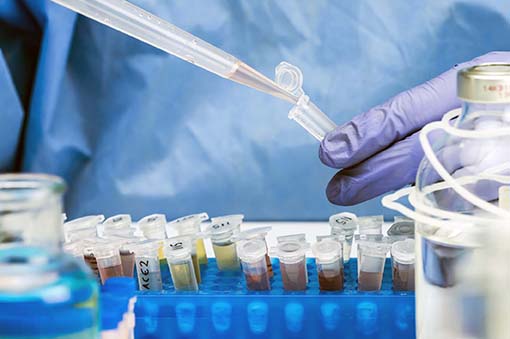
So what we are doing, we have just had a cabinet approval to undertake wastewater analysis. What that does is, it will give us a ballpark figure of what we think the demand is and once we understand the demand, we can start tailoring solutions for that. I will give you an example. Say we do some wastewater analysis on one of the high schools. It won’t identify the student’s and that is not what it is about. But what it will do, through an analysis program, is give us an understanding of what the actual demand is and the usages. If there was a problem in a particular high school then we would want to divert resources in there. Not just to target the actual drug side of it but the education piece. I think this is part of the piece that is missing at the moment. We are not joined up as well as we should do around this particular piece. It is very difficult to put a figure on what our consumption rate is. I would say at the moment that there is a slight trajectory upwards when it comes to drug use in Tonga. If you look at the wastewater analysis in Australia over the last nine or 10 years, over the last 12 months, consumption has gone up 21%. This is a massive problem in Australia, a massive problem in NZ, and when we get these massive seizures like 4.2 tons of cocaine the other day. These drugs seizures are not destined for Tonga and I want to make that really clear but the problems we potentially will have to face is what we would call seepage. By that I mean, say for eg. Tonga was used as a staging point to move drugs across the Pacific. Instead of being paid in cash, cartels and syndicates sometimes pay people in drugs with a view that go and generate your own money from the commodity that you have been given. I will say two things:
First – There is a new task force that has been set up with New Zealand and Australia, leading with the Columbia Police in Colombia, and that is to target the drugs at source, so they actually do not get on the water to start coming through the Pacific.
Second – We are working very hard with some of the regional architecture to be better joined up in our intelligence space. We put a lot of emphasis on our intelligence gathering and also our skill set to get a better picture of what is going on. I know that drug is a major concern for your audience and across the kingdom here, and I know his Majesty, the King talked about drugs being the biggest threat back in 2018 and again in 2019. What I will say is, we have to control our narrative a little bit about how bad it is. I will go to some meetings where people say Tonga is a wash-wool drugs. Tonga is not a wash-wool drugs. It has a drug issue and a drug problem but it is not a wash-wool drugs. So that’s my answer at this stage.
We are working on trying to understand what the demand is and actually having some empirical evidence that sits behind it so that we can see what those consumption rates are and I will clarify a bit on that – Australia’s consumption rate is 27 tons a year across cocaine, methamphetamine and heroin. The population is around about 27 million. If you look at one ton per million people, break that down to a consumption rate of one ton per million people. So, 100 kg per 100,000 people. If Tonga’s population is 108,000 and we came in at a consumption rate of 100kg – I would be concerned. So, we will wait and see what the wastewater analysis comes back and tells us. The other thing is this testing will take place every 3 months over the next 2 years. So even if we can’t get a definitive answer of what the demand is, we will have a better understanding if its staying steady, going up or the policies we are putting in place is driving it down.
The war on drugs.
War on drugs has been going on for 60 years. Have world-wide driven down the demand for drugs – the answer to that is no. We have had discussions with government here and with our New Zealand counter parts about a diversion and restorative justice program. So, what we are saying is there are three pillars to Tonga’s Anti-Drugs Strategy.
The First – is Supply Reduction
The Second – is Demand Reduction
The Third – is Harm Reduction.
The Prime Minister coined this phrase at the conference in Fiji and Momi Bay is that this is not just a government response. It is actually a whole of nation response. What we want to do is have a program put in place that would look to divert and support younger people. 80% of the people we deal with are good people having a bad day. There are genuinely bad people in Tonga and worldwide that needs to go to jail. There are also others that probably need a little bit of a break and support. The way this works is that it is like a community panel – we are in a very early stage of putting up a concept note through government and looking at how we would do this. We are in a very early stage of partnering with New Zealand for a pilot program. So, this is part of what we want to do. It needs to be a 3-prom process.
When I got here the jails were pretty much at capacity. They are over capacity now. But we cannot arrest our way out of this problem. It is around education, it is around health, it is around opportunity, it is around partnership with the public. We are looking at doing a pilot program with Sione Foundation, Police Citizen Youth Club. Our band is probably one of the biggest community tool we have. We relaunched the Police Rugby this year for the first time in 22 years and that is to get us out into the community, to be part of the community as oppose to being a police force who is here to enforce law. The upside is that, with our rugby, we have just closed our application for our next course and quite a few of the people that are applying to join the rugby team, comes from the rugby teams that we have played against because they want to. They see what we do, they want to be a part of it. We have got some really positive stories coming in but we can’t arrest our way out of this problem, nobody can.
88.1 FM People’s Radio / Tonga Chronicle: So now, we can feel confident that there is a lot of healthy police officers that are going to be here to respond to the public’s calls.
Tonga Police Commissioner: Its interesting that you should say that because we have a health and wellbeing plan. When I first got here, we started off by looking at basically our mental health and physical fitness. Phase 2 of that will start shortly. We have secured some funding through Australia for some containerized gymnasiums that will go to Ha’apai, Vava’u and ‘Eua. We have secured some funding to build a new multi-purpose warehouse out here, which will incorporate a new and better gym. We are looking to train up some physical training instructors so that we can be fit and healthy to look after our own thing, but the second part of that particular program is we want to start doing some programs with kids during school holidays. We want to be part of the community but we also want to show that there are alternatives to going down the path of drug use.
88.1 FM People’s Radio / Tonga Chronicle: According to the Police Minister 2025, he announced in June 2025 that there is a 98.8% drop in the seizures of methamphetamine. The Minister would not reflect if that is due to less trafficking or better smuggling or increase of the price in Tonga?
The year before I started here there were some quite large seizures of methamphetamine. There has not been any seizures of that scale since, and I would be naïve to say that it particularly shut it down. That is not the case. There is every possibility that we have missed some importations and I would be lying if I would say otherwise. What I would say is that, Tonga has some really good strength, I think one of them is the fact that to certain extend, it is a monarchy culture. By that you are very much united to your faith, to your family, to your friends. We see that through the 200 years celebration of the FWC. And that is all we need to tap into.
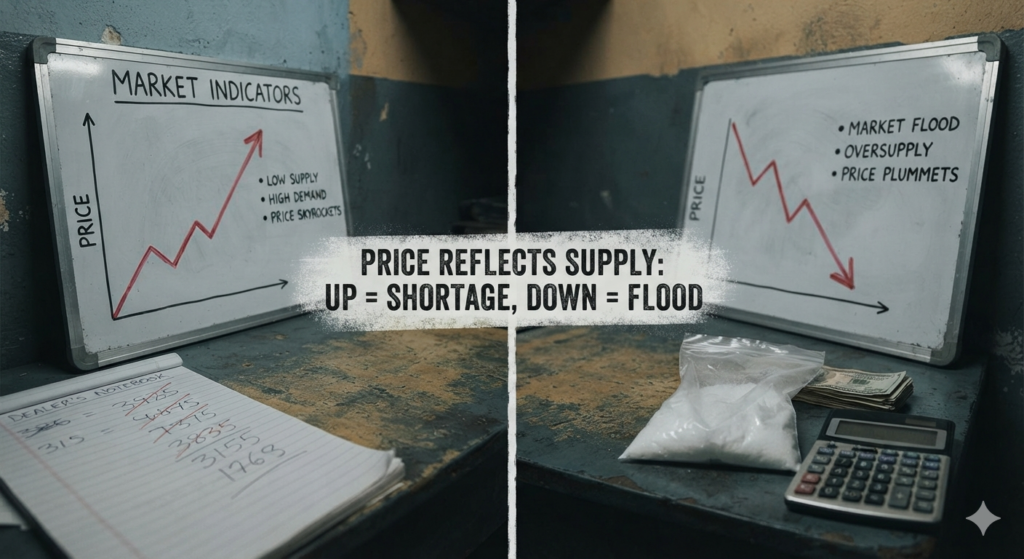
When prices go up, that is an indication that they are low on supply. When prices go down it is an indication that there’s a flood in the market, there is a lot out there and so prices has become cheap. Price is an indication of success when the price of methamphetamine starts to sky rocket it means there’s a shortage but when the prices suddenly plumets, we know that we have missed something and there is a flood in the market.